
Story
Oil Prices Climb as U.S.-Iran Clashes in Strait of Hormuz Threaten Supply
Summary
Crude oil prices extended a sharp weekly rally following military strikes by both the U.S. and Iran on vessels in the Strait of Hormuz, a critical chokepoint for global energy supplies.
Oil prices rose on Monday, building on substantial gains from the previous week after military confrontations between the United States and Iran in and around the Strait of Hormuz stoked fears of a prolonged disruption to global crude supplies.
As of 21:25 ET (01:25 GMT), Brent crude futures for November delivery were up 0.5% at $96.77 per barrel, while West Texas Intermediate (WTI) crude futures also gained 0.5% to trade at $91.94 per barrel. The gains follow a sharp rally last week, which saw Brent surge 7.8% and WTI jump nearly 10%.
Geopolitical Tensions Escalate
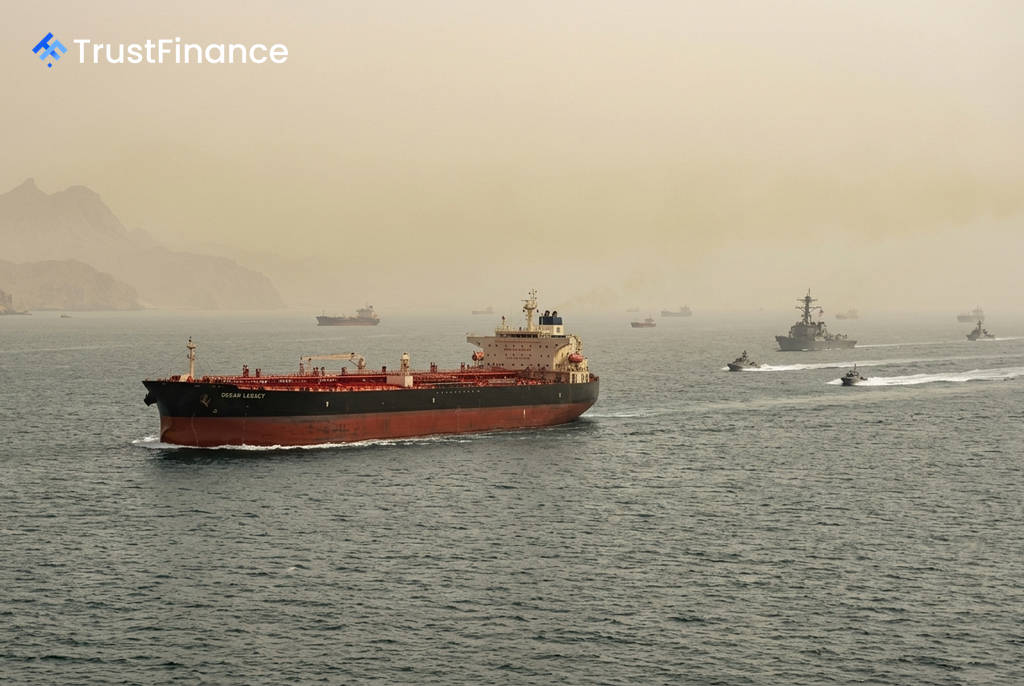
The price increase follows a direct military exchange in the vital waterway. The U.S. military reported on Saturday that it had struck three Iranian oil tankers. This action came after Iranian forces allegedly targeted U.S. Navy vessels with ballistic missiles.
Iran subsequently stated it had attacked a U.S. naval drone and warned of a "stronger response" to any further American military action. Citing Press TV, Iran's top security official announced plans to declare a new restricted maritime zone near the strait, potentially exposing vessels in the area to sanctions.
Market Impact and Supply Risks
 Ad
AdThe conflict directly threatens one of the world's most critical energy chokepoints. Approximately one-fifth of global oil consumption passes through the Strait of Hormuz, and any disruption carries significant implications for market stability.
Reflecting the heightened risk, shipping traffic in the area has already declined. According to data from analytics firm Kpler, traffic fell to about 10 commodity vessels per day, its lowest level since May. This slowdown highlights the immediate impact of the security threat on commercial operations.
Broader Production Context
The supply concerns come as the Organization of the Petroleum Exporting Countries and its allies (OPEC+) announced on Sunday it would hold oil production steady for October. The decision pauses a six-month series of output increases, as the group turns its attention to establishing new production quotas for 2027.
Read next
More on Commodities
US-China Summit to Tackle Key Commodity Disputes in Agriculture, Energy
The upcoming meeting between President Trump and President Xi is expected to focus on resolving trade frictions involving U.S. agricultural exports, Chinese energy tariffs, and the supply of critical rare earth materials.

Citi Warns Hawkish Fed Policy Threatens Non-AI Economic Growth
A recent report from Citi Research warns that the Federal Reserve's hawkish monetary policy could suppress the U.S. housing market and make the broader economy dangerously dependent on AI investment.

Petrobras Board Approves Participation in New Government Diesel Subsidy Program
Brazil's state-run oil company, Petrobras, will join a new government program providing a 1.00 real per liter subsidy on diesel, a move aimed at stabilizing fuel prices ahead of the upcoming presidential election.

Oil Prices Retreat as China Urges Iran to Curb Houthi Attacks on Saudi Facilities
Crude oil futures fell on Friday after reports that China, at Saudi Arabia's request, pressured Iran to rein in Houthi attacks, easing some geopolitical supply fears. However, ongoing pipeline disruptions and refining constraints continue to support the market.