
Story
New Jersey Asks Supreme Court to Rule on State Power Over Kalshi's Sports Contracts
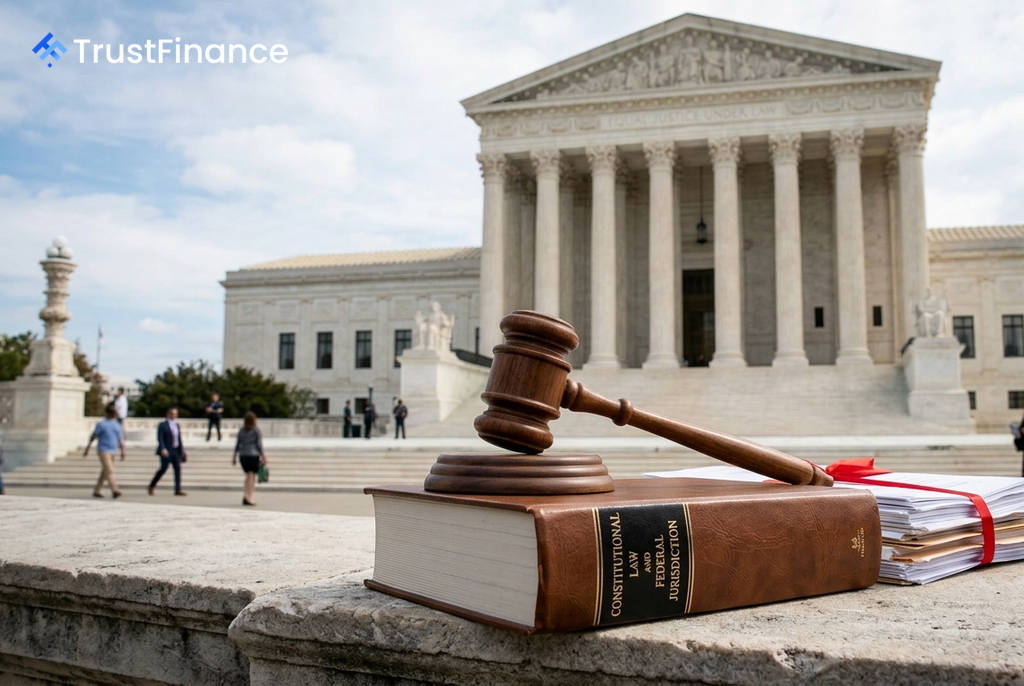
New Jersey has escalated its legal battle over the regulation of prediction markets, asking the U.S. Supreme Court to determine whether states have the power to police sports-related wagers on platforms like Kalshi. The petition challenges a lower court ruling that gave exclusive jurisdiction to a federal agency, a decision with significant implications for the gaming and financial industries.
State vs. Federal Jurisdiction
Authorities in New Jersey on Wednesday asked the nation's highest court to overturn an appellate court’s decision from April. That ruling held that the U.S. Commodity Futures Trading Commission (CFTC) has exclusive authority over the sports-related event contracts offered on Kalshi's trading platform.
The state argues that such platforms are effectively engaging in sports betting and should be subject to state-level gaming laws. "These companies have no right to offer their sports bets without following state law, which is why dozens of states across the ideological spectrum have opposed them," New Jersey Attorney General Jennifer Davenport said in a statement.
The Core of the Dispute
The case centers on the legal classification of Kalshi's products. Prediction markets like Kalshi allow users to trade contracts based on the outcome of future events, from elections to sports contests.
State regulators contend these activities are wagers that must comply with local laws. Key concerns cited by states include:
 Ad
- Operation without required state licenses.
- Violation of gaming laws, including bans on wagers by those under 21.
Conversely, Kalshi and the CFTC have maintained that these are financial instruments falling under the federal agency's sole jurisdiction. According to the report, the CFTC's position that it has exclusive authority was shared by the companies during the Trump administration.
Implications for Prediction Markets
The Supreme Court's decision on whether to hear the case—and its potential ruling—could fundamentally shape the future of the U.S. prediction market industry. A victory for New Jersey could force platforms to navigate a complex and costly patchwork of state-by-state gaming regulations or cease operations in certain jurisdictions.
If the appellate court's decision stands, it would solidify the CFTC's role as the primary regulator for these products, providing a more uniform federal framework for companies like Kalshi. The court's next move will be closely watched by investors and operators in the emerging event-contract market.
Read next
More on Stocks
FTC Orders Walmart, Uber, Delta to Disclose Data on Personalized Pricing
The U.S. Federal Trade Commission is demanding nine major companies, including leading retail, travel, and gig economy firms, to provide information on how they use consumer data for setting individual prices and wages.

Google Launches Gemini 4 Carbon AI Model to Bolster Cybersecurity Capabilities
Alphabet's Google has unveiled Gemini 4 Carbon, its latest AI model specifically designed for advanced cybersecurity tasks like vulnerability detection and secure code generation. The launch escalates competition with rivals OpenAI and Anthropic in the enterprise AI market.

Oracle Shares Surge After Unveiling $225 Billion Revenue Target for 2030
Oracle stock rose sharply after the company presented a long-term financial outlook targeting at least $225 billion in annual revenue by fiscal 2030, driven by its expanding AI infrastructure business.

DOJ Scrutinizes Nvidia's $12.9B Hugging Face Deal Amid Broader Antitrust Probe, Sources Say
The U.S. Department of Justice is reportedly examining Nvidia's planned $12.93 billion acquisition of AI platform Hugging Face as part of a wider, ongoing antitrust investigation into the chipmaker's market conduct.