
Story
Micron Sell-Off Divides Wall Street as Bulls Defend AI Thesis Against Bears
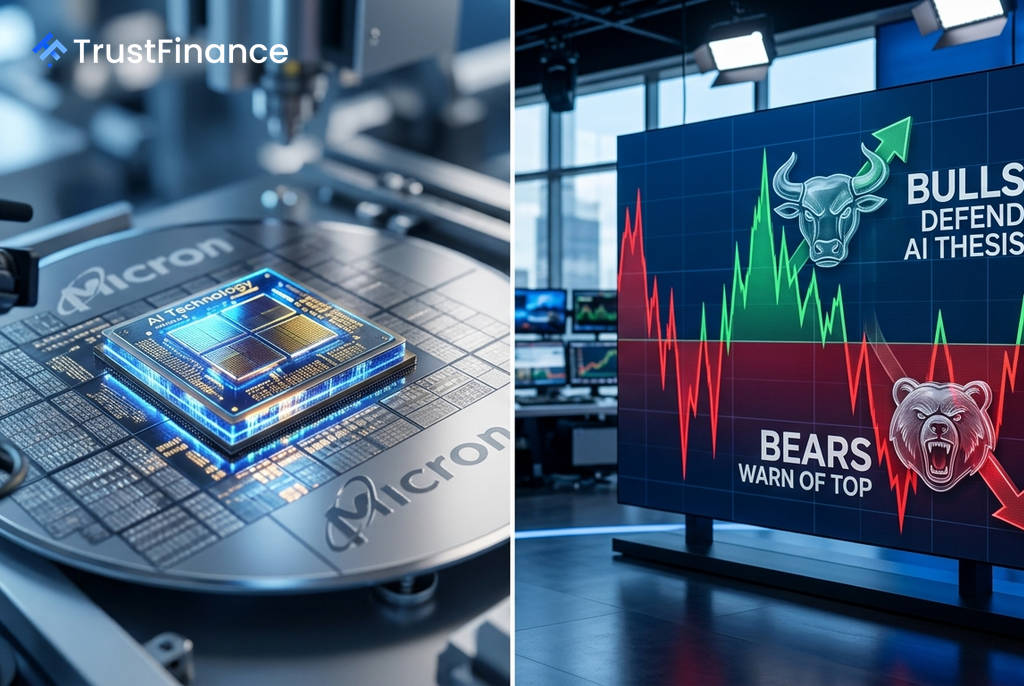
Micron Technology (MU) shares have extended their recent decline, pulling back sharply from a meteoric year-long rally amid contagion from a peer's stock drop and broader geopolitical jitters. The sell-off, which has seen the stock fall 16.6% over the past month, has created a stark divide on Wall Street, pitting analysts who see a buying opportunity against prominent bears who are signaling a potential top for the memory chipmaker.
Catalysts for the Decline
The recent pressure on Micron's stock stems from a confluence of factors. The stock was dragged down by a sell-off in fellow memory maker SK Hynix, which saw its shares plunge over 15% in a single day following its Nasdaq debut on July 10.
This was compounded by renewed geopolitical tensions between the U.S. and Iran, which soured broader market sentiment and hit semiconductor stocks particularly hard, according to market reports from July 13.
Bulls See Buying Opportunity
Despite the pullback, several major investment banks are reiterating their bullish stance, viewing the decline as a temporary reset. Analysts point to a fundamentally undersupplied memory market driven by soaring demand from artificial intelligence applications, which now account for 35-40% of cloud AI capital expenditures.
- Citi: Added Micron to its "90-Day Upside Catalyst Watch List" with a $1,400 price target, signaling confidence in a near-term rebound.
- UBS: Forecasts the DRAM market to remain undersupplied until at least the second quarter of 2028 and raised its estimate for third-quarter contract pricing to a 32% quarter-over-quarter increase.
- Bank of America: Characterized the sell-off as a "healthy reset before [a] rally," citing the long-term structural demand for AI infrastructure.
 Ad
Bears Signal Caution
However, the bearish camp has gained a high-profile voice. Michael Burry, known from "The Big Short," initiated a put-option short position against Micron on July 1 near its all-time high, betting on a decline after the stock's nearly 700% surge in the preceding year.
Adding to the caution are signs of significant insider selling. Transactions by executives, including CEO Sanjay Mehrotra under a 10b5-1 plan and a $1.5 million sale by a director on June 30, have reportedly reached their highest levels since 2010—a classic warning signal for some investors at cycle peaks.
Context and Outlook
Micron's stock has had a monumental run, surging from a 52-week low of $103.38 to a high of $1,255.00. The core debate centers on whether the powerful, long-term AI demand narrative can outweigh near-term market fragility and profit-taking. With the next earnings report not due until September 22, the stock's direction will likely be influenced by macroeconomic and geopolitical news flow in the interim.
Read next
More on Stocks
FTC Orders Walmart, Uber, Delta to Disclose Data on Personalized Pricing
The U.S. Federal Trade Commission is demanding nine major companies, including leading retail, travel, and gig economy firms, to provide information on how they use consumer data for setting individual prices and wages.

Google Launches Gemini 4 Carbon AI Model to Bolster Cybersecurity Capabilities
Alphabet's Google has unveiled Gemini 4 Carbon, its latest AI model specifically designed for advanced cybersecurity tasks like vulnerability detection and secure code generation. The launch escalates competition with rivals OpenAI and Anthropic in the enterprise AI market.

Oracle Shares Surge After Unveiling $225 Billion Revenue Target for 2030
Oracle stock rose sharply after the company presented a long-term financial outlook targeting at least $225 billion in annual revenue by fiscal 2030, driven by its expanding AI infrastructure business.

DOJ Scrutinizes Nvidia's $12.9B Hugging Face Deal Amid Broader Antitrust Probe, Sources Say
The U.S. Department of Justice is reportedly examining Nvidia's planned $12.93 billion acquisition of AI platform Hugging Face as part of a wider, ongoing antitrust investigation into the chipmaker's market conduct.