
Story
Korea Exchange Extends Trading Hours in Bid for Global Capital
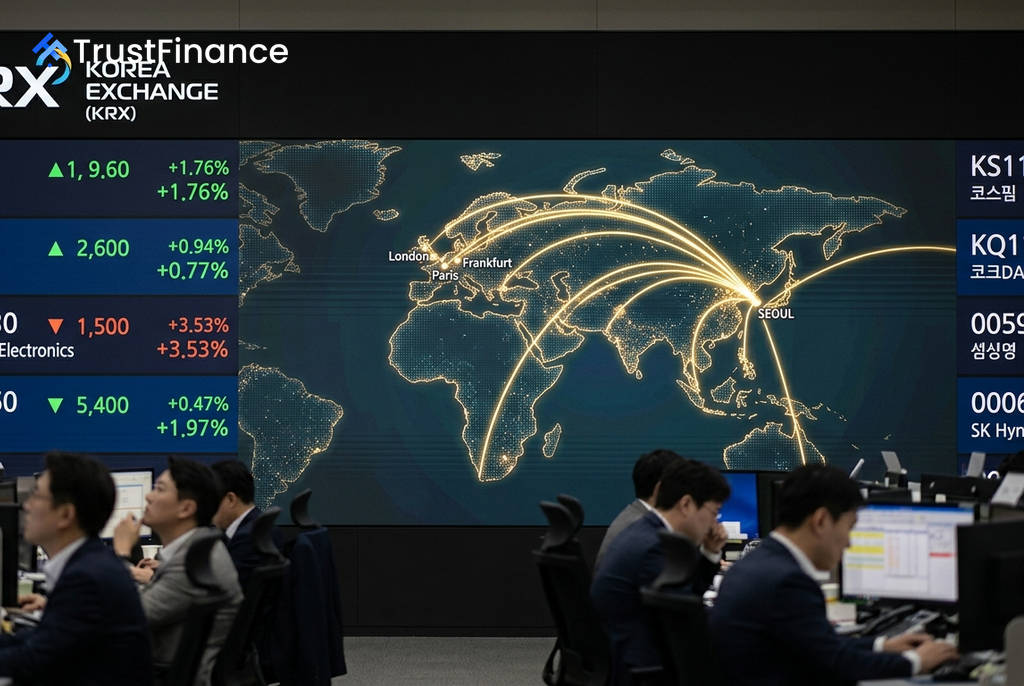
South Korea's main stock market operator is set to extend its trading hours into the evening, a significant move aimed at accommodating European investors and attracting more foreign capital into its equities market.
Beginning this Monday, the Korea Exchange will allow trading until 8 p.m. local time, a substantial extension from the current 3:30 p.m. close, according to a Bloomberg report. The change is a key part of Seoul's strategy to increase the appeal of its financial markets to a global audience.
Scope and Implementation
The extended session will apply to the roughly 2,400 stocks listed on the country's main Kospi and junior Kosdaq markets. Key details of the new session include:
- Short selling will be permitted during the extended hours.
- Exchange-traded funds (ETFs) will initially be excluded from evening trading.
This initiative is a step toward the exchange’s broader goal of eventually offering round-the-clock trading. A pre-market trading session is also planned for introduction by the end of 2027.
 Ad
Market Context and Potential Hurdles
The move comes after the Kospi index surged 64% in 2026, largely fueled by investor enthusiasm for the artificial intelligence sector, despite a recent 22% pullback from its July peak.
However, the primary challenge will be attracting sufficient institutional liquidity. According to the report, foreign investors may be reluctant to execute large trades in blue-chip companies like Samsung Electronics and SK Hynix until the evening session develops a deeper pool of buyers and sellers.
Thin liquidity could increase transaction costs and lead to greater price volatility. Currency hedging is another potential concern for overseas funds, as South Korea’s foreign exchange market, while operational 24/7, can be less liquid outside of peak hours, potentially making hedging more expensive.
Read next
More on Stocks
FTC Orders Walmart, Uber, Delta to Disclose Data on Personalized Pricing
The U.S. Federal Trade Commission is demanding nine major companies, including leading retail, travel, and gig economy firms, to provide information on how they use consumer data for setting individual prices and wages.

Google Launches Gemini 4 Carbon AI Model to Bolster Cybersecurity Capabilities
Alphabet's Google has unveiled Gemini 4 Carbon, its latest AI model specifically designed for advanced cybersecurity tasks like vulnerability detection and secure code generation. The launch escalates competition with rivals OpenAI and Anthropic in the enterprise AI market.

Oracle Shares Surge After Unveiling $225 Billion Revenue Target for 2030
Oracle stock rose sharply after the company presented a long-term financial outlook targeting at least $225 billion in annual revenue by fiscal 2030, driven by its expanding AI infrastructure business.

DOJ Scrutinizes Nvidia's $12.9B Hugging Face Deal Amid Broader Antitrust Probe, Sources Say
The U.S. Department of Justice is reportedly examining Nvidia's planned $12.93 billion acquisition of AI platform Hugging Face as part of a wider, ongoing antitrust investigation into the chipmaker's market conduct.