
Story
Iran Widens Attacks on Gulf Nations, Declares Strait of Hormuz Closed Amid Clashes With US
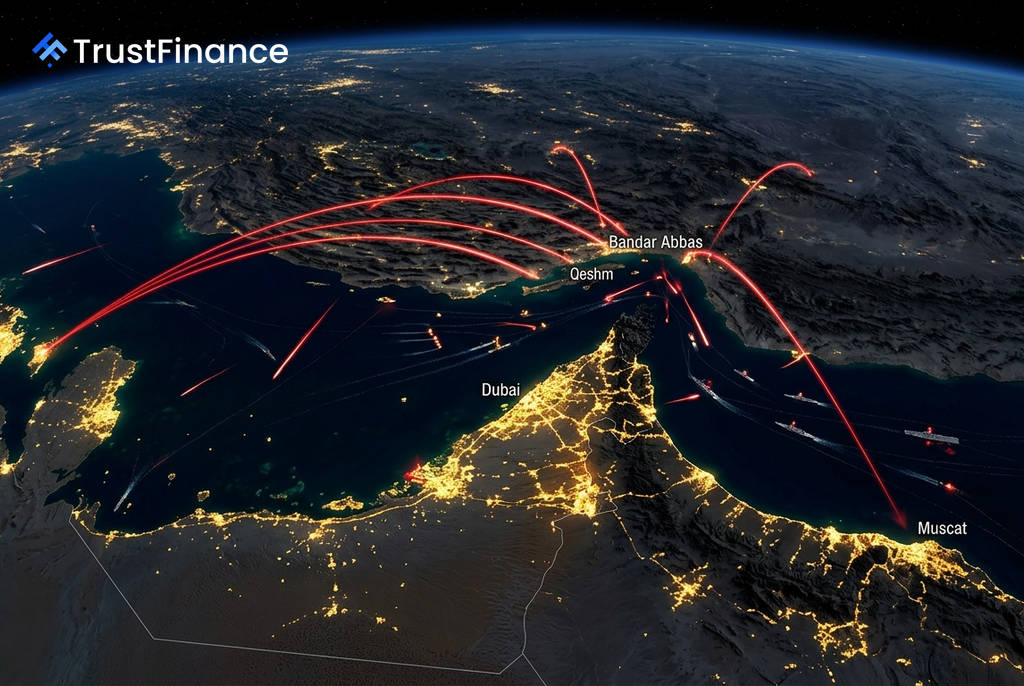
Iran has significantly escalated its military confrontation with the United States, launching widespread missile and drone assaults against U.S. facilities in several Gulf nations and declaring the vital Strait of Hormuz closed to unauthorized shipping. The barrage on Sunday marks a major expansion in the scope of the conflict, which threatens to further disrupt global energy supplies.
Broadening Military Exchange
In a coordinated series of attacks, Iran targeted countries hosting U.S. military assets. This included strikes on Qatar, a key mediator that had not been attacked since April, and the United Arab Emirates. According to a statement from its Revolutionary Guards, Iran also targeted:
- A command-and-control center and drone hangars in Jordan.
- A U.S. radar site in Kuwait.
- U.S. aircraft carrier support and refueling platforms in Oman.
- A jet maintenance center and command facility in Qatar.
U.S. Central Command stated on Saturday that its forces had struck over 300 Iranian military targets over three nights, including 140 on Saturday alone, in an effort "to degrade Iran’s ability to attack civilian mariners and commercial vessels."
Gulf nations reported impacts from the strikes. Qatar said three people were injured by falling shrapnel, while Kuwait reported damage and one injury at an oil drilling platform. The UAE and Bahrain also confirmed intercepting Iranian aerial attacks.
Dispute Over a Vital Waterway
 Ad
The status of the Strait of Hormuz, a chokepoint for about one-fifth of the world's pre-war oil and LNG shipments, is now a central point of contention. Iran's newly formed Persian Gulf Strait Authority announced Sunday that passage was "not currently possible" due to U.S. military movements.
This declaration followed Iranian attacks on commercial shipping. Iran said it struck two vessels traveling on unauthorized routes. India confirmed one of its nationals was missing after an attack on the container ship GFS Galaxy off the coast of Oman. The U.S. military, however, refuted Iran's claim of control, stating, "Iran does not control the strait. Traffic is flowing." The U.S. Navy's Joint Maritime Information Center advised that an "expanded" southern route near Oman remained available for traffic.
Diplomatic Collapse and Market Impact
The renewed hostilities cast serious doubt on the future of a U.S.-Iranian interim agreement signed last month, which aimed to reopen the strait. U.S. President Donald Trump said last week he considers the ceasefire to be over.
Iran’s top negotiator, Mohammad Baqer Qalibaf, signaled a hardened stance on social media, posting: "The era of one-sided deals is OVER...keep your word or pay the price." The escalating conflict and effective blockade have already pushed energy prices higher, contributing to global inflationary pressures and creating a politically sensitive issue in the U.S. ahead of congressional elections.