
Story
Gold Set for Weekly Loss as Oil Spike Revives Fed Rate Concerns
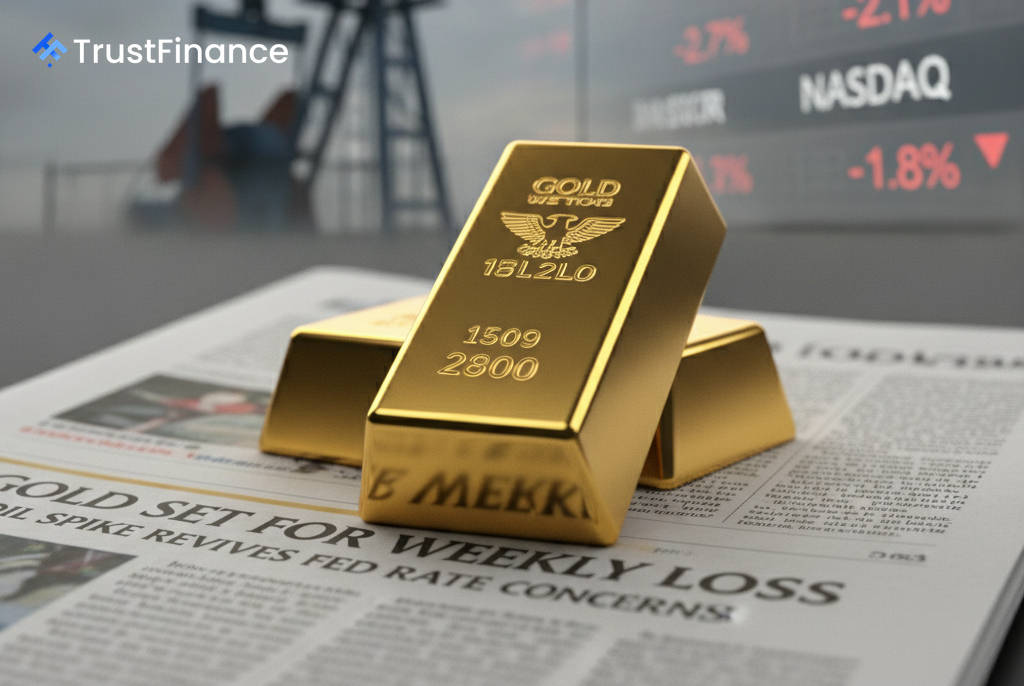
Gold prices fell on Friday, putting the precious metal on course for a weekly loss as a surge in oil prices, driven by renewed U.S.-Iran tensions, amplified investor concerns about stubborn inflation and the potential for higher-for-longer interest rates from the Federal Reserve.
By late afternoon trading, spot gold was down 0.2% at $4,114.45 per ounce, while gold futures for August delivery had fallen 0.5% to $4,122.47 per ounce. Both benchmarks were tracking a weekly decline of approximately 1.6%, according to market data.
Geopolitical Tensions Drive Oil Higher
The primary catalyst for the week's market sentiment was an escalation in the Middle East, where Iran reportedly attacked three commercial oil tankers in and around the Strait of Hormuz. The incidents sparked supply concerns, sending crude oil prices higher and adding a geopolitical risk premium back into energy markets.
The developments prompted sharp rhetoric from U.S. President Donald Trump, who stated a ceasefire between the two nations was "over." Despite the tense exchange, mediation efforts from Oman and Pakistan were underway, which analysts at ANZ noted provided some support for gold on "expectations of limited escalation in the Middle East conflict."
Inflation Fears and Fed Outlook
 Ad
The spike in energy costs has direct implications for inflation, a key metric for the Federal Reserve. A sustained rise in oil prices could complicate the central bank's efforts to control inflation, potentially forcing it to maintain its restrictive monetary policy. Higher interest rates typically weigh on gold, as they increase the opportunity cost of holding the non-yielding asset.
Minutes from the Fed's June 16-17 meeting, released this week, revealed an evenly divided policy committee regarding the future path of interest rates. The report showed that policymakers remained concerned about inflationary pressures from multiple sources, including the conflict in the Middle East.
Looking Ahead to Key Data
With geopolitical factors driving short-term volatility, market participants are now turning their focus to crucial U.S. economic data scheduled for next week. The Consumer Price Index (CPI) report for June is due on Tuesday, followed by the Producer Price Index (PPI) on Wednesday.
These inflation indicators will be closely scrutinized by investors for clues about the Federal Reserve's next policy move. While analysts cited in the source material believe May's inflation readings may have been a peak, next week's data will be critical in shaping market expectations.