
Story
Gold Prices Rise as Unexpected Drop in US Retail Sales Fuels Fed Pause Hopes
Summary
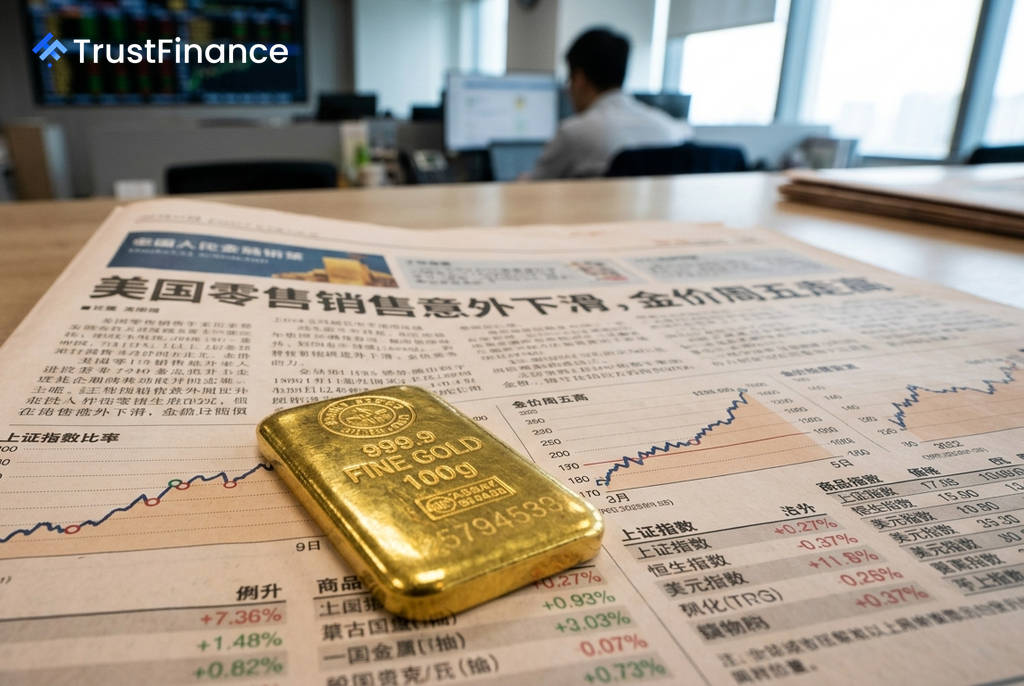
Gold prices advanced on Friday after July's US retail sales data unexpectedly declined, reinforcing investor expectations that the Federal Reserve will hold interest rates steady in September.
Gold prices gained on Friday after an unexpected decline in U.S. retail sales for July strengthened the case for the Federal Reserve to pause its interest rate hiking cycle at its next meeting.
By 9:47 a.m. ET, spot gold was up 0.9% at $4,389.44 per ounce, while gold futures rose 0.6% to $4,447.97 per ounce, according to Investing.com data. The precious metal is on track for its second consecutive weekly gain.
Weak Data Bolsters Dovish Outlook
The move higher followed data showing a surprise contraction in retail sales, adding to other recent signs of a cooling U.S. economy. This week's inflation figures also pointed to moderating price pressures in July.
In response to the weakening economic signals, money markets are now pricing in a probability of more than two-thirds that the Federal Reserve will keep interest rates unchanged at its September policy meeting. This outlook is a positive driver for gold, as lower interest rates reduce the opportunity cost of holding the non-yielding asset.
 Ad
AdGeopolitical Risks and Market Sentiment
Investors remain focused on upcoming U.S. employment data and remarks from the Federal Reserve Chair at the Jackson Hole economic symposium later this month for further clues on the path of monetary policy.
However, analysts at ANZ noted that the recent rally has prompted some profit-taking, particularly after gold prices briefly crossed the key technical level of the 100-day moving average. They also pointed to geopolitical uncertainty in the Middle East, specifically concerning the Strait of Hormuz, as a potential source of volatility. A flare-up in tensions could drive energy prices higher, reigniting inflation concerns and potentially forcing the Fed to maintain a more hawkish stance.
Read next
More on Commodities
Iran Warns of Retaliation Against Any New US Attack Amid Heightened Regional Tensions
Iran's military warned it would retaliate against any new attack by the U.S. and its allies, escalating tensions after Iran-backed Houthi rebels claimed strikes on Saudi Arabian oil infrastructure.

Wheat Futures Decline on Technical Selling as Crude Oil Weakens
Chicago wheat futures edged lower on Wednesday, pressured by technical selling linked to a downturn in crude oil prices, though losses were limited by ongoing global supply concerns.

Raw Sugar Futures Slip as Declining Oil Prices Weigh on Ethanol Demand
Raw sugar futures edged lower as a drop in crude oil prices made ethanol production less profitable, incentivizing mills to produce more sugar. However, prices found support from forecasts of lower crop yields in key producing regions.

Continental Resources Signs MOU with Venezuela's PDVSA to Develop Orinoco Oil Field
U.S.-based Continental Resources has entered a preliminary agreement with Venezuela's state-owned oil company, PDVSA, to jointly develop a block in the Orinoco Heavy Oil Belt estimated to hold 30 billion barrels of oil.