
Story
Global Bond Yields Rise on U.S.-Iran Tensions and Fed Policy Concerns
Summary
Government bond yields in the Eurozone increased on Wednesday amid escalating geopolitical tensions between the U.S. and Iran and investor caution ahead of the release of U.S. Federal Reserve meeting minutes. The combination of events has sparked a sell-off in sovereign debt, particularly short-term bonds.
Eurozone government bond yields rose on Wednesday, with a notable sell-off in short-dated debt, as investors reacted to a combination of geopolitical and monetary policy pressures. The primary drivers were renewed tensions between the United States and Iran and market apprehension preceding the release of minutes from the U.S. Federal Reserve's June meeting.
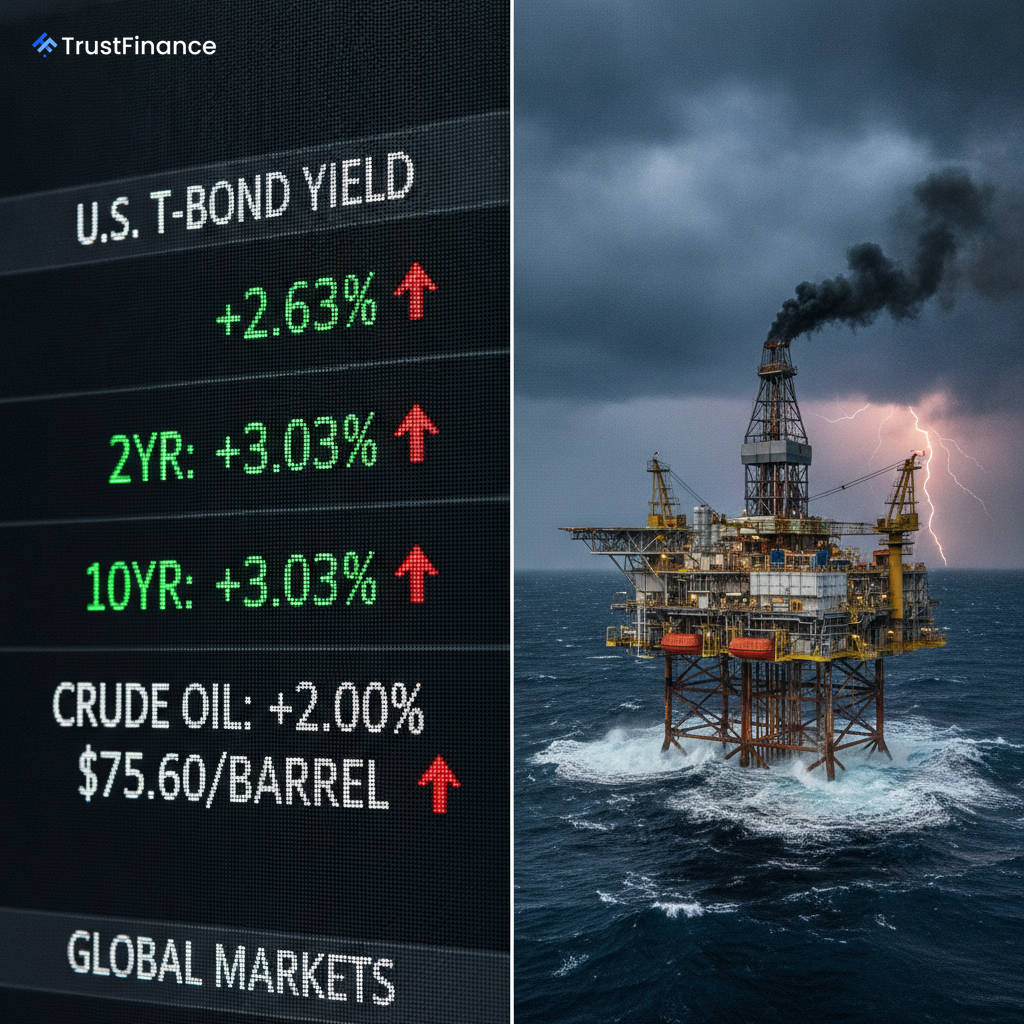
The geopolitical concerns were ignited after Washington revoked a key sanctions waiver that had allowed Iran to sell oil, a move Tehran reportedly declared a breach of their framework peace deal. The decision contributed to a 2% increase in global crude oil prices to $75.60 a barrel, fueling fears of resurgent inflation and rattling fixed-income markets.
The reaction was most pronounced at the front end of the yield curve, which is highly sensitive to inflation and central bank policy expectations. Germany’s 2-year government bond yield, a benchmark for the Eurozone, spiked to 2.63%. In comparison, the 10-year German Bund yield saw a more moderate rise of 2 basis points to 3.03%, indicating that investors are pricing in more immediate risks.
 Ad
AdAdding to market uncertainty is the anticipated release of minutes from the Federal Reserve, which will offer the first insights under its new Chairman, Kevin Warsh. Investors are reportedly cautious due to Warsh's known preference for a less predictable communication style compared to his predecessors. Analysts are watching for any indication that Fed governors were already considering tighter policy to combat inflation, a stance that, combined with the new oil price shock, could push global yields higher.