
Story
FIFA Leadership Crisis Pits European Opposition Against Infantino's Financial Patronage System
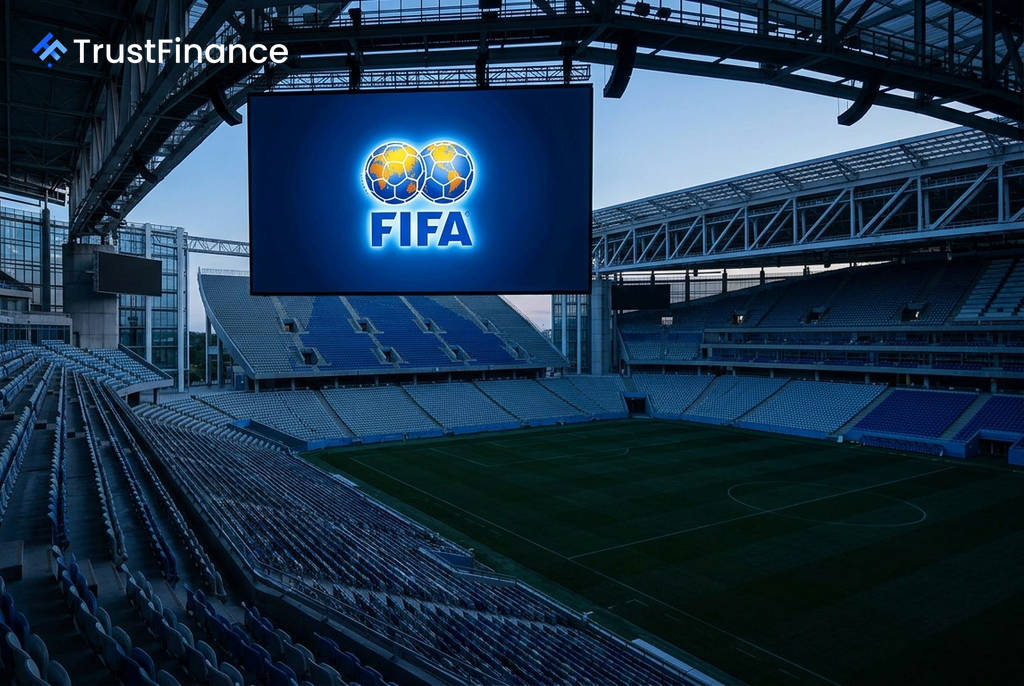
FIFA President Gianni Infantino is confronting a major crisis in his decade-long tenure after a contentious proposal to introduce private equity into the World Cup drew formal opposition from powerful regional bodies. The backlash from Europe's UEFA and North America's CONCACAF, which both declared no confidence in his leadership, has jeopardized Infantino's bid for a fourth term and highlighted the deep divisions within world soccer's governing body.
Leadership Under Fire
The immediate trigger for the crisis was an abortive plan to sell a stake in the World Cup to private investors. The proposal prompted a swift rebuke, with the Wales soccer federation formally withdrawing its support for Infantino. Citing the Reuters report, European governing body UEFA has also notified Infantino that it is considering legal action over the matter.
Opponents have a mechanism to force a leadership contest ahead of next year's scheduled election. A vote can be triggered at an Extraordinary Congress if requested in writing by 20% of FIFA's 211 member associations. With 55 members, a unanimous vote from UEFA alone would be sufficient to initiate this process, which would require the congress to be held within three months.
The Power of Development Funding
Despite the opposition from soccer's traditional power centers, unseating Infantino remains a formidable challenge due to FIFA's 'one nation, one vote' structure and its financial relationship with smaller members. His strategy may rely on the loyalty of nations that depend heavily on FIFA's development funding programs.
Under the current 2023-2026 cycle, each member association can claim up to $3 million for development projects, a significant increase from the previous period. This funding is vital for emerging soccer nations but less critical for wealthy European federations. This financial patronage has cultivated a strong support base for Infantino across Asia, Africa, the Caribbean, and the Pacific.
 Ad
A Case Study: Vanuatu
A clear example of this dynamic is Vanuatu, an island nation of about 340,000 people. According to Reuters, FIFA provided a development grant of $4.15 million to help construct a 6,500-seat stadium in its capital. The head of Vanuatu's football association, Lambert Maltock, also holds a position as one of eight vice-presidents on FIFA's Executive Council, demonstrating the influence smaller nations can wield within the organization's structure.
A Political Numbers Game
The conflict is shaping up as a political battle that pits the institutional weight of Europe against the collective voting power of numerous smaller nations. While critics argue that FIFA's funding model exchanges financial support for political influence, beneficiaries see it as essential for growing the sport globally.
"He’s opening up more chances for a team like ours, for nations like ours to make it," Brian Kaltak, Vanuatu's first professional player, told Reuters, highlighting the positive impact of Infantino's policies on developing countries. Ultimately, any campaign to remove the incumbent president will be a numbers game extending far beyond soccer's European elite.
Read next
More on Stocks
FTC Orders Walmart, Uber, Delta to Disclose Data on Personalized Pricing
The U.S. Federal Trade Commission is demanding nine major companies, including leading retail, travel, and gig economy firms, to provide information on how they use consumer data for setting individual prices and wages.

Google Launches Gemini 4 Carbon AI Model to Bolster Cybersecurity Capabilities
Alphabet's Google has unveiled Gemini 4 Carbon, its latest AI model specifically designed for advanced cybersecurity tasks like vulnerability detection and secure code generation. The launch escalates competition with rivals OpenAI and Anthropic in the enterprise AI market.

Oracle Shares Surge After Unveiling $225 Billion Revenue Target for 2030
Oracle stock rose sharply after the company presented a long-term financial outlook targeting at least $225 billion in annual revenue by fiscal 2030, driven by its expanding AI infrastructure business.

DOJ Scrutinizes Nvidia's $12.9B Hugging Face Deal Amid Broader Antitrust Probe, Sources Say
The U.S. Department of Justice is reportedly examining Nvidia's planned $12.93 billion acquisition of AI platform Hugging Face as part of a wider, ongoing antitrust investigation into the chipmaker's market conduct.