
Story
Federal Judge to Weigh Justice Dept. Subpoenas to New York Times Over Air Force One Report
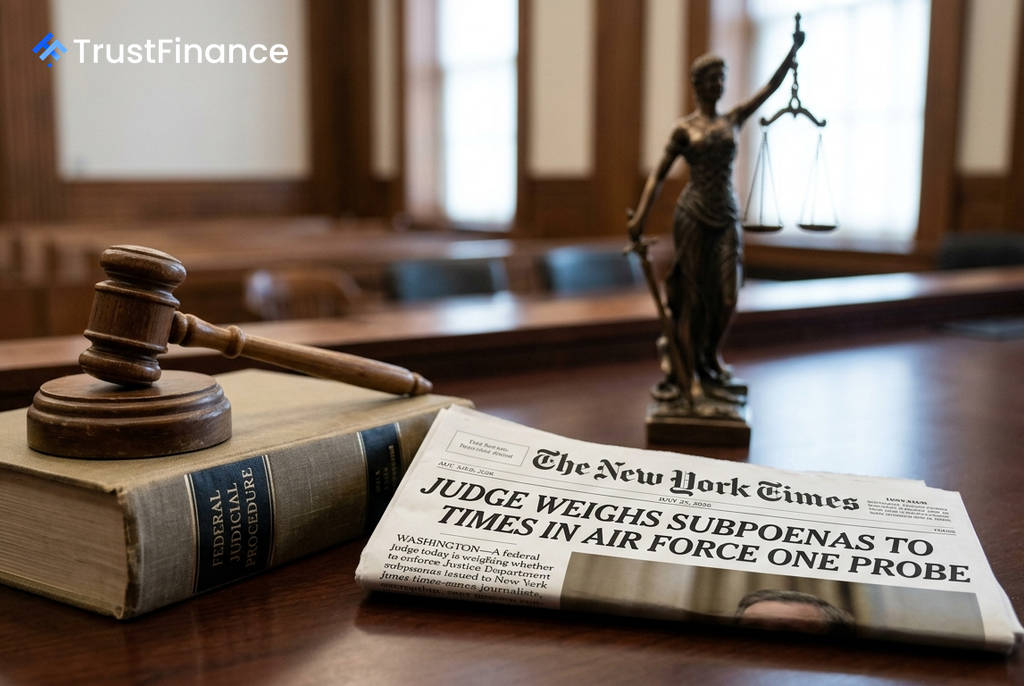
A federal judge in Manhattan is scheduled to hear arguments Thursday over subpoenas the Trump administration's Justice Department issued to New York Times journalists concerning their reporting on security issues with a presidential aircraft. The case highlights the ongoing tension between government leak investigations and First Amendment protections for the press.
Subpoenas Target Air Force One Reporting
The legal challenge stems from subpoenas issued on July 10 by Manhattan U.S. Attorney Jay Clayton. They seek to compel New York Times journalists to divulge sources for an article which reported that President Donald Trump had to fly on an older Air Force One from Turkey because a new plane, donated by Qatar, lacked antimissile and other defensive features.
According to a government court filing, prosecutors are investigating the leak of what they describe as classified national defense information. The government stated the newspaper's coverage posed a "substantial national security concern" at a time when the president was traveling amid international hostilities.
A Clash Over Press Freedom
The New York Times has asked U.S. District Judge Arun Subramanian to throw out the subpoenas, which are currently paused pending the hearing. In its court filings, the newspaper argued the subpoenas are an effort to harass and intimidate journalists, violating free press protections under the First Amendment of the U.S. Constitution.
 Ad
The media organization also accused the Justice Department of violating its own internal policies, which state that subpoenas against journalists should be a rare step requiring approval from top officials. In response, prosecutors argued the First Amendment does not shield reporters from the obligation to provide essential information in a criminal investigation.
Broader Context
Press advocacy groups contend that the move is part of a wider pattern by the Trump administration to use government power to pressure the news media and identify their confidential sources. Similar actions, including subpoenas and search warrants, have been used against other major news outlets such as the Washington Post and the Wall Street Journal.
The Trump administration has consistently stated that its objective is to pursue criminal charges against individuals who leak classified information, not to target journalists. Meanwhile, critics describe the actions as part of a broader campaign to bully and harass the news media.
Read next
More on Stocks
FTC Orders Walmart, Uber, Delta to Disclose Data on Personalized Pricing
The U.S. Federal Trade Commission is demanding nine major companies, including leading retail, travel, and gig economy firms, to provide information on how they use consumer data for setting individual prices and wages.

Google Launches Gemini 4 Carbon AI Model to Bolster Cybersecurity Capabilities
Alphabet's Google has unveiled Gemini 4 Carbon, its latest AI model specifically designed for advanced cybersecurity tasks like vulnerability detection and secure code generation. The launch escalates competition with rivals OpenAI and Anthropic in the enterprise AI market.

Oracle Shares Surge After Unveiling $225 Billion Revenue Target for 2030
Oracle stock rose sharply after the company presented a long-term financial outlook targeting at least $225 billion in annual revenue by fiscal 2030, driven by its expanding AI infrastructure business.

DOJ Scrutinizes Nvidia's $12.9B Hugging Face Deal Amid Broader Antitrust Probe, Sources Say
The U.S. Department of Justice is reportedly examining Nvidia's planned $12.93 billion acquisition of AI platform Hugging Face as part of a wider, ongoing antitrust investigation into the chipmaker's market conduct.