
Story
EDP CEO Says EU Member States Failing to Implement Renewable Permitting Reforms
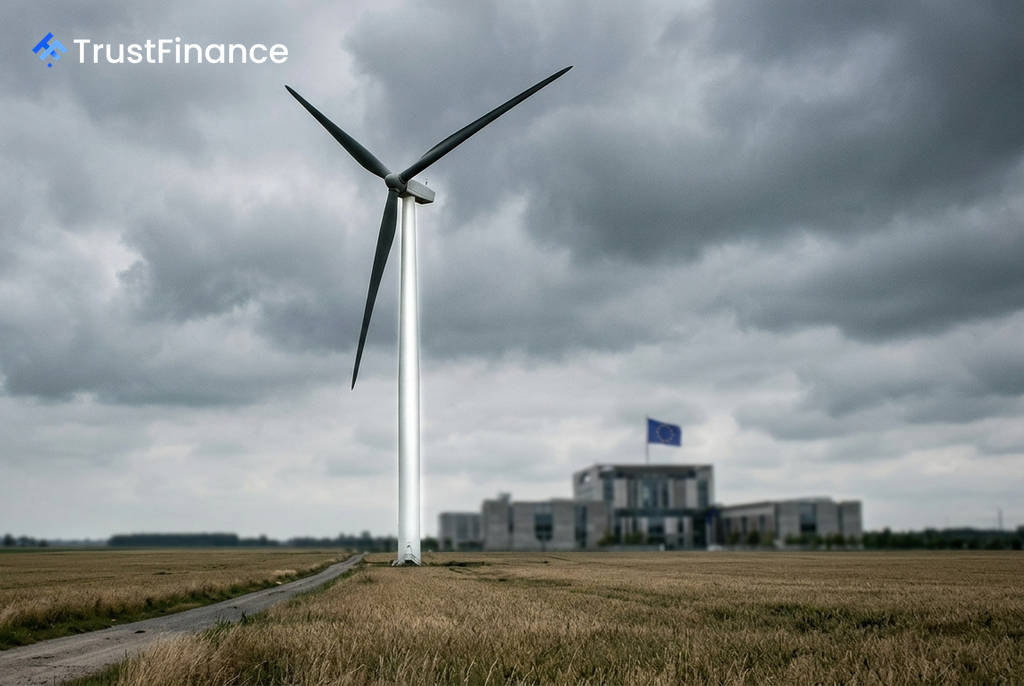
European Union member states are failing to implement critical permitting reforms needed to accelerate renewable energy projects, according to the CEO of Portuguese utility EDP. Miguel Stilwell d’Andrade said on Thursday that national and local governments are creating significant bottlenecks that hinder clean power investments.
National Delays Undermine EU Policy
Speaking to reporters, d’Andrade stated that measures adopted by the EU after Russia's 2022 invasion of Ukraine to simplify permitting have not been fully implemented by many countries, including Portugal, Poland, and Italy. He emphasized that the delays are not a result of EU policy but of inaction at the national level.
"The problem is not Europe. It’s much more up to the member states and to the regional and local governments than Europe. It’s really about execution on the ground," he said. According to an EDP statement from January, securing permits for renewable projects in Europe can take four to six years, whereas the construction itself typically takes only 12 to 18 months.
Regulatory Context and Responses
 Ad
The European Commission launched infringement proceedings last August against 26 member states for failing to fully translate its renewable energy directives into national law. The lengthy approval processes are a recognized hurdle for investment across the bloc.
In response to the criticism, a spokesperson for Portugal’s environment ministry stated the country is adopting measures to "streamline and facilitate permitting as much as possible." Italy’s energy ministry and a Polish government spokesperson did not respond to requests for comment, according to the source report.
Investment Implications
The permitting delays directly impact investment decisions for major energy firms like EDP, which operates in 29 countries through its subsidiary EDP Renovaveis, the world's fourth-largest wind energy producer. The group plans to invest €12 billion ($13.74 billion) between 2026 and 2028, primarily to expand its renewable capacity with a notable focus on the United States. A further €3.6 billion is allocated for electricity networks, mostly in Iberia.
Read next
More on Stocks
FTC Orders Walmart, Uber, Delta to Disclose Data on Personalized Pricing
The U.S. Federal Trade Commission is demanding nine major companies, including leading retail, travel, and gig economy firms, to provide information on how they use consumer data for setting individual prices and wages.

Google Launches Gemini 4 Carbon AI Model to Bolster Cybersecurity Capabilities
Alphabet's Google has unveiled Gemini 4 Carbon, its latest AI model specifically designed for advanced cybersecurity tasks like vulnerability detection and secure code generation. The launch escalates competition with rivals OpenAI and Anthropic in the enterprise AI market.

Oracle Shares Surge After Unveiling $225 Billion Revenue Target for 2030
Oracle stock rose sharply after the company presented a long-term financial outlook targeting at least $225 billion in annual revenue by fiscal 2030, driven by its expanding AI infrastructure business.

DOJ Scrutinizes Nvidia's $12.9B Hugging Face Deal Amid Broader Antitrust Probe, Sources Say
The U.S. Department of Justice is reportedly examining Nvidia's planned $12.93 billion acquisition of AI platform Hugging Face as part of a wider, ongoing antitrust investigation into the chipmaker's market conduct.