
Story
Coupang's $423 Million Fine Sparks US-South Korea Diplomatic Tensions
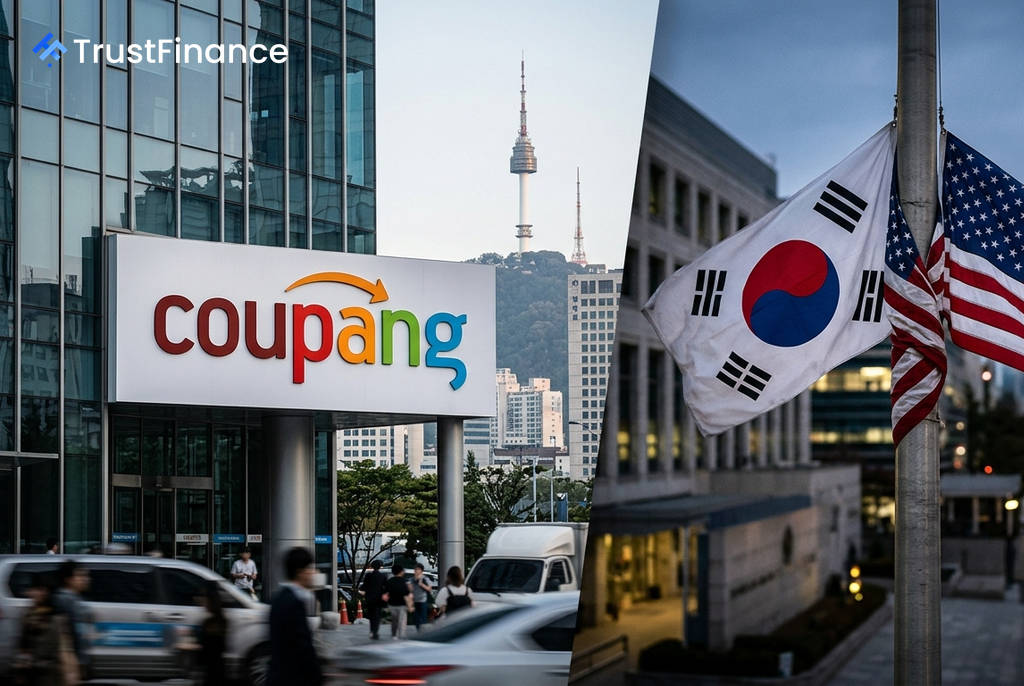
A regulatory dispute over a data leak at e-commerce firm Coupang is straining relations between the United States and South Korea, with Washington voicing criticism over a substantial fine and Seoul defending its actions as standard consumer protection. The growing friction has prompted South Korea's ambassador to the U.S. to return to Seoul for consultations, signaling the seriousness of the issue for the key allies.
The Core Dispute
The conflict began after Coupang, a Seattle-based company that is South Korea's largest online retailer, reported a data leak in November that it said impacted more than 33 million customers. In June, South Korean regulators imposed a fine of 625 billion won ($422.62 million) on the company.
Coupang has stated its intention to challenge the penalty, arguing that regulators did not adequately consider the corrective measures it implemented following the breach. A source close to the negotiations told Reuters the company had repeatedly sought a "constructive off-ramp" with Seoul over the past several months.
Escalating Political Fallout
The fine has drawn sharp criticism from some U.S. officials. A U.S. House Judiciary Committee report issued in July accused South Korea of discriminating against American-owned businesses and weaponizing its regulations. A State Department spokesperson also cautioned that South Korea "should not impose disproportionate burdens on U.S. companies."
 Ad
South Korean officials have rejected these claims, insisting the fine is not discriminatory. "It was action over a personal data leak affecting 35 million people. It would be the same for any company,” ruling Democratic Party lawmaker Park Sun-won told Reuters. The South Korean presidential office characterized the U.S. committee's report as a one-sided reflection of Coupang's position.
Broader Implications for the Alliance
The disagreement is unfolding against a backdrop of sensitive bilateral cooperation, including South Korea's $350 billion investment pledge in the U.S. and negotiations over security matters like Seoul's ambition to build nuclear-powered submarines. South Korea's Foreign Ministry has maintained that the Coupang case should not be linked to these strategic discussions.
Adding to the complexity, the U.S. State Department has also raised concerns about recent amendments to South Korean communications laws that increase penalties on content publishers for spreading false information. Washington fears the changes could lead to excessive content regulation and affect major U.S. tech platforms operating in the country.
Read next
More on Stocks
FTC Orders Walmart, Uber, Delta to Disclose Data on Personalized Pricing
The U.S. Federal Trade Commission is demanding nine major companies, including leading retail, travel, and gig economy firms, to provide information on how they use consumer data for setting individual prices and wages.

Google Launches Gemini 4 Carbon AI Model to Bolster Cybersecurity Capabilities
Alphabet's Google has unveiled Gemini 4 Carbon, its latest AI model specifically designed for advanced cybersecurity tasks like vulnerability detection and secure code generation. The launch escalates competition with rivals OpenAI and Anthropic in the enterprise AI market.

Oracle Shares Surge After Unveiling $225 Billion Revenue Target for 2030
Oracle stock rose sharply after the company presented a long-term financial outlook targeting at least $225 billion in annual revenue by fiscal 2030, driven by its expanding AI infrastructure business.

DOJ Scrutinizes Nvidia's $12.9B Hugging Face Deal Amid Broader Antitrust Probe, Sources Say
The U.S. Department of Justice is reportedly examining Nvidia's planned $12.93 billion acquisition of AI platform Hugging Face as part of a wider, ongoing antitrust investigation into the chipmaker's market conduct.