
Story
Chinese Tech Stocks Offer Steep Discounts, But Regulatory and Geopolitical Risks Remain High
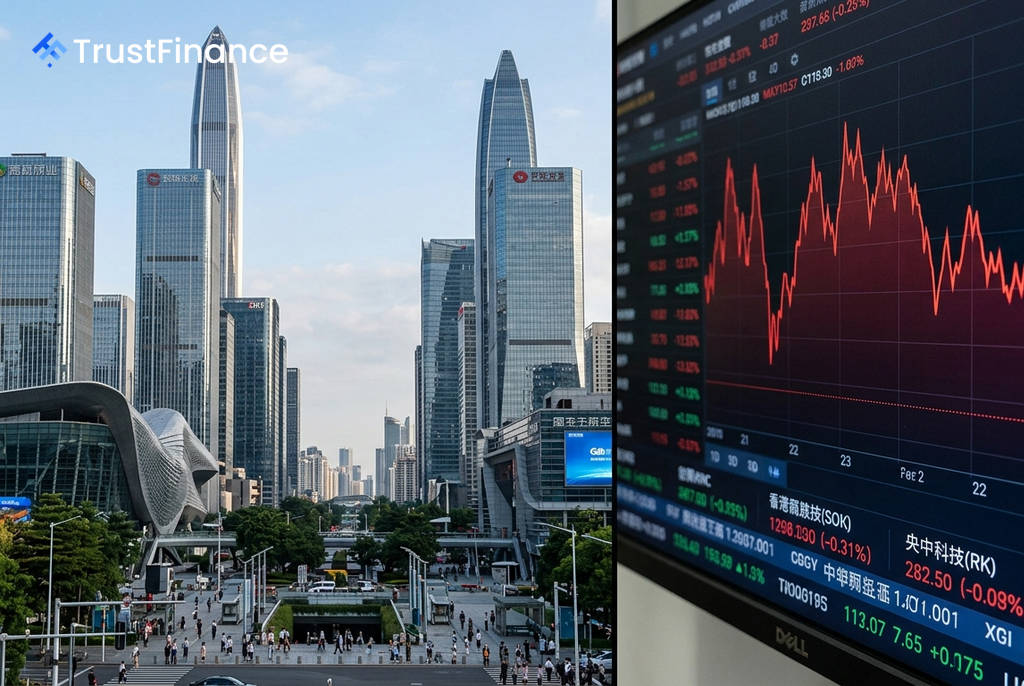
Chinese technology stocks are presenting investors with a sharp contrast between deeply discounted valuations and a formidable list of risks, leading to significant year-to-date drawdowns for many of the sector's largest names. While companies like Alibaba and Baidu have seen their market values fall, the potential for growth continues to draw cautious interest.
The Valuation Opportunity
A notable valuation gap has opened between Chinese tech giants and their U.S. peers. Despite robust earnings growth in some cases, major firms are trading at what some analysts see as a steep discount. For instance, PDD Holdings (PDD) trades at a price-to-earnings (P/E) ratio of approximately 10x, and Morgan Stanley has set an Overweight target of $148 on the stock, compared to its recent price of around $88.
Year-to-date performance highlights the sector's volatility, with most major stocks posting significant losses:
- Alibaba (BABA): -20.0%
- PDD Holdings (PDD): -24.3%
- Baidu (BIDU): -23.6%
- Xiaomi (1810.HK): -27.0%
In a notable exception, e-commerce firm JD.com (JD) has gained 11.1% year-to-date, bucking the broader trend.
A Landscape of Persistent Risks
 Ad
Investors must weigh the valuation appeal against several significant headwinds. These risks are not theoretical and have had a tangible impact on stock performance and business operations.
- Regulatory Whiplash: China's regulatory crackdown on the tech sector has not formally concluded. PDD continues to face anti-monopoly scrutiny, while Baidu's core online marketing revenue is expected to decline by 15.6% year-over-year, reflecting a structural weakening in its advertising business.
- Geopolitical Volatility: Ongoing tensions between the U.S. and China create unpredictable risks for American Depositary Receipts (ADRs), including potential delisting threats and capital flow restrictions.
- Macroeconomic Drag: A slowdown in Chinese consumer spending is directly impacting company revenues, as seen in the outlook for Baidu's advertising segment.
- Event-Driven Volatility: Single-stock risk remains high, as illustrated by Xiaomi's recent 7.3% single-day drop following a disappointing product event.
Cautious Entry Points
For risk-averse investors, a diversified approach through exchange-traded funds (ETFs) may be a more prudent strategy than investing in individual stocks. Funds like the iShares MSCI China Multisector Tech (TCHI) and the Rayliant-ChinaAMC Transformative China Tech (CNQQ) offer broader exposure, mitigating the impact of volatility in any single name.
Among individual stocks, JD.com stands out as a relative bright spot due to its positive year-to-date return and a 3% dividend yield. Barclays maintains an Overweight rating on the stock with a $41 price target, suggesting a more clearly defined risk-reward profile compared to its peers.
Read next
More on Stocks
FTC Orders Walmart, Uber, Delta to Disclose Data on Personalized Pricing
The U.S. Federal Trade Commission is demanding nine major companies, including leading retail, travel, and gig economy firms, to provide information on how they use consumer data for setting individual prices and wages.

Google Launches Gemini 4 Carbon AI Model to Bolster Cybersecurity Capabilities
Alphabet's Google has unveiled Gemini 4 Carbon, its latest AI model specifically designed for advanced cybersecurity tasks like vulnerability detection and secure code generation. The launch escalates competition with rivals OpenAI and Anthropic in the enterprise AI market.

Oracle Shares Surge After Unveiling $225 Billion Revenue Target for 2030
Oracle stock rose sharply after the company presented a long-term financial outlook targeting at least $225 billion in annual revenue by fiscal 2030, driven by its expanding AI infrastructure business.

DOJ Scrutinizes Nvidia's $12.9B Hugging Face Deal Amid Broader Antitrust Probe, Sources Say
The U.S. Department of Justice is reportedly examining Nvidia's planned $12.93 billion acquisition of AI platform Hugging Face as part of a wider, ongoing antitrust investigation into the chipmaker's market conduct.