
Story
China's Xi to Lead CEO Delegation to US in Bid to Bolster Economic Ties, Sources Say
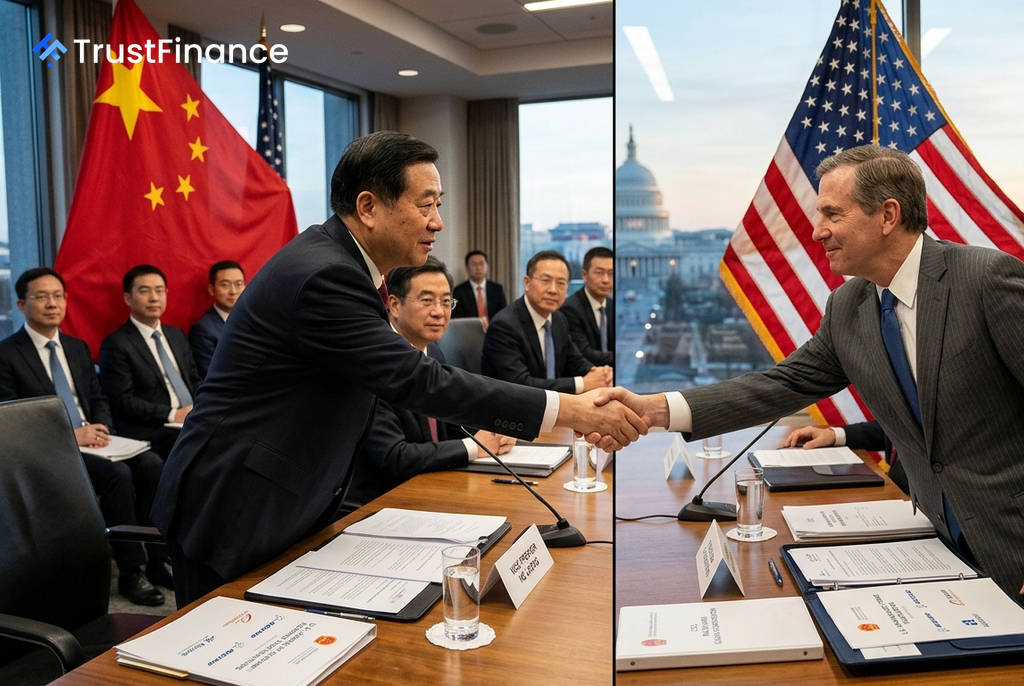
Chinese President Xi Jinping is preparing to bring a large delegation of corporate executives on his upcoming visit to Washington, a rare diplomatic move aimed at signaling Beijing's desire to stabilize commercial relations with the United States, according to sources familiar with the plans.
The inclusion of a business contingent for the September 24 summit is an unusual step for Xi, who has seldom traveled with corporate leaders since Beijing initiated a series of regulatory crackdowns on its private sector in 2020.
A Shift in Diplomatic Strategy
The move is reportedly intended to signal China's willingness to support investment and commercial ties, potentially offering the White House some economic talking points ahead of midterm elections, one source said. The composition of the delegation has not yet been determined, according to the report.
This approach contrasts with Xi's recent diplomatic trips but harks back to his 2015 U.S. visit. That trip, which included executives like Alibaba's Jack Ma, resulted in a $38 billion agreement for 300 Boeing aircraft and high-level meetings between Chinese and U.S. tech leaders.
Navigating a Tense Commercial Landscape
The delegation's visit comes amid a period of heightened scrutiny for Chinese companies in the U.S. Washington has recently implemented several restrictive trade measures, including:
 Ad
- A 100% tariff on imported Chinese electric vehicles.
- Bans on certain foreign technology imports, such as drones and routers.
- The forced divestiture of TikTok’s U.S. operations.
- Placement of major Chinese tech firms on the Commerce Department's Entity List.
According to Scott Kennedy, a China expert at the Center for Strategic and International Studies (CSIS), the move suggests Beijing will be "more intentional about the role of these business people," which could prove "really valuable."
Modest Expectations for Summit Outcomes
Despite the high-profile business presence, expectations for major breakthroughs at the summit remain modest, sources said. Discussions are ongoing between the two nations to manage trade ties through formal mechanisms, but progress has been slow. The Board of Investment, for instance, is considered unlikely to produce significant deliverables due to the challenging U.S. environment for Chinese capital.
Disagreements also persist over the definition of "non-sensitive" goods under the Board of Trade. While a final agreement on trade is a key U.S. priority, alongside securing more rare earth export licenses, sources indicate that a comprehensive resolution is not anticipated at the summit.
Read next
More on Stocks
FTC Orders Walmart, Uber, Delta to Disclose Data on Personalized Pricing
The U.S. Federal Trade Commission is demanding nine major companies, including leading retail, travel, and gig economy firms, to provide information on how they use consumer data for setting individual prices and wages.

Google Launches Gemini 4 Carbon AI Model to Bolster Cybersecurity Capabilities
Alphabet's Google has unveiled Gemini 4 Carbon, its latest AI model specifically designed for advanced cybersecurity tasks like vulnerability detection and secure code generation. The launch escalates competition with rivals OpenAI and Anthropic in the enterprise AI market.

Oracle Shares Surge After Unveiling $225 Billion Revenue Target for 2030
Oracle stock rose sharply after the company presented a long-term financial outlook targeting at least $225 billion in annual revenue by fiscal 2030, driven by its expanding AI infrastructure business.

DOJ Scrutinizes Nvidia's $12.9B Hugging Face Deal Amid Broader Antitrust Probe, Sources Say
The U.S. Department of Justice is reportedly examining Nvidia's planned $12.93 billion acquisition of AI platform Hugging Face as part of a wider, ongoing antitrust investigation into the chipmaker's market conduct.