
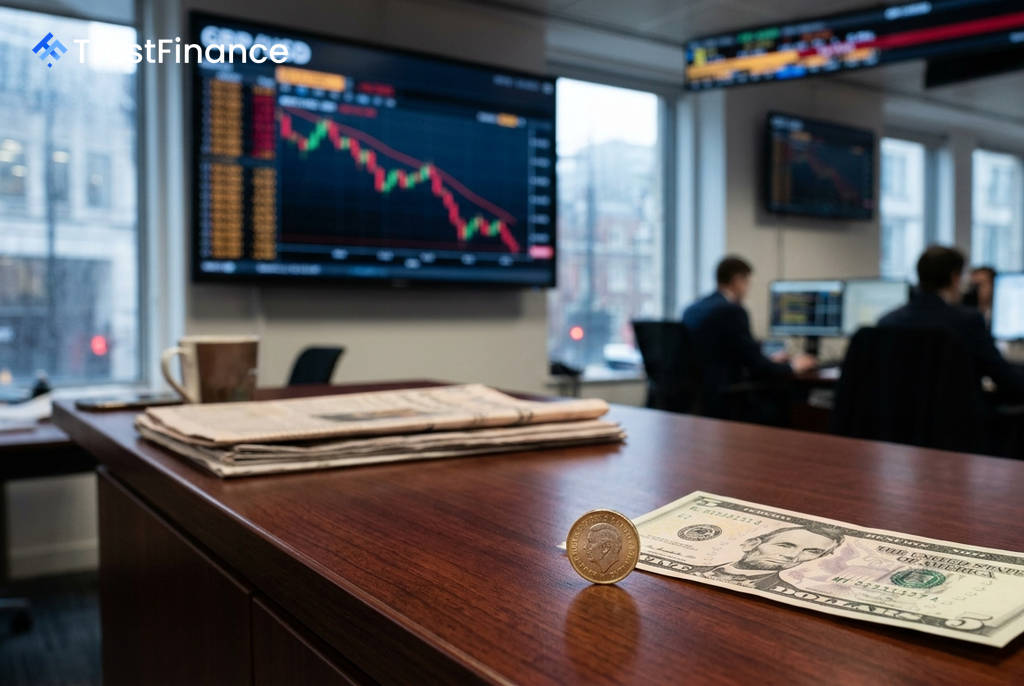
Pound Sterling Weakens as Hawkish Fed Outlook Boosts US Dollar
The British pound and the euro both fell against a broadly stronger U.S. dollar as markets repriced for a more aggressive Federal Reserve policy path following recent hawkish commentary.
Section
The latest forex coverage from the TrustFinance editorial desk.
The British pound and the euro both fell against a broadly stronger U.S. dollar as markets repriced for a more aggressive Federal Reserve policy path following recent hawkish commentary.
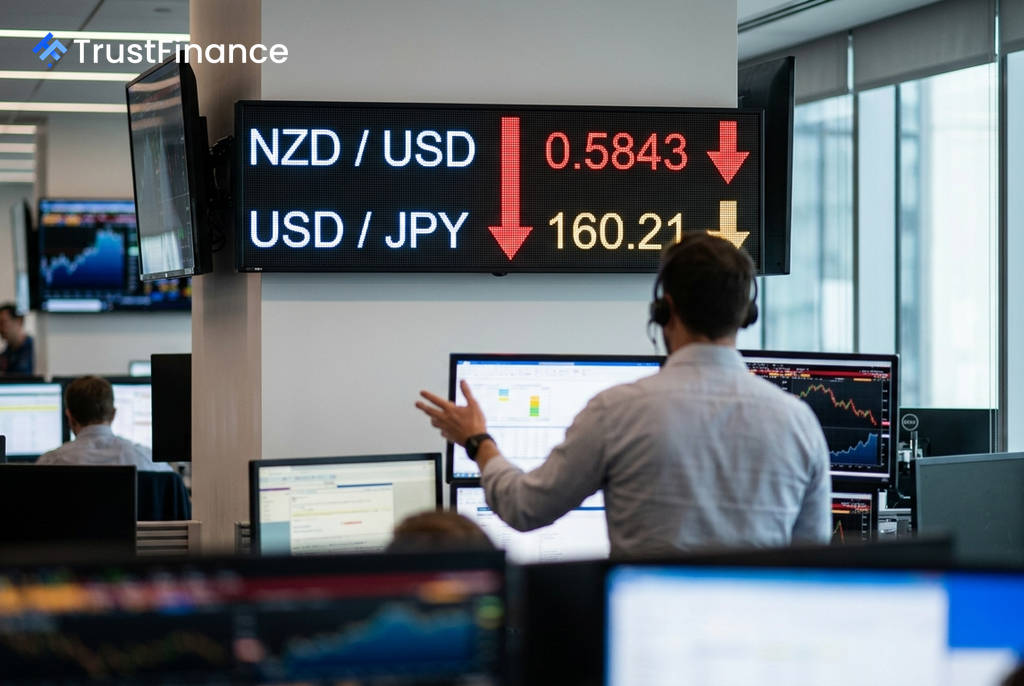
The New Zealand dollar fell sharply despite a central bank rate hike, as a less aggressive policy outlook weighed on the currency. Meanwhile, the U.S. dollar gained broadly against Asian currencies, supported by rising Treasury yields and increased bets on a Federal Reserve rate hike.
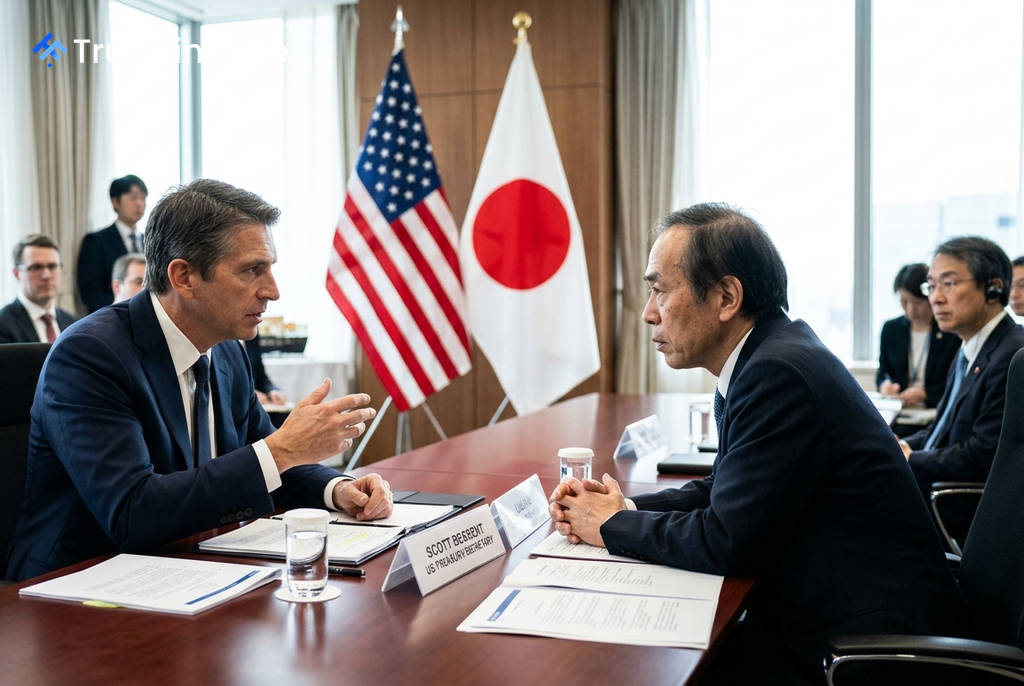
U.S. Treasury Secretary Scott Bessent has called on the Bank of Japan to implement sound monetary policy to control inflation and prevent excessive currency swings, adding to expectations of a potential rate hike.
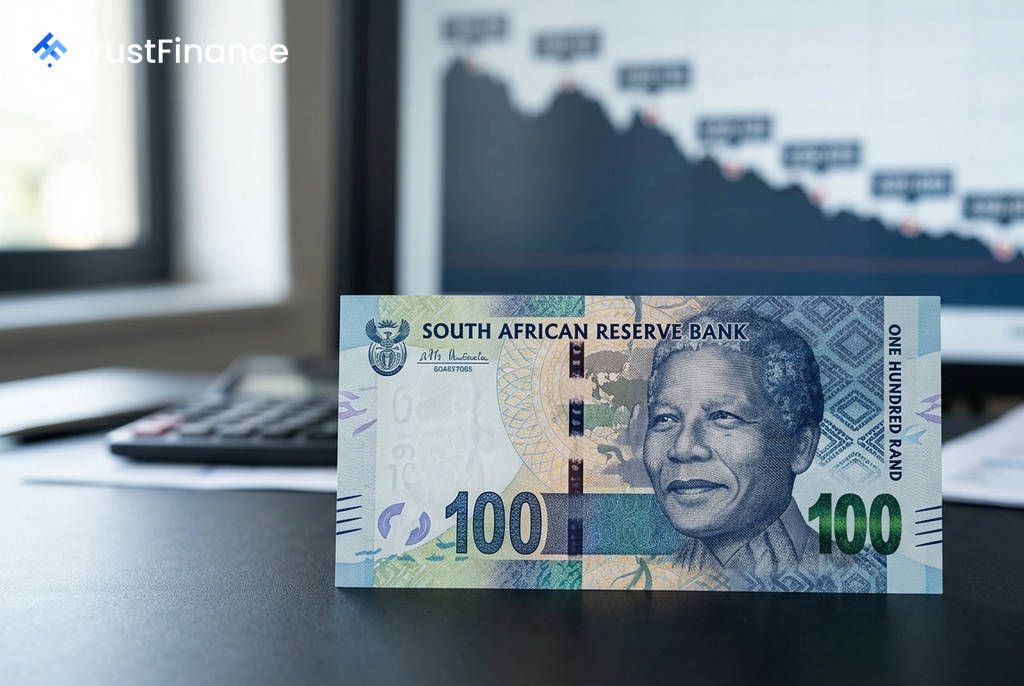
The South African rand weakened against the U.S. dollar on Tuesday after a key survey showed manufacturing sentiment fell to its lowest level of the year, signaling a contraction in the sector.
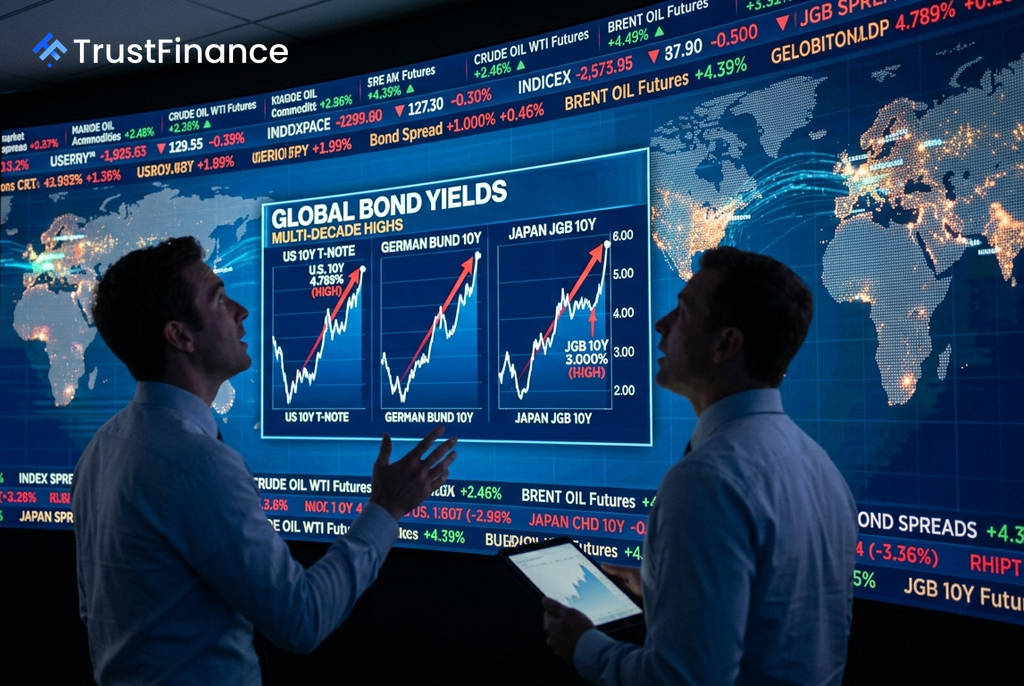
A sharp sell-off in sovereign debt has accelerated, pushing government borrowing costs in Europe and Asia to their highest levels in over a decade amid escalating geopolitical conflict and persistent central bank hawkishness.
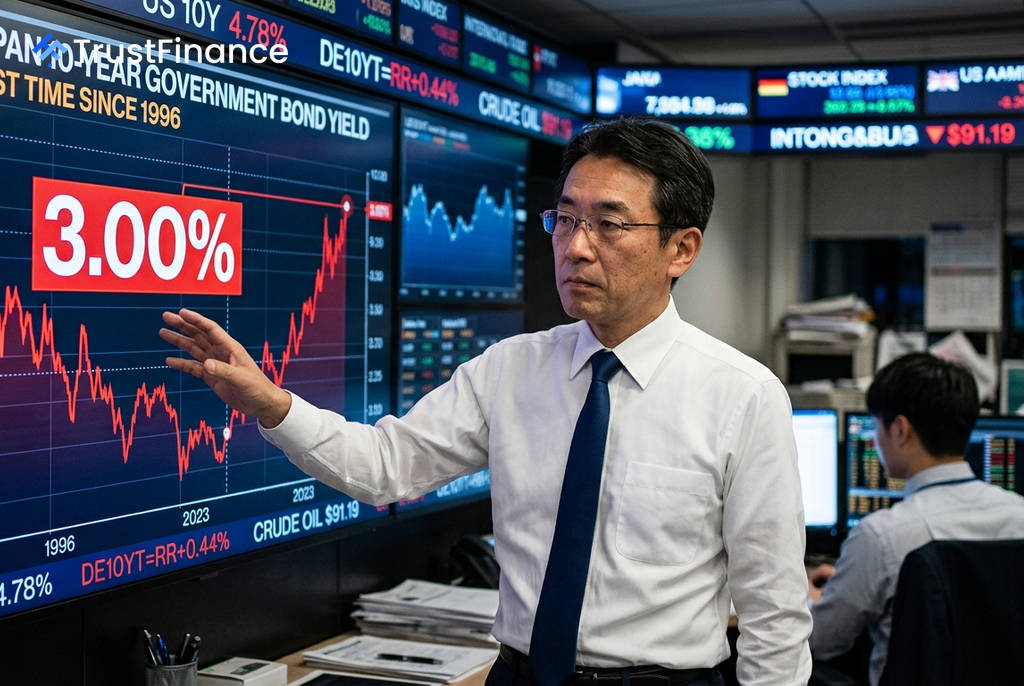
The 10-year Japanese government bond yield breached the key 3% level for the first time in three decades, as a global selloff intensifies on inflation fears and geopolitical risk. Analysts see the move as a regime change with significant implications for global capital flows and central bank policy.
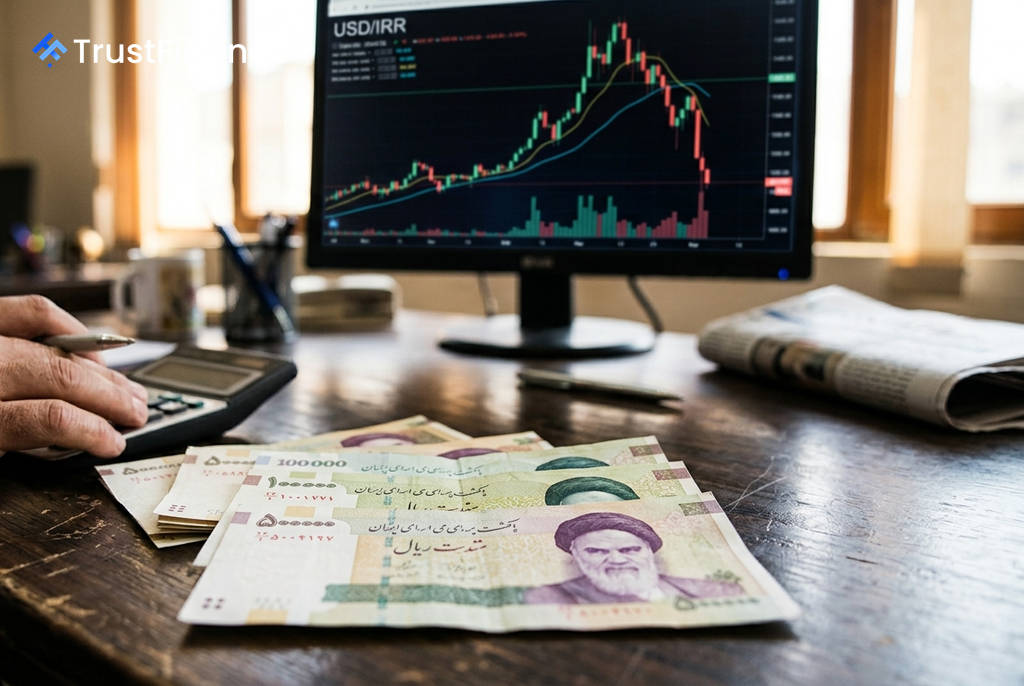
Iran's central bank governor stated the country has enough foreign currency to withstand U.S. sanctions and is prepared to inject up to $2 billion to stabilize the rial, which recently hit a record low.
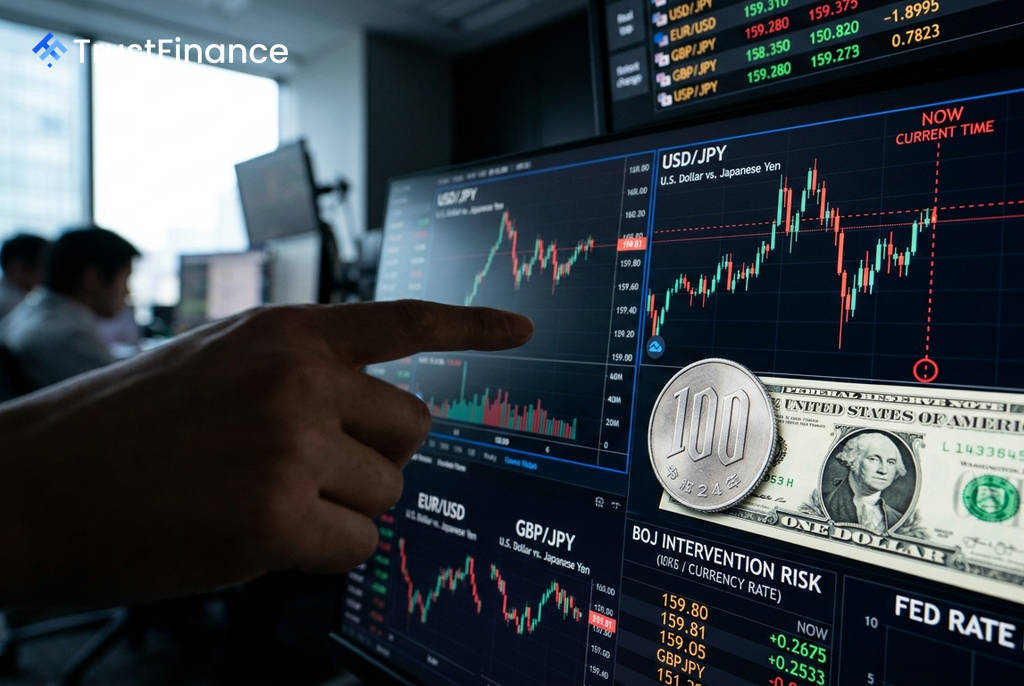
The Japanese yen traded near the closely watched 160-per-dollar level, caught between calls for Bank of Japan rate hikes and rising expectations for a September interest rate increase by the U.S. Federal Reserve.

U.S. Treasury yields climbed as hawkish comments from former Federal Reserve Governor Kevin Warsh and a sharp rise in oil prices drove market expectations for a September rate hike to nearly 60%.