
Story
Canadian Dollar Hits Two-Week High as July Inflation Tops Forecasts
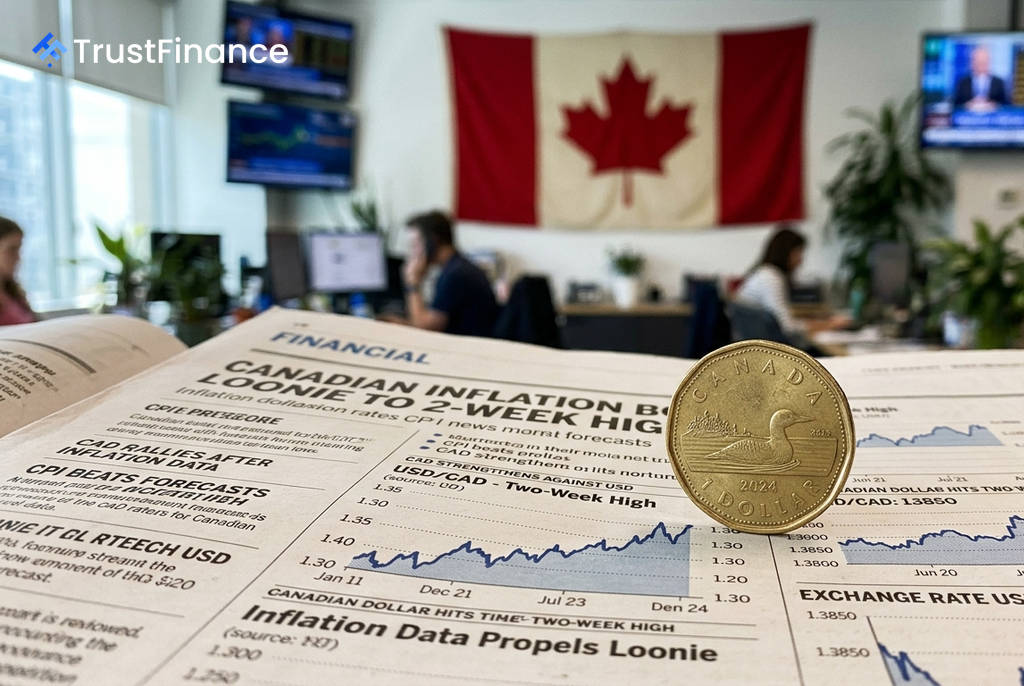
The Canadian dollar climbed to a two-week high against the U.S. dollar on Monday, supported by July inflation data that came in hotter than anticipated and a corresponding rise in government bond yields.
The loonie appreciated 0.2% to trade at 1.3850 per U.S. dollar, or 72.20 U.S. cents. During the session, it touched 1.3845, its strongest level since June 1, according to data from Investing.com.
Inflation Data Exceeds Expectations
The currency's move was driven by a report showing Canada's annual inflation rate accelerated to 3.0% in July, surpassing market forecasts of a 2.9% increase. The rise was partly attributed to higher gasoline prices linked to geopolitical factors.
Core inflation measures, which are closely watched by the Bank of Canada, remained contained. The CPI-trim and CPI-median indicators registered at 1.9% and 2.0%, respectively.
Broader Economic Context
 Ad
The inflation report follows other positive economic indicators in employment, trade, and GDP, suggesting a recovery is gaining traction after a slowdown earlier in the year. This improving outlook is also reflected in the bond market, where the yield on Canada's 10-year government bond has climbed by approximately 17 basis points over the past month.
This increase in Canadian bond yields is the second-largest among G7 sovereign bonds during the period, trailing only Japan, and signals growing investor confidence in the domestic economy.
US Tariff Headwinds Remain
Despite the positive domestic data, a key risk factor looms. The United States has announced plans to impose a 50% tariff on roughly $20 billion worth of Canadian goods, set to take effect on August 19. The targeted products represent about 5.2% of Canada's total exports to the U.S.
Economists at RBC noted that while the tariffs will create uncertainty and have a significant impact on affected sectors, they are not expected to fundamentally disrupt the overall economic recovery due to their narrow scope.
Read next
More on Forex
Polish Zloty Hits 11-Month Low Against Euro on Energy Price Pressure
The Polish zloty weakened to 4.410 against the euro, its lowest point since November 2023, as rising energy prices and caution ahead of a U.S. Federal Reserve decision weighed on the currency.

Sterling Slips as Dollar Strengthens Ahead of Fed Decision and UK Budget
The British pound lost ground against a resurgent U.S. dollar on Wednesday as market attention shifted from tech sector volatility to upcoming central bank decisions and the UK budget announcement.

Eurozone Bond Yields Climb as French Fiscal Concerns Return Ahead of Fed, ECB Decisions
Yields on French and German government bonds rose as relief from a ratings affirmation for France proved temporary, with investors refocusing on fiscal challenges and awaiting key policy verdicts from the U.S. Federal Reserve and the European Central Bank.

Canadian Dollar Slips as Markets Await Bank of Canada, Fed Decisions
The Canadian dollar edged lower against its U.S. counterpart, snapping a seven-day winning streak as investors adopted a cautious stance ahead of Wednesday's key interest rate announcements from both the Bank of Canada and the U.S. Federal Reserve.