
Story
Brinker International Options See Heavy Bearish Flow Amid Stock Sell-Off

Summary
Traders aggressively bought short-dated put options on Brinker International (EAT) as the stock fell sharply, with a put/call ratio above 2.0 indicating expectations of further near-term downside.
Brinker International (NYSE:EAT) experienced a significant surge in bearish options activity on Tuesday as its stock price declined. The heavy volume in put options, particularly those with a very short time to expiration, suggests traders are positioning for further downward pressure on the restaurant operator's shares in the immediate term.
A Closer Look at the Options Flow
According to market data from September 15, options volume on Brinker was heavily skewed toward puts. The total volume reached 2,830 contracts, with 1,932 puts trading against just 898 calls. This resulted in a put/call ratio of approximately 2.15, more than double the neutral benchmark and a strong signal of bearish sentiment.
The most notable activity centered on contracts expiring in just three days, on September 18, 2026:
- The $200 strike put saw 825 contracts trade, nearly doubling its prior open interest of 427. This indicates a high likelihood of new bearish positions being opened.
- The $195 strike put also saw significant volume of 602 contracts.
The focus on such short-dated options implies a high degree of conviction from traders that a downward move is imminent, as they are paying a premium for protection that will quickly lose value due to time decay.
Technicals and Volatility Reinforce Caution
 Ad
AdThe options activity coincided with a 4.72% drop in Brinker's stock to $204.06 as of mid-afternoon trading on September 15. The daily technical indicators for the stock were categorized as a "Strong Sell," with the Relative Strength Index (RSI) at 36.2, suggesting it had more room to fall before becoming technically oversold.
Furthermore, the targeted strike prices of $200 and $195 align closely with the stock's weekly technical support levels, which are noted at $205.07 (S1) and $197.63 (S2). This suggests traders are targeting technically significant price floors. Elevated 3-month implied volatility of 50.25% also reflects heightened market uncertainty surrounding the stock.
Context: Near-Term Pressure vs. Long-Term Trend
While the near-term signals point squarely to downside risk, it is important to view this activity in a broader context. On a weekly timeframe, the stock's technical posture remains a "Strong Buy," according to Investing.com data. Brinker's shares have had a strong year, up 40.79% year-to-date as of September 15.
This divergence suggests that the current bearish positioning may be a tactical play on a sharp pullback within a longer-term uptrend, rather than a fundamental reversal of the stock's positive trajectory. The market will be watching closely to see if the key $200 support level holds in the coming sessions.
Read next
More on Stocks
Orion180 Prices IPO at $12 Per Share, Targeting $240 Million Raise
Florida-based insurer Orion180 Insurance Group Inc. has priced its initial public offering of 20 million shares at $12.00 each, aiming to raise $240 million ahead of its debut on the Nasdaq.

Nucor Stock Slides After Q3 Earnings Guidance Misses Analyst Forecasts
Nucor Corporation (NUE) shares fell after the company projected third-quarter earnings of $5.55 to $5.65 per share, below the Wall Street consensus of $5.99, citing the absence of significant one-time gains from the prior quarter.
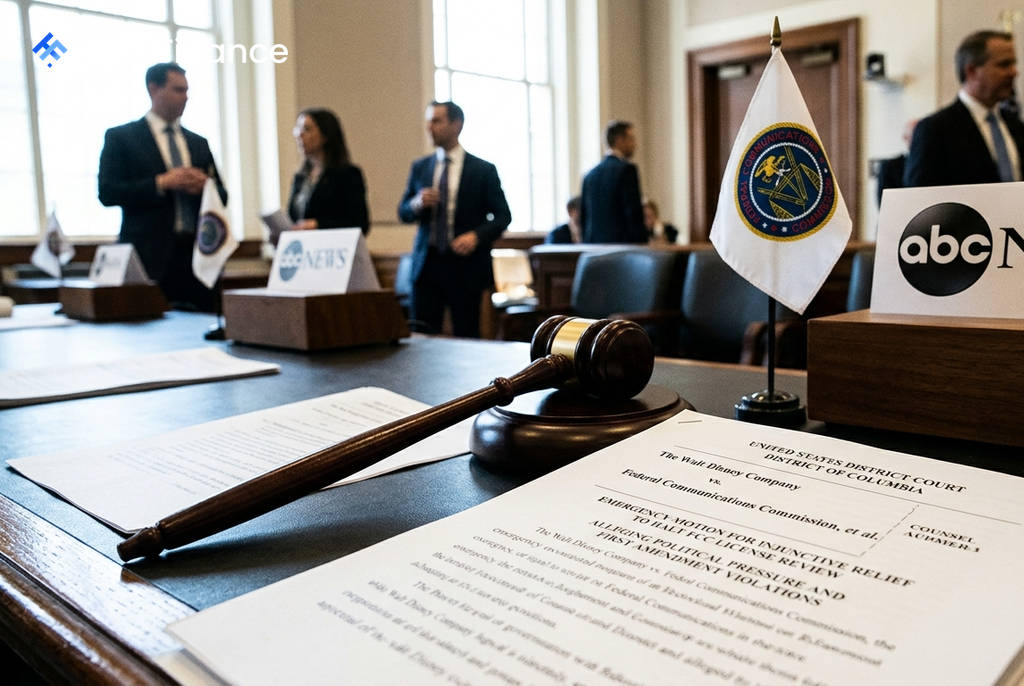
Disney Asks Court to Halt FCC License Review, Alleges Political Pressure From Trump
The Walt Disney Company has filed a legal challenge to stop the Federal Communications Commission from conducting an early review of its ABC station licenses, claiming the regulator is acting on President Trump's directives.
Starbucks Settles Florida Lawsuit Over Diversity Policies for $1 Million
The coffee giant has agreed to settle a lawsuit with Florida's attorney general, pledging to avoid race- or sex-based quotas in its employment practices and pay $1 million to cover the state's litigation costs.