
Story
Bitcoin Holds Above $64,000 Amid Key U.S. Regulatory and Institutional Moves
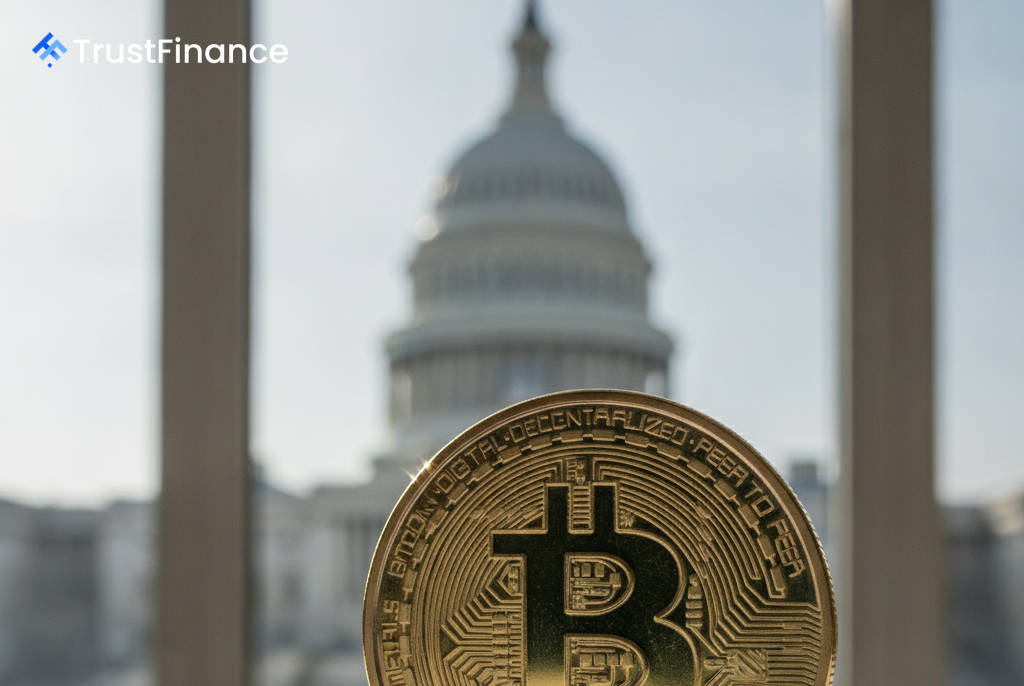
Bitcoin held its ground above the $64,000 mark on Saturday, sustaining a recovery from an earlier weekly dip as market participants weighed significant U.S. regulatory developments and further signs of institutional adoption.
As of 1:15 p.m. ET, the world's largest cryptocurrency was trading at $64,197.6, a 0.60% gain on the day, after touching an intraday high of $64,489.8, according to Investing.com data.
U.S. Policy Shifts Take Center Stage
A key development came as a four-year ban on a U.S. central bank digital currency (CBDC) was set to take effect. The restriction, which prevents the Federal Reserve from issuing a digital dollar through the end of 2030, was part of a housing bill that became law after President Donald Trump declined to sign or veto it.
This move is viewed by many in the industry as a positive for privately issued stablecoins, as it removes a potential government-backed competitor. The President's inaction on the bill, however, has also raised questions about potential political delays for other proposed digital asset legislation.
Institutional Adoption Advances
On the institutional front, Circle, the issuer of the USDC stablecoin, received final approval from the Office of the Comptroller of the Currency (OCC) to establish a federally supervised national trust bank. The approval allows Circle to provide digital asset custody services under direct federal oversight and could eventually allow for OCC-supervised management of USDC reserves.
 Ad
This development is the latest example of the crypto sector's gradual integration into the traditional U.S. financial system, as a growing number of firms obtain federal banking charters.
Market Outlook and Maturation
Despite the positive fundamental news, some analysts are urging investors to temper expectations for Bitcoin's future price cycles. While long-term forecasts remain high, historical data suggests that each four-year halving cycle has produced progressively smaller gains as the asset has matured.
Analysts point to several factors that could lead to more sustainable, but less dramatic, returns over time:
- Growing institutional ownership
- The widespread adoption of spot Bitcoin ETFs
- A deeper and more liquid derivatives market