
Story
Baltic Dry Index Caps Strong Week with 1.2% Gain on Capesize Strength
Summary
The Baltic Dry Index rose to 2,944, finishing the week up 8.4%, as a surge in the capesize vessel segment pointed to strong demand for industrial commodities like iron ore.
The Baltic Dry Index, a key global benchmark for shipping costs of raw materials, advanced on Friday, driven by a significant rise in rates for larger capesize vessels. The gains capped a strong weekly performance for the index, reflecting robust demand for key industrial commodities.
Index Performance Details
According to data from the Baltic Exchange, the main composite index saw broad-based gains for the week, with the capesize segment showing notable strength.
- The main Baltic Dry Index (BDI), which tracks rates for capesize, panamax, and supramax vessels, increased by 34 points, or 1.2%, to close at 2,944.
- For the week, the main index posted a substantial gain of 8.4%.
- The Capesize Index rose 86 points, or 1.9%, to 4,655, concluding the week with an increase of approximately 13.5%.
- The Panamax Index was little changed on the day at 2,253, but it secured a 2.3% gain for the week.
Capesize Rates Lead the Charge
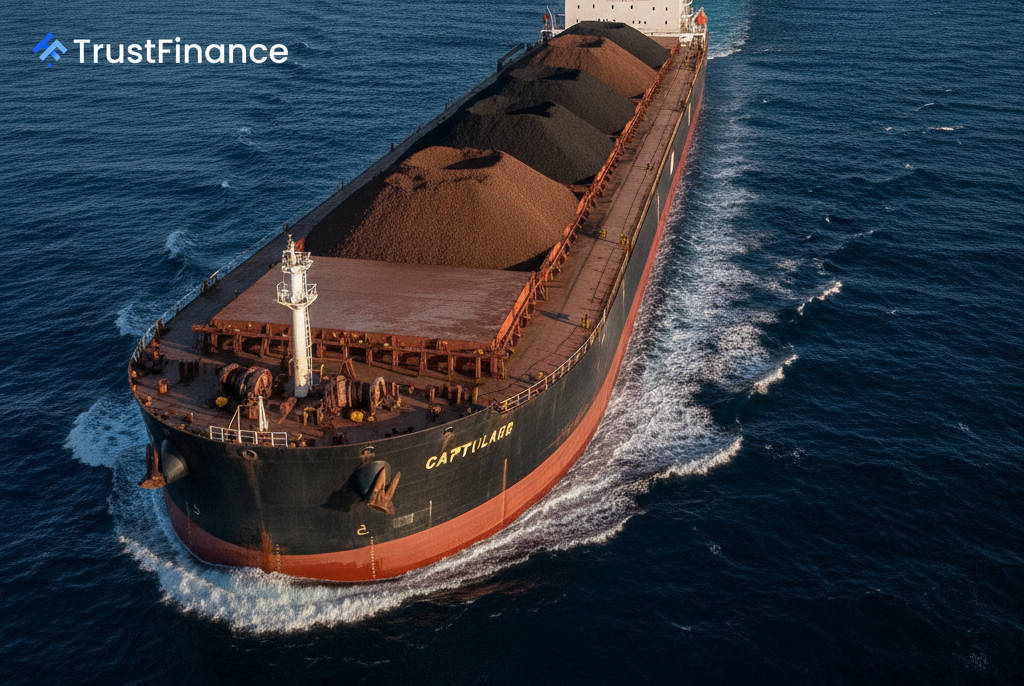
The primary driver for the index's upward momentum was the capesize segment. Average daily earnings for these large vessels, which typically transport 150,000-ton cargoes like iron ore and coal, climbed by $780 to $38,711, according to the exchange data.
 Ad
AdThis strength in shipping rates corresponds with recent activity in the iron ore market. The source material noted that iron ore futures rose on Friday, supported by factors including seasonally lower shipments from Australia and destocking at major Chinese ports, which can increase demand for seaborne cargo.
What This Means for Markets
The Baltic Dry Index is often viewed by analysts as a leading indicator of global economic activity, as it reflects real-time demand for the raw materials that fuel manufacturing and construction. A rising index generally points to healthy demand for commodities.
The sustained increase in shipping rates, particularly for the capesize vessels that dominate long-haul iron ore and coal routes, suggests that demand for these industrial inputs remains solid.