
Story
AI Boosts Market Efficiency but Raises 'Tail Risk' Concerns, Bernstein Says
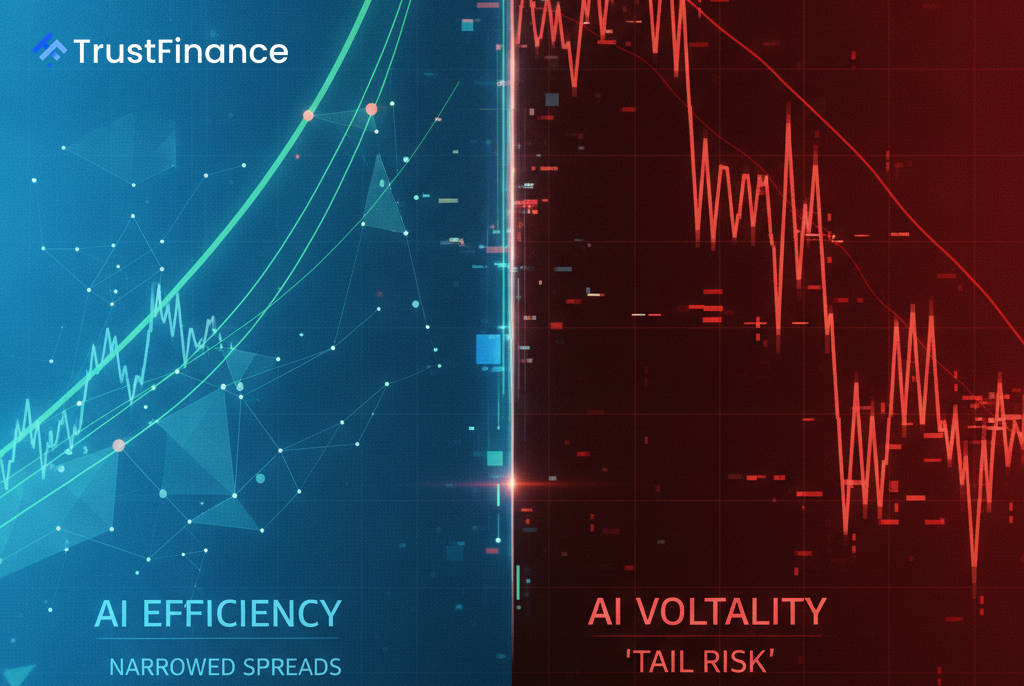
Artificial intelligence is making financial markets more efficient in many respects but is also introducing new vulnerabilities that could lead to greater volatility and market dislocations, according to a research note from Bernstein.
The Efficiency Gains
Analysts at Bernstein found that AI is improving market efficiency at the company level by processing earnings reports, regulatory filings, and alternative datasets faster than human counterparts. This acceleration helps to narrow information gaps, improve price discovery, and reduce the magnitude of earnings surprises as analyst forecasts converge more quickly with actual results.
The technology is also reshaping the research process itself. Key benefits include:
- Automated workflows that cut the time needed for earnings reviews and financial model updates.
- Expanded analyst coverage, allowing analysts to follow more companies, particularly in historically under-researched areas like emerging market small caps.
This expanded coverage could eventually help reduce the long-standing valuation premium often associated with thinly followed stocks, the note suggests.
New Risks and Volatility
 Ad
Despite the benefits, the note warns that widespread adoption of similar AI models could create systemic risks. As more investors use comparable tools trained on overlapping data, trading signals could become increasingly synchronized, leading to crowded positions and more severe market reversals during periods of stress.
Bernstein pointed to recent events as examples of these risks, including the August 2024 unwind of the yen carry trade and instances where AI-generated misinformation briefly moved U.S. equities. These examples illustrate how automated strategies can accelerate volatility before human investors have time to verify new information.
The 'Reflexivity Problem'
A further concern highlighted by the analysts is the "reflexivity problem." This describes a potential feedback loop where AI-generated recommendations increasingly influence investor behavior, pushing asset prices in a way that reinforces the models' future outputs.
Such a cycle could strengthen momentum trades, increase market concentration in a handful of names, and produce larger valuation extremes. The overall conclusion from Bernstein is that while AI will likely reduce average market inefficiencies, it will simultaneously increase the likelihood of larger, more sudden dislocations, resulting in greater tail risk.