
Story
Yen Nears 40-Year Low as Lack of Intervention Emboldens Traders
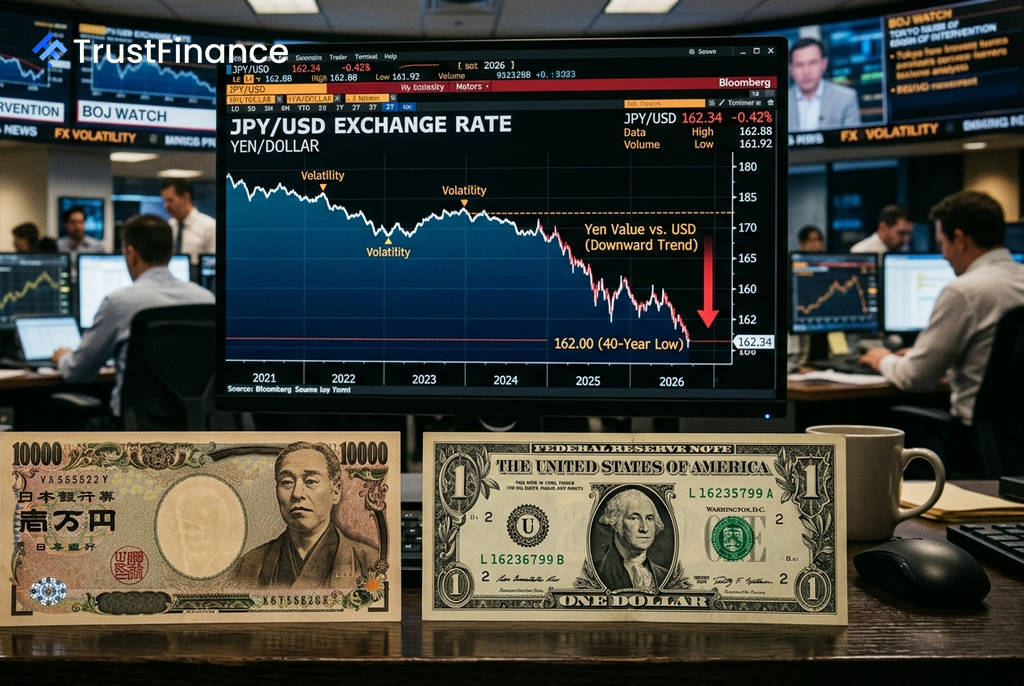
The Japanese yen weakened in early Tuesday trading, hovering near a 40-year low against the U.S. dollar, as the absence of intervention from Tokyo emboldened traders to push the currency lower.
Yen Hits Multi-Decade Lows
The yen's slide was broad-based, with the currency struggling on the weaker side of 162 per dollar. The pressure was also evident against other major currencies, as reported by Reuters.
- Against the British pound, the yen languished near its lowest point since 2007 at 217.09.
- The euro also advanced, last buying 185.47 yen following a 0.5% gain in the previous session.
Intervention Watch Continues
The move comes after market speculation that Japanese authorities might act to support the currency during the recent U.S. holiday, a period of typically lower market liquidity. However, no such action materialized.
 Ad
"There had been speculation at the end of last week that Japan could intervene again... but no action has been taken, contributing to the yen giving back some of its recent gains," said Lee Hardman, senior currency analyst at MUFG. This inaction is being interpreted by some investors as a signal to continue testing the Ministry of Finance's tolerance for yen weakness.
Broader Market Context
While the yen fell, the U.S. dollar was on softer footing against other currencies following a recent jobs report that came in below expectations. The Dollar Index, which measures the greenback against a basket of peers, was last at 100.86.
Investors have pared back expectations for U.S. rate hikes, with markets now pricing in roughly 29 basis points of Federal Reserve cuts by December, down from about 38 bps a week ago. Market participants are now awaiting the minutes from the Federal Open Market Committee’s (FOMC) June meeting on Wednesday for further insight into the U.S. rate outlook.