
Story
What Is a Forex 'Rate Check'? A Key Central Bank Signaling Tool
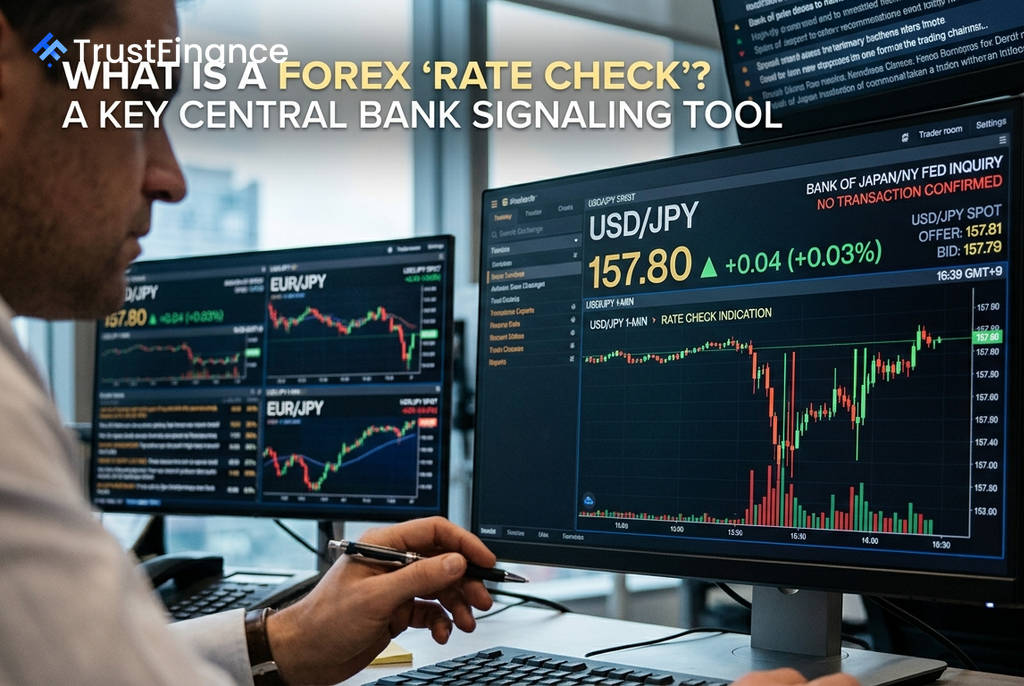
A "rate check" is a signal that monetary authorities are closely monitoring a currency and may be preparing to intervene in the market, but the action itself involves no actual trading, according to strategists at Bank of America cited by Investing.com.
This maneuver serves as a middle ground between verbal intervention, where officials try to influence exchange rates through public statements, and direct intervention, which involves spending government funds to buy or sell a currency.
How It Works
During a rate check, a central bank or government agency asks financial institutions for a reference exchange rate or a firm, tradable quote. After receiving the quote, the authority chooses not to execute a trade.
The primary purpose is to signal to the market that officials are present and watching, which can deter speculative trading. It provides policymakers with a tool to influence exchange rates without immediately deploying financial reserves.
Recent Examples and Market Impact
Japan has historically used rate checks before conducting formal interventions to support the yen. The United States reportedly followed suit for the first time in January 2026, when a query from the New York Federal Reserve was interpreted by markets as a sign of alignment with Tokyo over concerns about a weak yen.
 Ad
More recently, the New York Fed was reported to have conducted another rate check last week in the USD/JPY pair on behalf of the U.S. Treasury, following a Japanese intervention to buy yen. The news briefly caused the USD/JPY pair to fall by approximately 0.8% before it recovered its losses. U.S. officials have not confirmed any actual transactions.
A separate rate check involving the EUR/JPY pair was considered more unusual, as interventions typically target a country's own currency. The signal from Washington on a euro-related pair raised questions among market participants.
Outlook and Limitations
Repeated rate checks may lose their effectiveness if the market comes to believe that no actual intervention will follow. As traders become accustomed to the tactic, its impact can diminish over time.
Without further policy action, strategists believe the USD/JPY could drift back toward the mid-160s. A more significant impact would be seen if government-led intervention successfully pushes the exchange rate below 155, which could force investors to unwind short-yen positions and prompt Japanese exporters to readjust their currency hedging strategies.
Read next
More on Forex
Polish Zloty Hits 11-Month Low Against Euro on Energy Price Pressure
The Polish zloty weakened to 4.410 against the euro, its lowest point since November 2023, as rising energy prices and caution ahead of a U.S. Federal Reserve decision weighed on the currency.

Sterling Slips as Dollar Strengthens Ahead of Fed Decision and UK Budget
The British pound lost ground against a resurgent U.S. dollar on Wednesday as market attention shifted from tech sector volatility to upcoming central bank decisions and the UK budget announcement.
Eurozone Bond Yields Climb as French Fiscal Concerns Return Ahead of Fed, ECB Decisions
Yields on French and German government bonds rose as relief from a ratings affirmation for France proved temporary, with investors refocusing on fiscal challenges and awaiting key policy verdicts from the U.S. Federal Reserve and the European Central Bank.

Canadian Dollar Slips as Markets Await Bank of Canada, Fed Decisions
The Canadian dollar edged lower against its U.S. counterpart, snapping a seven-day winning streak as investors adopted a cautious stance ahead of Wednesday's key interest rate announcements from both the Bank of Canada and the U.S. Federal Reserve.