
Story
Venezuela's Promised Elections Face Significant Delays Amid Institutional Reforms, US Focus on Stability

Summary
A promised democratic transition in Venezuela is likely to be delayed until late 2027 or beyond, according to political sources, as the interim government focuses on complex judicial and electoral reforms and the U.S. prioritizes economic stability and oil interests.
Venezuela's long-awaited elections may be delayed for a year or more, with some analysts projecting a vote is unlikely before late 2027, according to multiple political sources cited by Reuters. The delay stems from the significant institutional overhaul required and a U.S. focus on economic stability over a rapid political transition.
Acting President Delcy Rodriguez, who assumed power after a U.S. raid captured former President Nicolas Maduro, recently told the UN General Assembly that her government was preparing for elections. However, she provided no specific timeline for the vote.
Tricky Institutional Reforms
The primary obstacle is the planned replacement of all 32 Supreme Court judges and the five directors of the National Electoral Council. Opposition groups and international observers have long criticized these bodies for lacking independence, alleging that the 2018 and 2024 re-elections won by Maduro were fraudulent.
These reforms are currently being discussed in U.S.-backed talks between the interim government and an opposition faction. Even after new officials are appointed, significant logistical work remains. According to Oswaldo Martinez of the Caracas-based consultancy ORC, updating voter rolls and resolving operational questions like the voting method could take up to a year on its own.
US Prioritizes Economic Stability
Washington has signaled that economic and social stability are prerequisites for a political transition, influencing the electoral timeline. This stance suggests a preference for a managed process over a swift vote that could destabilize the nation and its critical oil sector.
 Ad
Ad- U.S. Secretary of State Marco Rubio stated this week, "What would threaten an enduring republic in Venezuela would be that someone is elected and they inherit a complete catastrophe, economic and social, and then the whole project is endangered."
- Risa Grais-Targow, Latin America director at Eurasia Group, noted that the Trump administration is "prioritizing economic stability and oil-related deals," suggesting new elections won't be held until late 2027 at the earliest.
This approach has drawn criticism that the U.S. is sidelining the Venezuelan opposition in favor of securing oil and investment deals. Last month, President Donald Trump announced a major U.S. initiative to take control of a fifth of the country's oil reserves.
Implications for Markets and Politics
The extended timeline indicates that for now, both Washington and Caracas are treating the political transition as a "longer-term" and "open-ended" process, according to Nicholas Watson of consultancy Teneo. The immediate priority appears to be economic normalization, with a heavy focus on U.S. commercial interests.
This dynamic has left prominent opposition figures like Maria Corina Machado absent from the current talks. Some U.S. lawmakers have also expressed concern, arguing that Washington has not yet secured meaningful democratic concessions from Rodriguez’s government in exchange for its cooperation.
Read next
More on Commodities
Iran Proposes Seven-Day Plan to U.S. to Reopen Strait of Hormuz
Iranian Foreign Minister Abbas Araqchi announced a 'concrete' seven-day plan to restore passage through the Strait of Hormuz, stating the decision now rests with the United States. The proposal could have significant implications for global oil markets.

Soybean Futures Edge Higher as Market Awaits US-China Trade Details
Soybean prices rose as traders anticipated concrete news from a US-China summit, while rain-delayed harvests in the Midwest tightened near-term supplies.

Indian State Refiners Seek 2.75 Million Tons of U.S. LPG for 2027 Delivery
A consortium of India's state-owned oil companies, including Indian Oil and Bharat Petroleum, has issued a joint tender to import approximately 2.75 million metric tons of liquefied petroleum gas from the United States for delivery throughout 2027.
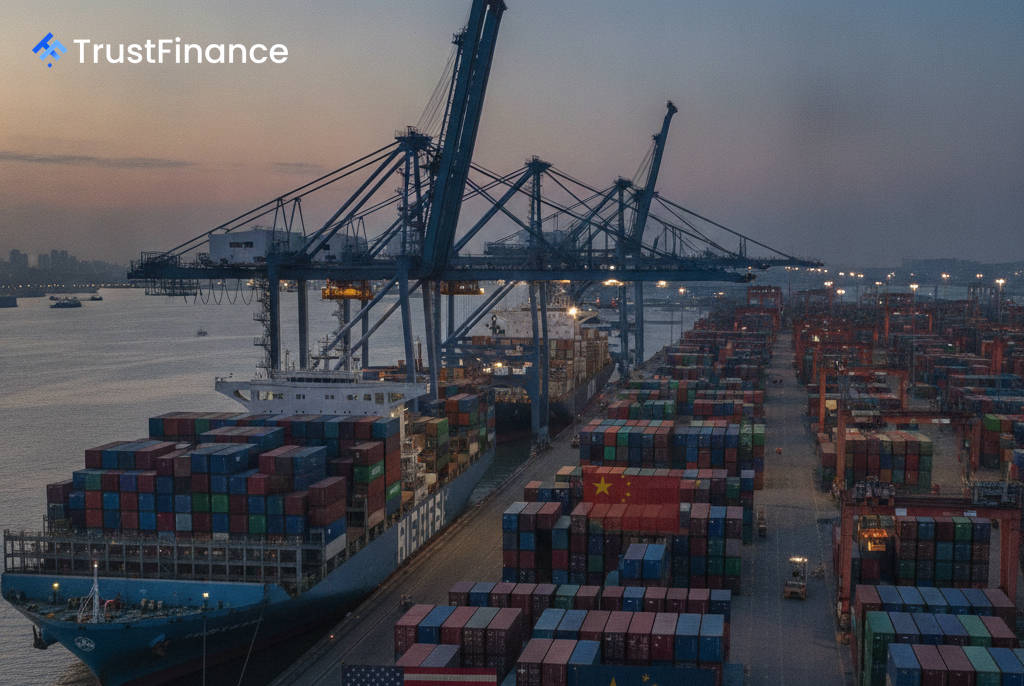
US to Detail China Trade Progress on Monday, USTR Greer Says
The United States will release details on Monday regarding recent trade negotiations with China, which include an agreement to exempt certain goods from potential future tariffs, U.S. Trade Representative Jamieson Greer announced.