
Story
US to Double Tariffs on Canadian Autos to 50% After Trade Talks Collapse
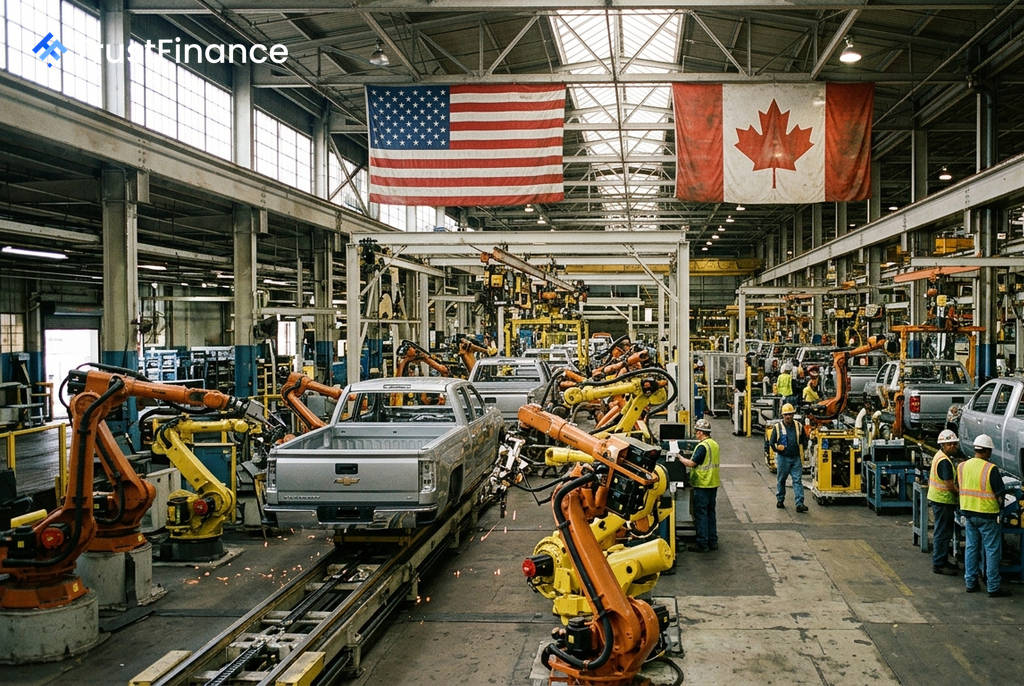
The Trump administration on Monday announced plans to more than double tariffs on vehicles, trucks, and auto parts imported from Canada to 50%, a move set to take effect on January 1. The decision marks a sharp reversal from recent trade negotiations, where automakers had anticipated a reduction in the current 25% levy.
A Reversal of Expectations
Just last week, the auto industry was hopeful that summer trade talks between the U.S. and Canada would provide tariff relief. A proposed deal would have lowered the rate on Canadian cars and light-duty trucks from 25% to 15%, according to a Reuters report. Instead, the collapse of those talks led to President Donald Trump's declaration of a significantly higher levy.
"We cannot end up in a place come January next year where Canada... is being treated like China," one industry executive told Reuters, highlighting the severity of the planned increase. Some industry sources speaking to the news agency expressed hope that the January deadline leaves room for a resolution before the new tariffs are implemented.
Impact on Automakers and Supply Chains
The tariff hike threatens to add significant costs for automakers with deeply integrated North American supply chains. While Canadian-built vehicles accounted for about 6% of U.S. sales in 2025, according to Barclays, the impact will be concentrated on several high-volume models.
 Ad
Key models and manufacturers exposed to the higher tariffs include:
- General Motors (GM): Approximately 17% of its top-selling Chevrolet Silverado pickup trucks are produced in Canada, Barclays research shows.
- Stellantis: The company's Chrysler Pacifica minivan, a key model, is manufactured exclusively in Canada.
- Ford: The automaker is preparing to import its Super Duty large trucks from a plant in Oakville, Ontario.
- Toyota and Honda: The two Japanese automakers represented over 75% of the 1.2 million vehicles produced in Canada in 2025, with a large portion shipped to the U.S., according to Global Automakers of Canada.
An Uneven Competitive Landscape
Detroit auto executives have already been voicing concerns that existing trade policies place them at a disadvantage. Separate trade deals have set tariffs on imports from key Asian and European markets at 15%, while the levy on North American partners has remained at 25%.
The administration has also considered requiring Canadian and Mexican imports to have 50% U.S.-made content to qualify for lower tariffs—a standard not applied to rivals in Asia or Europe. A senior Honda executive warned on Tuesday that the trade uncertainty could jeopardize future investments, such as a potential eighth assembly plant in North America. GM, Ford, Stellantis, and Toyota either declined to comment or did not immediately respond to Reuters' requests for comment.
Read next
More on Stocks
FTC Orders Walmart, Uber, Delta to Disclose Data on Personalized Pricing
The U.S. Federal Trade Commission is demanding nine major companies, including leading retail, travel, and gig economy firms, to provide information on how they use consumer data for setting individual prices and wages.

Google Launches Gemini 4 Carbon AI Model to Bolster Cybersecurity Capabilities
Alphabet's Google has unveiled Gemini 4 Carbon, its latest AI model specifically designed for advanced cybersecurity tasks like vulnerability detection and secure code generation. The launch escalates competition with rivals OpenAI and Anthropic in the enterprise AI market.

Oracle Shares Surge After Unveiling $225 Billion Revenue Target for 2030
Oracle stock rose sharply after the company presented a long-term financial outlook targeting at least $225 billion in annual revenue by fiscal 2030, driven by its expanding AI infrastructure business.

DOJ Scrutinizes Nvidia's $12.9B Hugging Face Deal Amid Broader Antitrust Probe, Sources Say
The U.S. Department of Justice is reportedly examining Nvidia's planned $12.93 billion acquisition of AI platform Hugging Face as part of a wider, ongoing antitrust investigation into the chipmaker's market conduct.