
Story
US Restricts Foreign Electrical Grid Equipment, Citing National Security
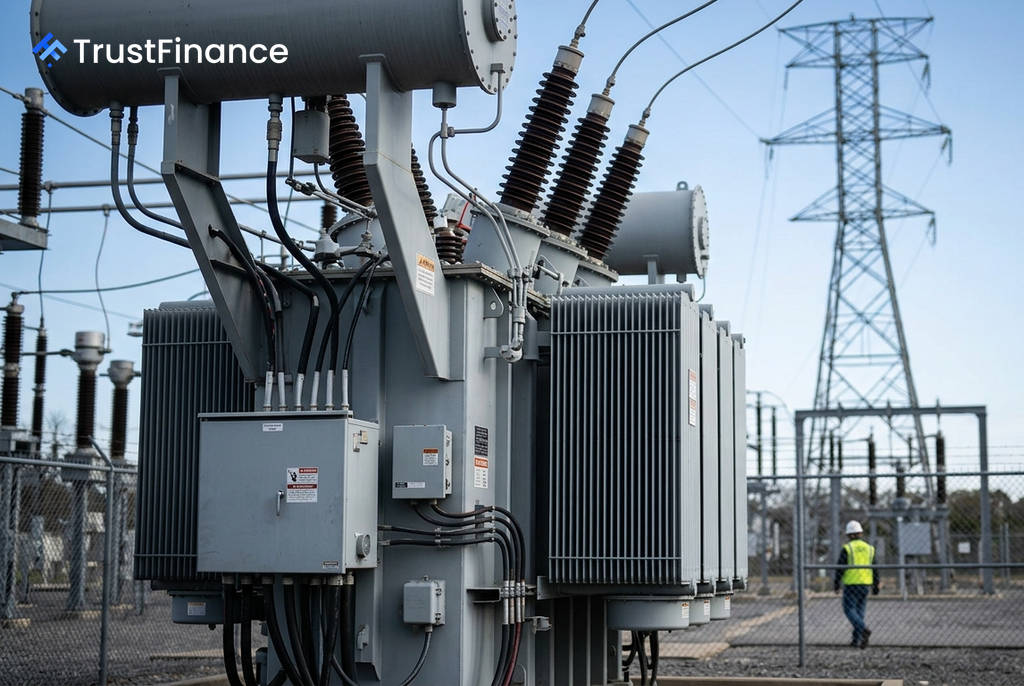
The White House has declared a national emergency over the foreign supply of bulk-power system components, issuing an executive order on Thursday that restricts the import and installation of certain electrical equipment. The order is aimed at mitigating what the administration deems an undue risk to the integrity of the U.S. power grid and national security.
Details of the Executive Order
The order grants the administration the authority to prohibit transactions involving electrical equipment designed, manufactured, or supplied by entities under the control or jurisdiction of a designated "Covered Foreign Entity." The restrictions apply specifically to the bulk-power system, which includes equipment rated at 69 kilovolts (kV) or higher for the interconnected energy grid, rather than local distribution networks.
Covered product categories specified in the order include:
- Transformers, inverters, and uninterruptible power supplies (UPS)
- High-voltage equipment such as circuit breakers
- Generators and generation turbines
- Battery energy storage systems (BESS)
- Industrial control systems, including programmable logic controllers (PLCs)
Market Impact and Analyst Commentary
 Ad
According to analysts at Citi, the executive order appears to be "effectively aimed at Chinese suppliers." The firm views the development as a moderate net positive for European industrial firms, particularly Siemens Energy. By constraining the ability of Chinese companies to enter or expand in the U.S. market, the order could allow other international players to defend market share and potentially increase prices.
Citi noted that the tight U.S. market for grid components had attracted Asian suppliers, including from China, who were often able to offer relatively quick delivery times. The new restrictions could also improve profitability for Wartsila’s Storage joint venture by limiting competition from Chinese BESS suppliers, the analysts added.
Supply Chain Context
For a company like Siemens Energy, the order's impact is nuanced. The company currently relies on imports to meet U.S. demand for transformers, with its new factory in Charlotte not expected to deliver large transformers until late 2027. However, its most important supply bases are in Brazil and Mexico, while China has not been a material sourcing hub for its transformers to date, insulating it from the direct impact of the restrictions.
Read next
More on Stocks
FTC Orders Walmart, Uber, Delta to Disclose Data on Personalized Pricing
The U.S. Federal Trade Commission is demanding nine major companies, including leading retail, travel, and gig economy firms, to provide information on how they use consumer data for setting individual prices and wages.

Google Launches Gemini 4 Carbon AI Model to Bolster Cybersecurity Capabilities
Alphabet's Google has unveiled Gemini 4 Carbon, its latest AI model specifically designed for advanced cybersecurity tasks like vulnerability detection and secure code generation. The launch escalates competition with rivals OpenAI and Anthropic in the enterprise AI market.

Oracle Shares Surge After Unveiling $225 Billion Revenue Target for 2030
Oracle stock rose sharply after the company presented a long-term financial outlook targeting at least $225 billion in annual revenue by fiscal 2030, driven by its expanding AI infrastructure business.

DOJ Scrutinizes Nvidia's $12.9B Hugging Face Deal Amid Broader Antitrust Probe, Sources Say
The U.S. Department of Justice is reportedly examining Nvidia's planned $12.93 billion acquisition of AI platform Hugging Face as part of a wider, ongoing antitrust investigation into the chipmaker's market conduct.