
Story
US Distillate Exports Hit Record High, Pushing Domestic Inventories to Lowest Level Since 1996
Summary
U.S. exports of diesel and heating oil surged to a record 1.9 million barrels per day, according to the EIA, drawing domestic stockpiles down to their lowest seasonal level since 1996 amid tight global supplies.
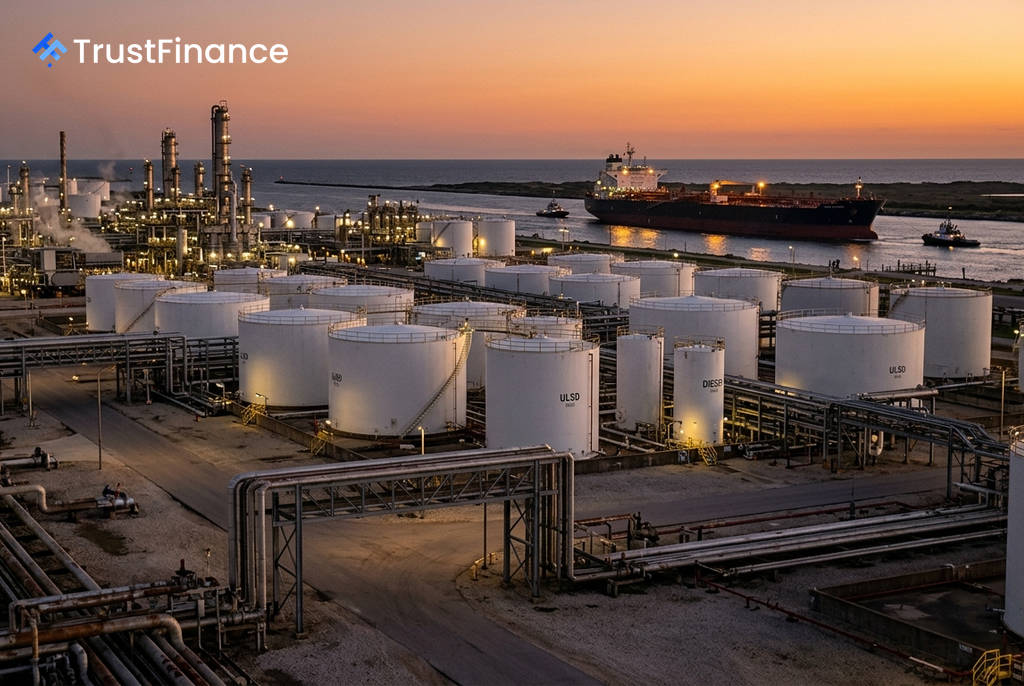
U.S. exports of distillate fuels, including diesel and heating oil, soared to a record 1.9 million barrels per day (bpd) last week, draining domestic inventories and intensifying concerns about supply availability. The data, released Wednesday by the U.S. Energy Information Administration (EIA), shows stockpiles have fallen to their lowest level for this time of year in nearly three decades.
Record Exports Drain Stockpiles
The latest export figure surpasses the previous record set in May and marks the fifth consecutive week that U.S. distillate shipments abroad have exceeded 1.5 million bpd. Distillate fuels are a category of refined petroleum products that includes diesel fuel, heating oil, and jet fuel.
This sustained export pressure is tightening the domestic fuel supply, a trend that continues even as U.S. refiners operate at high utilization rates. The strong international demand is outpacing the ability of refiners to replenish domestic inventories.
Market Impact and Supply Concerns
The direct consequence of the export surge is a sharp drop in domestic supply. As of last week, U.S. distillate fuel inventories stood at their lowest seasonal level since 1996, according to the EIA data.
 Ad
AdThis depletion is raising concerns for the upcoming autumn and winter months. Markets are particularly focused on the potential for tight supplies of heating oil, which is critical for residential and commercial heating, especially in the U.S. Northeast.
Global Factors Driving Demand
The U.S. is currently serving as a crucial supplier to a strained global diesel market. International supplies have been significantly constricted by several geopolitical factors:
- Russian Supply Cuts: Ukrainian attacks on Russian refining infrastructure have reduced the country's fuel production. In response, Moscow has banned most of its diesel exports, removing a significant volume from the global market.
- Supply Chain Risks: Ongoing geopolitical tensions have disrupted the transport of crude oil and refined products through critical maritime channels, including the Strait of Hormuz.
Amid these global disruptions, the United States is one of the few countries with the available refining capacity to consistently produce and export large volumes of diesel fuel to meet international demand.
Read next
More on Commodities
US-China Summit to Tackle Key Commodity Disputes in Agriculture, Energy
The upcoming meeting between President Trump and President Xi is expected to focus on resolving trade frictions involving U.S. agricultural exports, Chinese energy tariffs, and the supply of critical rare earth materials.

Citi Warns Hawkish Fed Policy Threatens Non-AI Economic Growth
A recent report from Citi Research warns that the Federal Reserve's hawkish monetary policy could suppress the U.S. housing market and make the broader economy dangerously dependent on AI investment.

Petrobras Board Approves Participation in New Government Diesel Subsidy Program
Brazil's state-run oil company, Petrobras, will join a new government program providing a 1.00 real per liter subsidy on diesel, a move aimed at stabilizing fuel prices ahead of the upcoming presidential election.

Oil Prices Retreat as China Urges Iran to Curb Houthi Attacks on Saudi Facilities
Crude oil futures fell on Friday after reports that China, at Saudi Arabia's request, pressured Iran to rein in Houthi attacks, easing some geopolitical supply fears. However, ongoing pipeline disruptions and refining constraints continue to support the market.