
Story
US Data Center Financing Faces New Scrutiny Amid Rising Community Opposition
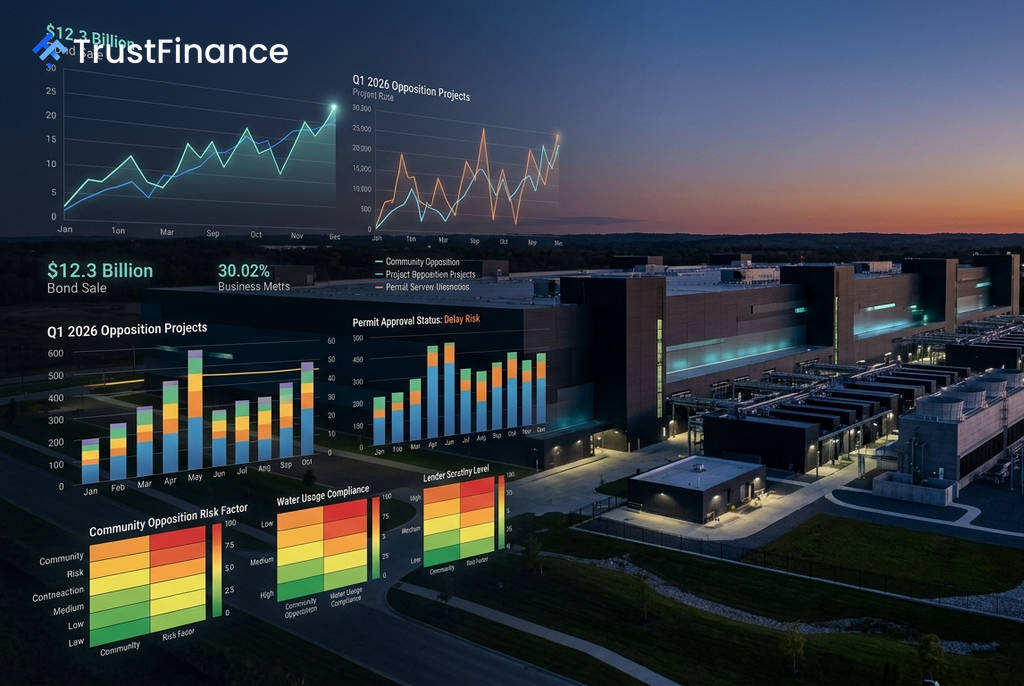
The boom in U.S. data center development is encountering a significant new obstacle, forcing financial backers to add community and political opposition to their risk-assessment checklists. Lenders and investors are now scrutinizing local sentiment more closely before committing capital to the multi-billion dollar projects essential for cloud computing and artificial intelligence.
A New Layer of Due Diligence
Wall Street firms that finance these massive infrastructure projects, including JPMorgan Chase, Morgan Stanley, and Bank of America, are adding a new layer to their due diligence process. Senior bankers told Reuters they are increasingly prioritizing projects in states perceived as more welcoming and are carefully evaluating local support to avoid backing ventures that could face costly delays or cancellations.
"Readiness means all the permitting and approvals that are required, and the community support from the people who are going to live around it," said Karen Fang, global head of infrastructure and sustainable finance at Bank of America, who listed it as a primary factor alongside a project's credit quality. Lenders worry about wasting significant time and resources on proposals that ultimately stall.
This heightened scrutiny reflects the substantial effort required to arrange financing. "The amount of work that goes into putting a bank loan in place for one of these projects is significant," said Kevin Curtin, head of AI infrastructure investment banking at JPMorgan. He noted that builders must continuously demonstrate compliance with financial covenants throughout the construction phase.
Projects Under Pressure
The scale of local resistance is growing. In the first quarter of 2026 alone, at least 75 projects valued at approximately $130 billion faced community opposition, according to research from Data Center Watch. Common complaints from residents include concerns about noise, visual impact, and the immense strain data centers place on local power grids and water supplies.
 Ad
Several high-profile projects have been affected:
- A Prince William, Virginia, project by QTS, which is owned by Blackstone, was terminated after facing strong local opposition.
- Data center operator CyrusOne is confronting resistance from residents for a proposed $500 million facility in Sangamon County, Illinois.
- A Meta-partnered project in El Paso, Texas, has also drawn opposition from some residents.
Balancing Risk and Reward
Despite these challenges, the financial appetite for data centers remains robust, fueled by massive demand for AI infrastructure. Goldman Sachs forecasts that big tech companies will spend more than $6 trillion on AI through 2030. Morgan Stanley CFO Sharon Yeshaya acknowledged the firm is "very cognizant" of the risks but affirmed its role in helping clients raise capital for the capital-intensive industry.
Investors are adapting by pricing potential cancellation risks into their models, confident that overall demand for computing power will remain high. In response, data center developers are taking pre-emptive steps to mitigate local concerns, such as planning for on-site power generation, in an effort to secure the necessary approvals and financing to move forward.
Read next
More on Stocks
FTC Orders Walmart, Uber, Delta to Disclose Data on Personalized Pricing
The U.S. Federal Trade Commission is demanding nine major companies, including leading retail, travel, and gig economy firms, to provide information on how they use consumer data for setting individual prices and wages.

Google Launches Gemini 4 Carbon AI Model to Bolster Cybersecurity Capabilities
Alphabet's Google has unveiled Gemini 4 Carbon, its latest AI model specifically designed for advanced cybersecurity tasks like vulnerability detection and secure code generation. The launch escalates competition with rivals OpenAI and Anthropic in the enterprise AI market.

Oracle Shares Surge After Unveiling $225 Billion Revenue Target for 2030
Oracle stock rose sharply after the company presented a long-term financial outlook targeting at least $225 billion in annual revenue by fiscal 2030, driven by its expanding AI infrastructure business.

DOJ Scrutinizes Nvidia's $12.9B Hugging Face Deal Amid Broader Antitrust Probe, Sources Say
The U.S. Department of Justice is reportedly examining Nvidia's planned $12.93 billion acquisition of AI platform Hugging Face as part of a wider, ongoing antitrust investigation into the chipmaker's market conduct.