
Story
Treasury Yields Climb as Investors Brace for Hawkish Fed Minutes
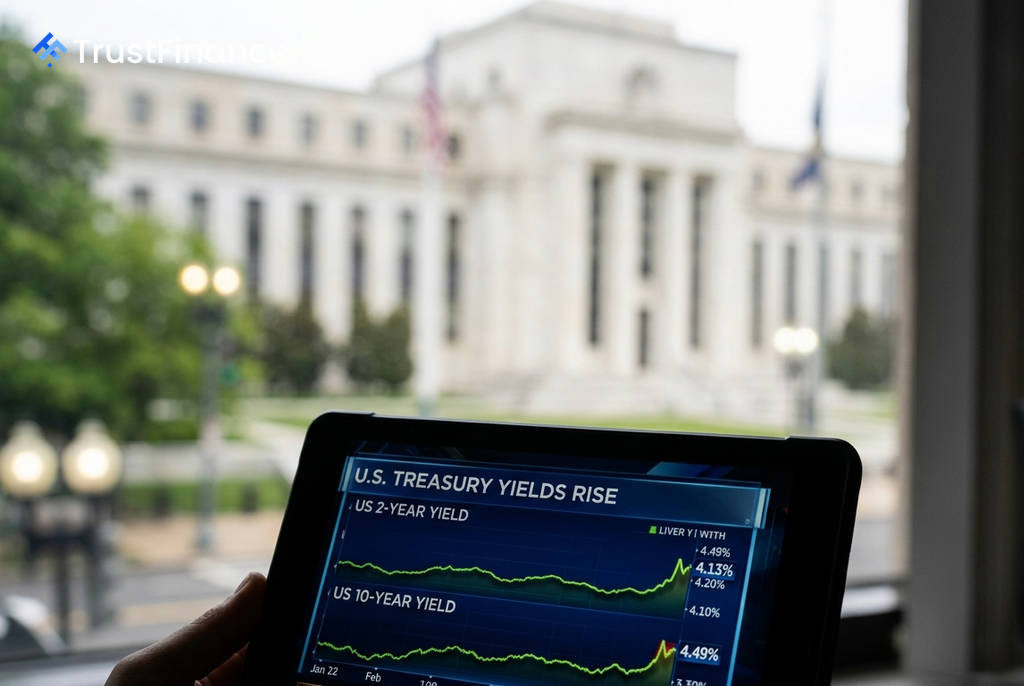
U.S. Treasury yields rose on Tuesday as bond investors positioned for the release of minutes from the Federal Reserve's June policy meeting, anticipating details that could reinforce a hawkish outlook on monetary policy.
Fed Minutes in Focus
The primary driver for the move in the fixed-income market is the upcoming publication of the minutes from the Federal Open Market Committee's (FOMC) June 16–17 meeting. This will be the first detailed account of the committee's deliberations under the leadership of newly appointed Fed Chair Kevin Warsh. The central bank held its benchmark rate steady at 3.50%–3.75% last month, but an accompanying economic forecast surprised markets with a hawkish tilt.
Reflecting this anticipation, selling pressure pushed yields, which move inversely to prices, higher. The yield on the benchmark 10-year Treasury note climbed to 4.49%, while the policy-sensitive two-year Treasury yield rose to 4.13%.
Broader Market Context
 Ad
The defensive stance in the bond market comes even after a recent government report showed the U.S. economy added just 57,000 jobs in June, well below the consensus estimate of 115,000. This suggests investors are currently more focused on the Fed's potential reaction to inflation than on signs of a slowing labor market.
In Europe, government bond yields also moved higher. The yield on Germany's benchmark 10-year bund was up at 2.948%. According to the source, this was partly driven by a stronger-than-expected Sentix index reading, which showed a significant improvement in Eurozone investor confidence for July and dampened the appeal of safe-haven assets.
Adding to the pressure on European bonds were remarks from European Central Bank policymaker Fabio Panetta. The Bank of Italy governor warned that European central banks face long-term political pressure to absorb larger government deficits, a potential headwind for bond valuations.