
Story
Toyota Shares Fall as Margin Concerns Overshadow Buyback and Guidance Upgrade
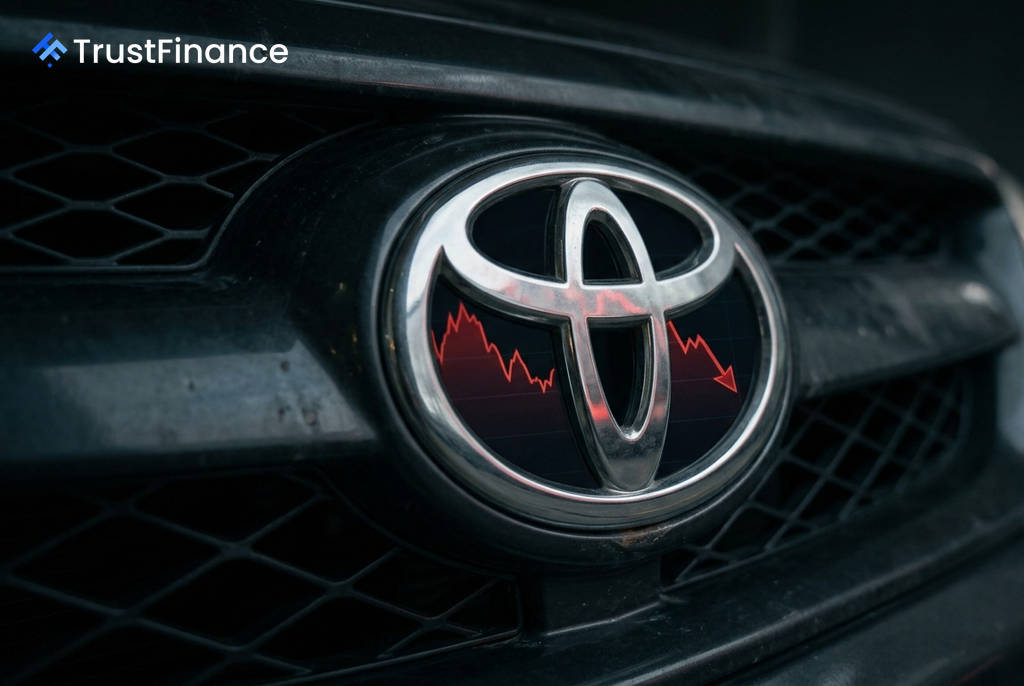
Toyota Motor Corp. (NYSE: TM) shares fell after the company's first-quarter earnings report, as investors looked past a raised profit forecast and a major share buyback to focus on a decline in core profitability and growing external headwinds.
Behind the Headline Numbers
While Toyota reported a strong earnings-per-share figure, the market keyed in on a more fundamental metric: operating income. The automaker's operating income for the quarter fell 8.8% year-over-year to ¥1.06 trillion (approximately $6.8 billion), signaling a squeeze on its core business.
Analysts noted that the headline EPS beat was largely attributable to a one-time gain from the privatization of Toyota Industries. The drop in operating profit, a purer measure of the company's automotive business health, raised concerns about underlying margin compression. In response, Toyota's Tokyo-listed shares (7203) have fallen over 10% this week, according to the source.
Market Focuses on Headwinds
Investors are weighing several challenges that could impact Toyota's future profitability. A primary concern is the 25% U.S. tariff on vehicles built in Mexico and Canada, where Toyota has significant manufacturing operations. This tariff directly impacts the cost of a large portion of its North American volume.
 Ad
Other factors contributing to market unease include:
- U.S. Sales Data: Toyota's U.S. sales fell 1% year-over-year in July. Sales of its flagship RAV4 model declined 21% amid a model transition.
- Strengthening Yen: A recent rebound in the Japanese yen, reportedly due to government intervention, creates an unfavorable exchange rate for major exporters like Toyota, potentially eroding overseas earnings.
- Low Incentives: The company's incentive spending per vehicle was $1,328, significantly below the industry average of $3,194. While this protects margins, it could risk ceding market share to more aggressive competitors.
Buyback and Guidance Viewed with Caution
Toyota announced a substantial ¥1 trillion share repurchase program and raised its full-year operating income forecast by 13% to ¥3.4 trillion. However, the market appeared to interpret these moves defensively.
Forward-looking investors often view large buybacks as a signal that a company may have limited opportunities for high-return organic reinvestment. Similarly, the upgraded guidance was met with skepticism, as it implies a sharp acceleration in profitability will be required to meet the new target in the face of the aforementioned tariff and currency pressures. The market's reaction suggests that concerns over structural profitability currently outweigh the positive signals from shareholder returns and management's optimistic forecast.
Read next
More on Stocks
FTC Orders Walmart, Uber, Delta to Disclose Data on Personalized Pricing
The U.S. Federal Trade Commission is demanding nine major companies, including leading retail, travel, and gig economy firms, to provide information on how they use consumer data for setting individual prices and wages.

Google Launches Gemini 4 Carbon AI Model to Bolster Cybersecurity Capabilities
Alphabet's Google has unveiled Gemini 4 Carbon, its latest AI model specifically designed for advanced cybersecurity tasks like vulnerability detection and secure code generation. The launch escalates competition with rivals OpenAI and Anthropic in the enterprise AI market.

Oracle Shares Surge After Unveiling $225 Billion Revenue Target for 2030
Oracle stock rose sharply after the company presented a long-term financial outlook targeting at least $225 billion in annual revenue by fiscal 2030, driven by its expanding AI infrastructure business.

DOJ Scrutinizes Nvidia's $12.9B Hugging Face Deal Amid Broader Antitrust Probe, Sources Say
The U.S. Department of Justice is reportedly examining Nvidia's planned $12.93 billion acquisition of AI platform Hugging Face as part of a wider, ongoing antitrust investigation into the chipmaker's market conduct.