
Story
SpaceX More Confident in $100B Revenue Goal, CFO Cites New AI Compute Contract
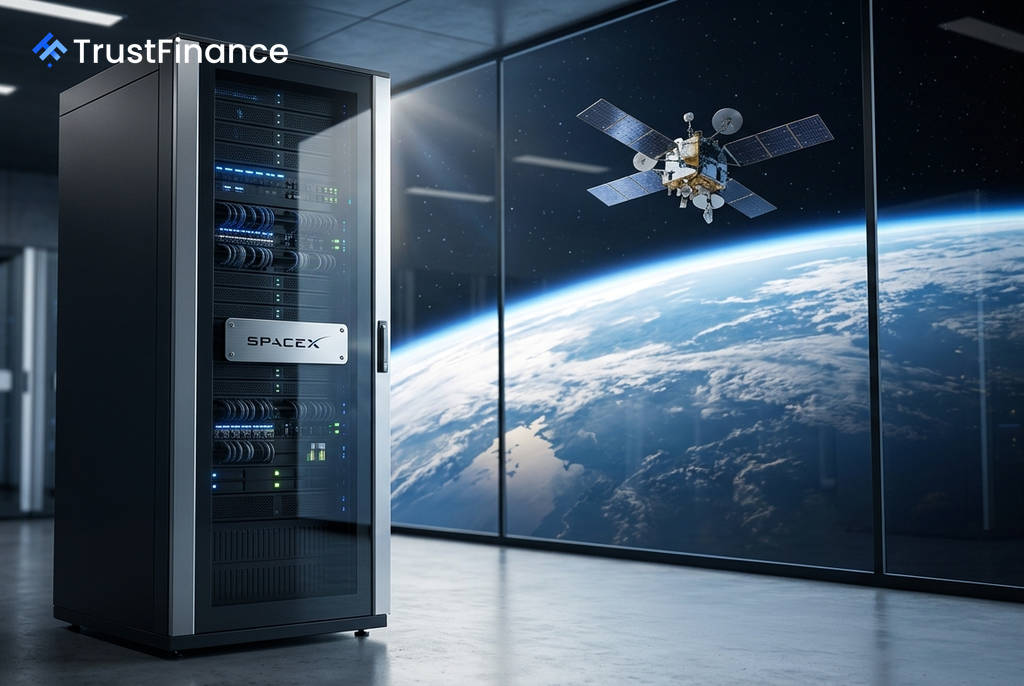
SpaceX is growing more confident in its ability to achieve a $100 billion annual revenue run rate by the end of 2026, driven by a major new agreement in the booming artificial intelligence sector. The company's chief financial officer revealed that a new contract to provide AI computing infrastructure will add significant recurring revenue, positioning AI services as a core growth engine alongside its launch and satellite businesses.
New AI Contracts Bolster Revenue
Speaking at the Goldman Sachs Communacopia + Technology Conference, SpaceX CFO Bret Johnsen announced the company has signed a new AI computing agreement with an undisclosed client. The deal is set to generate $1.11 billion in monthly revenue starting in December.
This contract, which annualizes to approximately $13.3 billion, significantly strengthens SpaceX's revenue base. It adds to existing AI compute agreements with customers including Google and Anthropic, which collectively generate over $2 billion per month. Johnsen stated that this latest deal makes the company "more confident" in reaching its ambitious revenue target.
To hit a $100 billion run rate, SpaceX would need to generate approximately $8.33 billion in monthly revenue. This represents a more than threefold increase from its second-quarter monthly average of about $2.6 billion, highlighting the rapid scaling required to meet the company's goal.
 Ad
Ground and Space Infrastructure Expansion
SpaceX is aggressively expanding its terrestrial AI infrastructure to meet surging demand. Johnsen outlined plans to grow its ground-based AI computing capacity from just over 2 gigawatts (GW) at the end of 2026 to between 5 and 10 GW in 2027.
Looking further ahead, the company views orbital computing as a long-term solution to overcome terrestrial constraints such as power grid limitations. Johnsen noted that power availability is becoming a significant bottleneck for AI infrastructure on Earth. SpaceX's long-term vision includes deploying 100 GW of AI computing capacity to orbit annually by the end of the decade, leveraging solar power to operate massive data centers in space.
While this "space AI data center" concept offers a potential path to bypass Earth-based limitations, it faces substantial engineering hurdles. These include managing heat dissipation in a vacuum, launch costs, in-orbit maintenance, and protecting sensitive electronics from radiation.
Read next
More on Stocks
FTC Orders Walmart, Uber, Delta to Disclose Data on Personalized Pricing
The U.S. Federal Trade Commission is demanding nine major companies, including leading retail, travel, and gig economy firms, to provide information on how they use consumer data for setting individual prices and wages.

Google Launches Gemini 4 Carbon AI Model to Bolster Cybersecurity Capabilities
Alphabet's Google has unveiled Gemini 4 Carbon, its latest AI model specifically designed for advanced cybersecurity tasks like vulnerability detection and secure code generation. The launch escalates competition with rivals OpenAI and Anthropic in the enterprise AI market.

Oracle Shares Surge After Unveiling $225 Billion Revenue Target for 2030
Oracle stock rose sharply after the company presented a long-term financial outlook targeting at least $225 billion in annual revenue by fiscal 2030, driven by its expanding AI infrastructure business.

DOJ Scrutinizes Nvidia's $12.9B Hugging Face Deal Amid Broader Antitrust Probe, Sources Say
The U.S. Department of Justice is reportedly examining Nvidia's planned $12.93 billion acquisition of AI platform Hugging Face as part of a wider, ongoing antitrust investigation into the chipmaker's market conduct.