
Story
South Korea's Headline Inflation Slows in July, But Core Prices Accelerate
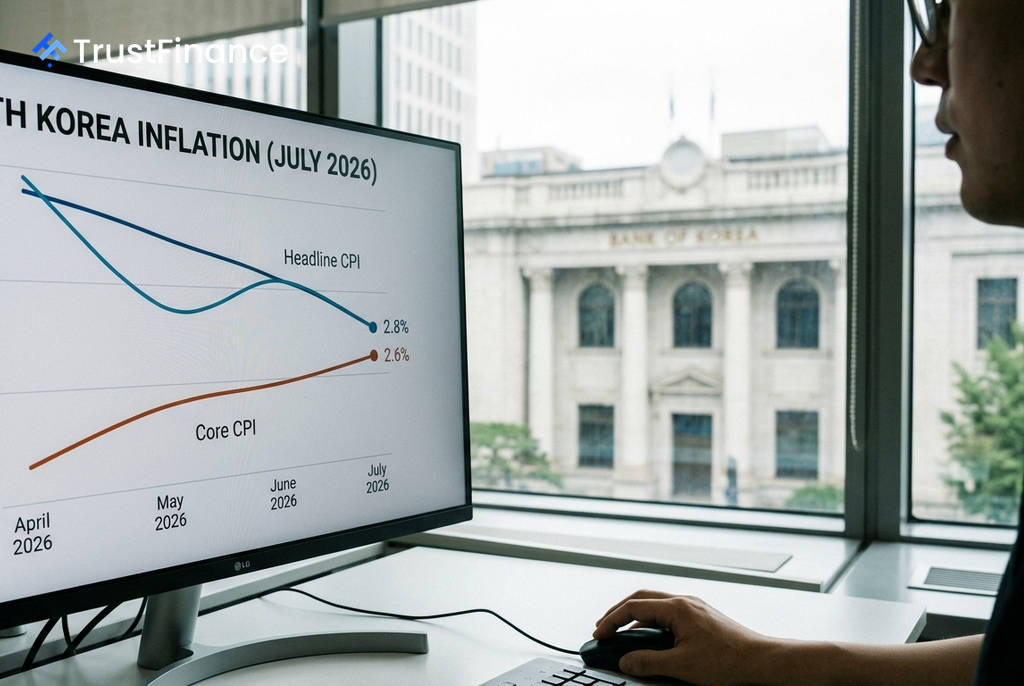
South Korea's headline inflation rate cooled to a three-month low in July, but a surge in core inflation to its highest level since late 2023 signals that underlying price pressures remain persistent. The mixed data presents a complex picture for the Bank of Korea as it navigates future monetary policy.
Headline vs. Core Inflation
The consumer price index (CPI) rose 2.8% year-over-year in July, a three-month low, according to a report from the Ministry of Data and Statistics. The reading was below analyst expectations for a 3.0% print and marked a deceleration from the 3.2% increase recorded in June.
In a sign of broadening price pressures, core CPI, which excludes volatile food and energy costs, accelerated to 2.6% in July from 2.5% in the prior month. This marked the largest increase in core inflation since December 2023.
Implications for Monetary Policy
The divergence between the headline and core figures is likely to keep the Bank of Korea (BOK) on a hawkish path. The central bank raised its benchmark interest rate last month for the first time in three-and-a-half years and has indicated that additional increases may follow.
 Ad
Policymakers have cited strong domestic economic growth as a potential driver of inflation. The accelerating core inflation figure reinforces concerns that price pressures are becoming entrenched, supporting the case for further monetary tightening.
Outlook and External Risks
The moderation in July's headline figure was reportedly prompted by a dip in oil prices. However, this relief may be temporary, as policymakers expect inflationary pressures from energy to resume.
According to the source, rising commodity prices, fueled in part by increased military tensions in the Middle East, remain a key concern. Volatile oil prices, in particular, are considered a significant upside risk to South Korea's inflation outlook in the coming months.
Read next
More on Stocks
FTC Orders Walmart, Uber, Delta to Disclose Data on Personalized Pricing
The U.S. Federal Trade Commission is demanding nine major companies, including leading retail, travel, and gig economy firms, to provide information on how they use consumer data for setting individual prices and wages.

Google Launches Gemini 4 Carbon AI Model to Bolster Cybersecurity Capabilities
Alphabet's Google has unveiled Gemini 4 Carbon, its latest AI model specifically designed for advanced cybersecurity tasks like vulnerability detection and secure code generation. The launch escalates competition with rivals OpenAI and Anthropic in the enterprise AI market.

Oracle Shares Surge After Unveiling $225 Billion Revenue Target for 2030
Oracle stock rose sharply after the company presented a long-term financial outlook targeting at least $225 billion in annual revenue by fiscal 2030, driven by its expanding AI infrastructure business.

DOJ Scrutinizes Nvidia's $12.9B Hugging Face Deal Amid Broader Antitrust Probe, Sources Say
The U.S. Department of Justice is reportedly examining Nvidia's planned $12.93 billion acquisition of AI platform Hugging Face as part of a wider, ongoing antitrust investigation into the chipmaker's market conduct.