
Story
Shipping Sector Sees Divergent Fortunes Amid Geopolitical Tension and Surging US Imports
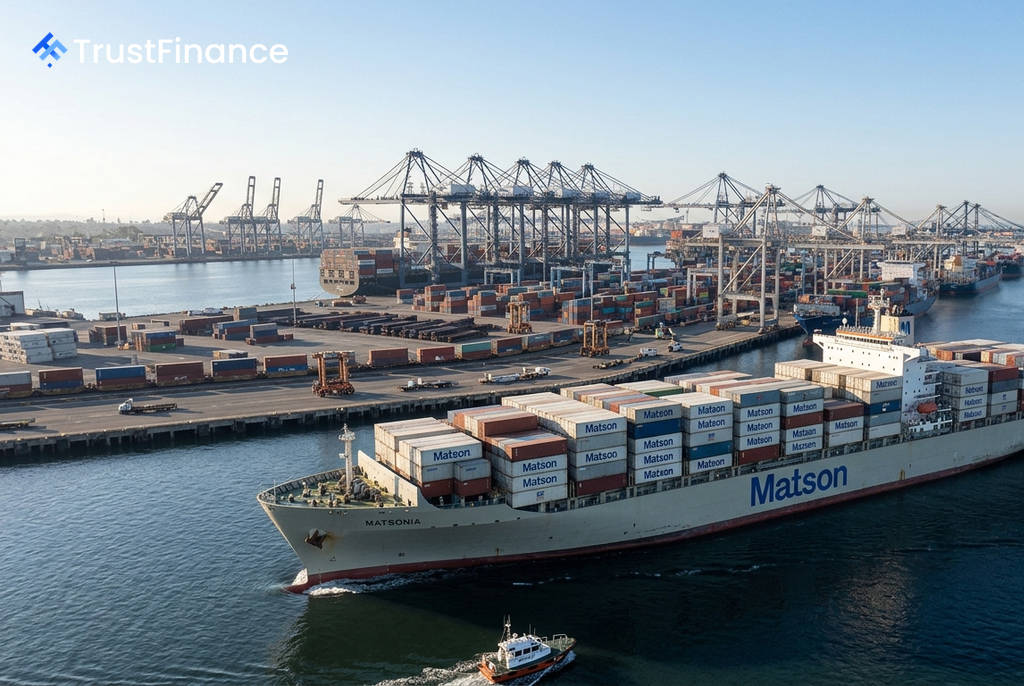
The global freight market is navigating a period of intense disruption, as geopolitical conflicts simultaneously inflict heavy costs on some carriers while creating profitable opportunities for others. Despite the turmoil, which includes the closure of the Strait of Hormuz and persistent attacks in the Red Sea, U.S. import volumes surged in July to near-record levels.
A Market of Contrasts
The current environment has created a sharp divide in performance among major shipping lines. Maersk, for instance, raised its full-year earnings guidance for the second time in 2026 after reporting second-quarter EBITDA of $3.0 billion, well ahead of the $2.12 billion consensus. The company's performance highlights how carriers with diversified routes less exposed to the Middle East can capitalize on higher rates.
In stark contrast, Hapag-Lloyd saw its second-quarter profit fall 73% to $83 million. The carrier attributed the decline to $600 million in additional costs for fuel, insurance, and rerouting stemming from the effective closure of the Strait of Hormuz. This underscores the severe financial strain on operators heavily reliant on Asia-Europe trade corridors.
US Imports Defy Headwinds
Despite global shipping challenges, U.S. seaports remain remarkably busy. According to data from Descartes Systems Group, ports handled 2.5 million TEUs (twenty-foot equivalent units) in July 2026, the fourth-highest volume for that month on record. Year-to-date through July, total U.S. container imports were down just 0.9% from 2025 levels.
 Ad
A significant driver was a surge in goods from China, which reached 873,129 TEUs in July—the highest monthly total in a year—as shippers appeared to be front-running potential tariff changes. This trend directly benefited carriers like Matson Inc. (MATX), which reported its China service container volume grew 15.2% year-over-year in the second quarter, with the service expected to run near capacity through the third quarter peak season.
Market Outlook and Key Risks
The freight sector's outlook remains heavily dependent on geopolitical developments. The Strait of Hormuz, a chokepoint for roughly 20% of global oil consumption before the recent conflict, is largely closed to commercial traffic. A de-escalation or ceasefire in the region could quickly lower freight rates and erase the disruption premiums carriers are currently earning.
Conversely, any further escalation could push rates even higher but would also increase operational costs and risks for all shipping companies. This uncertainty places a premium on carriers with strong balance sheets, diversified trade routes, and defensible market positions that provide a margin of safety against volatile conditions.
Read next
More on Stocks
FTC Orders Walmart, Uber, Delta to Disclose Data on Personalized Pricing
The U.S. Federal Trade Commission is demanding nine major companies, including leading retail, travel, and gig economy firms, to provide information on how they use consumer data for setting individual prices and wages.

Google Launches Gemini 4 Carbon AI Model to Bolster Cybersecurity Capabilities
Alphabet's Google has unveiled Gemini 4 Carbon, its latest AI model specifically designed for advanced cybersecurity tasks like vulnerability detection and secure code generation. The launch escalates competition with rivals OpenAI and Anthropic in the enterprise AI market.

Oracle Shares Surge After Unveiling $225 Billion Revenue Target for 2030
Oracle stock rose sharply after the company presented a long-term financial outlook targeting at least $225 billion in annual revenue by fiscal 2030, driven by its expanding AI infrastructure business.

DOJ Scrutinizes Nvidia's $12.9B Hugging Face Deal Amid Broader Antitrust Probe, Sources Say
The U.S. Department of Justice is reportedly examining Nvidia's planned $12.93 billion acquisition of AI platform Hugging Face as part of a wider, ongoing antitrust investigation into the chipmaker's market conduct.