
Story
Raytheon Secures $1.3 Billion in US Contracts for Missile Defense and Weapon Systems
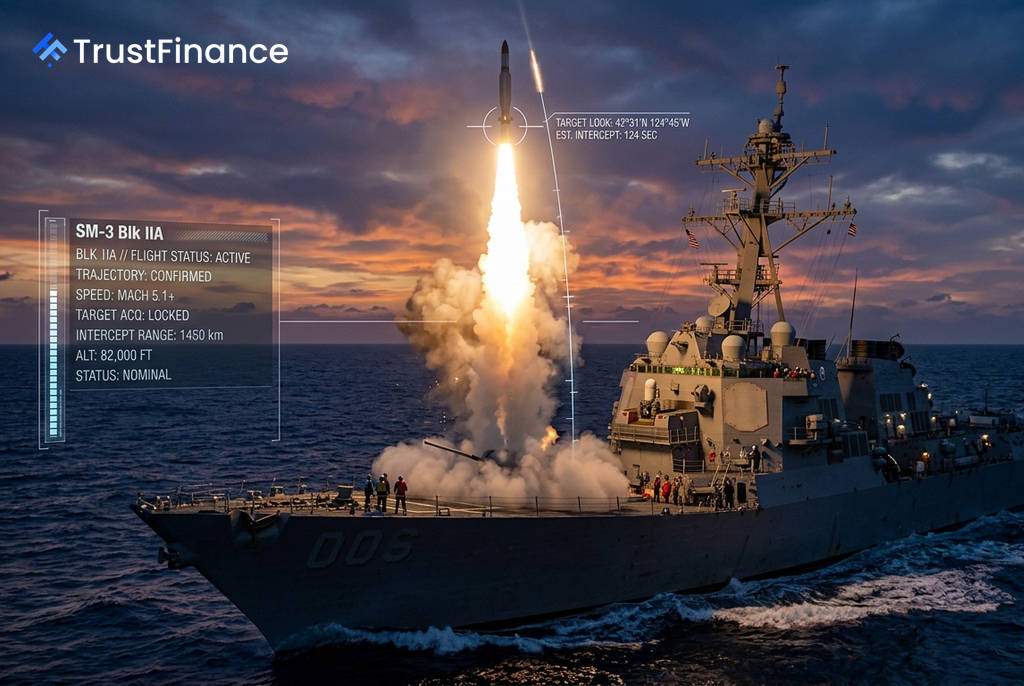
Raytheon, a subsidiary of RTX, has secured two U.S. military contracts with a combined value of $1.3 billion for missile production and weapon system support, according to a Friday announcement from the Department of Defense. The awards cover the production of Standard Missile-3 interceptors and continued work on the TOW anti-tank weapon system.
Breakdown of the Awards
The larger of the two contracts is a $745.4 million award from the Missile Defense Agency for the manufacture and assembly of Standard Missile-3 (SM-3) Block IIA All-Up Rounds. This noncompetitive contract includes foreign military sales requirements for the Japan Ministry of Defense.
A second award is a $536 million modification to an existing contract for full-rate production and engineering services supporting the TOW Weapon System. According to the Pentagon, this modification increases the total cumulative value of that contract to $750.8 million.
Funding and Timelines
Work on the SM-3 contract will be performed in Tucson, Arizona, and Huntsville, Alabama, with an estimated completion date of Feb. 28, 2031. The award obligates $275.6 million in fiscal 2026 U.S. procurement funds and $277.7 million in foreign military sales funds from Japan at the time of the award.
 Ad
The work on the TOW system contract, awarded by the Army Contracting Command, will be performed in Tucson, Arizona, and is expected to be completed by Aug. 31, 2027. The modification obligates $54.9 million in fiscal 2026 Army procurement funds.
What This Means for Raytheon
These contracts reinforce Raytheon's position as a critical supplier of advanced missile systems for the U.S. and its key allies. The SM-3 is a vital component of the Aegis Ballistic Missile Defense System, while the TOW remains one of the world's most widely deployed anti-tank guided missiles.
For investors, such long-term production and support contracts contribute to a stable and predictable revenue stream, strengthening the company's defense backlog. The inclusion of a major foreign military sale to Japan also underscores the persistent international demand for U.S. defense technology amid global security concerns.
Read next
More on Stocks
FTC Orders Walmart, Uber, Delta to Disclose Data on Personalized Pricing
The U.S. Federal Trade Commission is demanding nine major companies, including leading retail, travel, and gig economy firms, to provide information on how they use consumer data for setting individual prices and wages.

Google Launches Gemini 4 Carbon AI Model to Bolster Cybersecurity Capabilities
Alphabet's Google has unveiled Gemini 4 Carbon, its latest AI model specifically designed for advanced cybersecurity tasks like vulnerability detection and secure code generation. The launch escalates competition with rivals OpenAI and Anthropic in the enterprise AI market.

Oracle Shares Surge After Unveiling $225 Billion Revenue Target for 2030
Oracle stock rose sharply after the company presented a long-term financial outlook targeting at least $225 billion in annual revenue by fiscal 2030, driven by its expanding AI infrastructure business.

DOJ Scrutinizes Nvidia's $12.9B Hugging Face Deal Amid Broader Antitrust Probe, Sources Say
The U.S. Department of Justice is reportedly examining Nvidia's planned $12.93 billion acquisition of AI platform Hugging Face as part of a wider, ongoing antitrust investigation into the chipmaker's market conduct.