
Story
PayPal's Honey Unit Faces Allegations of Improperly Diverting Affiliate Commissions
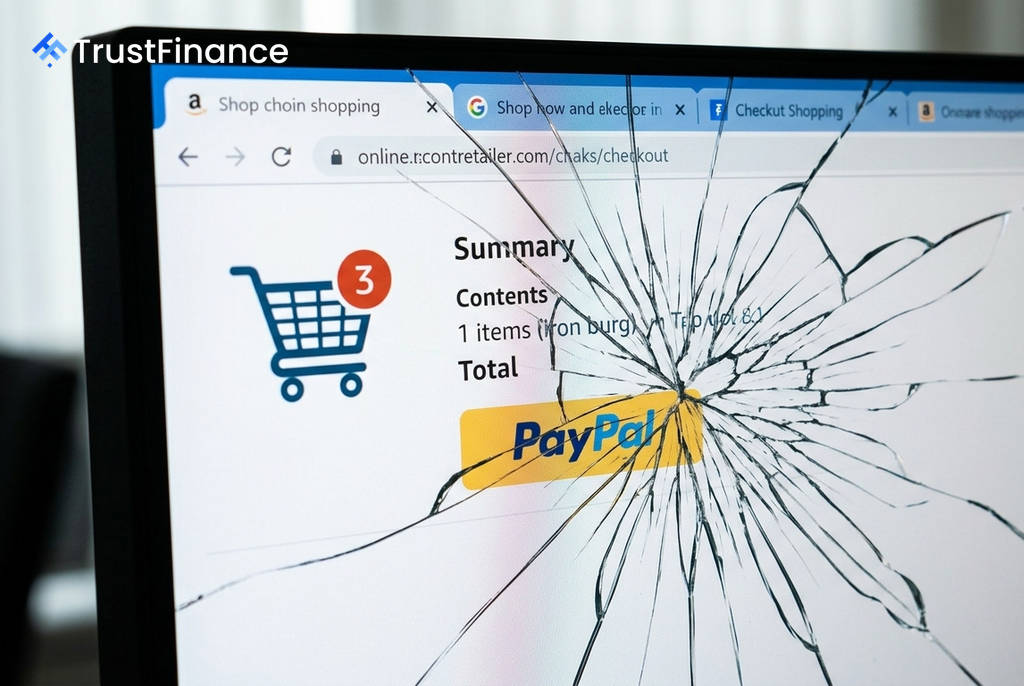
PayPal Holdings Inc. (PYPL) is facing scrutiny over the business practices of its Honey unit, following allegations from a YouTuber that the popular coupon-finding browser extension systematically redirects affiliate marketing commissions from content creators to itself. While the claims have not yet been widely covered in financial media, they present potential reputational, regulatory, and strategic risks for the payments company at a sensitive time.
The Core Allegation
The controversy, highlighted by YouTuber MegaLag, centers on how Honey's browser extension handles affiliate tracking cookies. The claim is that when a user clicks a creator's affiliate link to a retail site, the Honey extension overwrites the creator's cookie with its own. This action allegedly diverts the sales commission, which should have gone to the creator who drove the traffic, to Honey instead.
If these claims are substantiated on a broad scale, it would suggest a business model that captures value from the creator economy rather than simply providing coupon services to consumers. For PayPal, which acquired Honey in 2020 for approximately $4 billion, such a finding could significantly impair the perceived value and integrity of the acquisition.
Reputational and Regulatory Headwinds
The allegations create several potential challenges for PayPal, which is in the midst of a turnaround effort under CEO Enrique Lores that relies heavily on rebuilding merchant and consumer trust.
 Ad
- Creator Backlash: Content creators are a vocal and significant user base for PayPal and its Venmo service. A widespread perception that Honey undermines their earnings could lead to boycotts or a migration to competing platforms.
- Regulatory Scrutiny: Practices deemed deceptive could attract attention from regulators. The Federal Trade Commission (FTC) has previously pursued companies for unfair or deceptive digital practices under Section 5 of the FTC Act, and state attorneys general could also launch investigations.
- Financial Impact: A significant controversy could force PayPal into defensive spending on legal fees, public relations, and potential creator compensation programs. This could divert resources from its stated goal of achieving $1.5 billion in cost savings to fund reinvestment and margin improvement.
Market Context and Investor Outlook
The issue arises as PayPal's stock has seen a recent rally, but the company still faces fundamental business challenges. In its Q2 results, PayPal reported that its active accounts were declining, and its adjusted operating income fell 8% year-over-year. The company's transaction margin dollar growth was a modest 1%.
Analysts have already voiced concerns about market share loss in branded checkout and the slow monetization of Venmo. The Honey controversy adds another layer of risk for investors to monitor. Key developments to watch include whether the story gains traction in mainstream media, any official response from PayPal or Honey, and any signs of inquiry from regulatory bodies.
Read next
More on Stocks
FTC Orders Walmart, Uber, Delta to Disclose Data on Personalized Pricing
The U.S. Federal Trade Commission is demanding nine major companies, including leading retail, travel, and gig economy firms, to provide information on how they use consumer data for setting individual prices and wages.

Google Launches Gemini 4 Carbon AI Model to Bolster Cybersecurity Capabilities
Alphabet's Google has unveiled Gemini 4 Carbon, its latest AI model specifically designed for advanced cybersecurity tasks like vulnerability detection and secure code generation. The launch escalates competition with rivals OpenAI and Anthropic in the enterprise AI market.

Oracle Shares Surge After Unveiling $225 Billion Revenue Target for 2030
Oracle stock rose sharply after the company presented a long-term financial outlook targeting at least $225 billion in annual revenue by fiscal 2030, driven by its expanding AI infrastructure business.

DOJ Scrutinizes Nvidia's $12.9B Hugging Face Deal Amid Broader Antitrust Probe, Sources Say
The U.S. Department of Justice is reportedly examining Nvidia's planned $12.93 billion acquisition of AI platform Hugging Face as part of a wider, ongoing antitrust investigation into the chipmaker's market conduct.