
Story
Pakistan to Seek Larger China Swap Line, Expects US Decision on $10B Facility
Summary
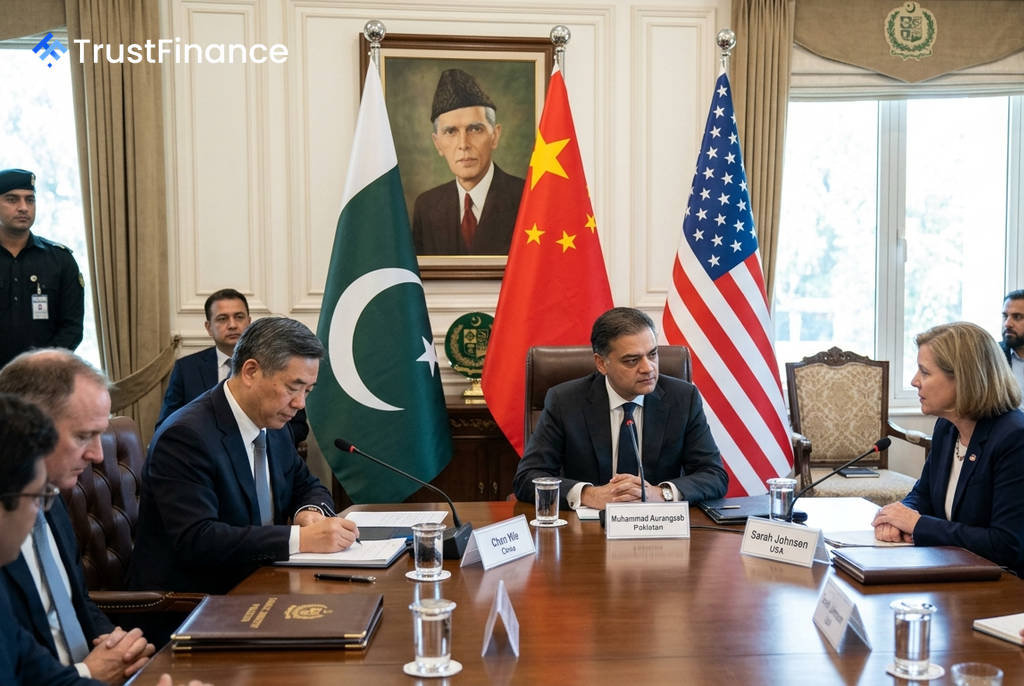
Pakistan plans to request an expansion of its 30 billion yuan currency swap with China and is awaiting a U.S. decision on a proposed $10 billion stabilization fund, according to the country's finance minister.
Pakistan will seek to expand its 30 billion yuan currency swap line with China when it comes up for renewal in 2027 and expects a decision from the United States on a proposed $10 billion exchange stabilization facility within two months, Finance Minister Muhammad Aurangzeb said.
The country remains dependent on external financing to support its foreign exchange reserves and meet debt service obligations, making financial support from partners like China and the U.S., as well as multilateral institutions, critical for economic stability.
Dual-Track Financing Strategy
In a recent interview, Aurangzeb confirmed that the existing 30 billion yuan swap facility from China has been fully drawn. While the government has not yet determined the size of the requested increase, the finance minister said Chinese officials were "open to it" during recent discussions.
"We do plan to make a formal request at the time of the renewal," Aurangzeb stated. Separately, he said a response to Pakistan's request for a $10 billion stabilization facility from Washington is expected within the next two months. The government is also in talks with the U.S. Export-Import Bank (EXIM) and the International Development Finance Corporation (DFC) for further support. Potential uses for U.S. financing include:
- EXIM funds for aircraft purchases from Boeing for the privatized Pakistan International Airlines.
- DFC support for a planned $5 billion program to upgrade the country's oil refineries.
Geopolitical Context and Economic Risks
 Ad
AdWhen asked about seeking simultaneous support from both the U.S. and China, Aurangzeb described it as an "and-and" discussion, emphasizing Pakistan's strategic relationships with both nations. "China has been a long-standing strategic partner for us... and we have very good... understanding and relationship with the Trump administration," he said.
Aurangzeb also addressed the risk of elevated oil prices stemming from the recent Middle East conflict. He noted that while Pakistan has secured sufficient supplies through October, a prolonged conflict into the later months of the year would be an "area of concern" and could threaten the government's 4% growth target for the fiscal year.
Status of IMF Program
An International Monetary Fund (IMF) mission is scheduled to arrive next week for the fourth review of Pakistan's $7 billion program. The finance minister expressed confidence in the country's position, stating, "we are in good stead with the quantitative benchmarks, and we are largely compliant with the structural benchmarks."
Despite external pressures, Aurangzeb affirmed that the government currently has no plans to seek additional or emergency financing from the IMF, stating that the situation is considered "manageable" for now.
Read next
More on Stocks
Electra Therapeutics IPO Poised to Price Above Midpoint on Strong Investor Demand
The biotechnology company is expected to price its initial public offering in the upper half of its $14 to $16 range, following significant interest from institutional investors, according to reports.

Vicor Shares Surge 15%, But Record Put Volume Signals Investor Caution
Shares of Vicor Corporation rallied over 15% on Thursday, yet options market data revealed a record volume of put contracts, suggesting some investors are betting against the sustainability of the surge.

Generac Stock Surges, Options Buzz After Securing Amazon as Data Center Client
Generac Holdings announced a multi-billion dollar agreement to supply industrial generators to Amazon's data centers, causing its stock to rally and igniting significant short-term options trading.

Moroccan All Shares Index Slips to One-Month Low on Banking, Mining Weakness
Morocco's main stock index, the Moroccan All Shares, closed down 0.17% on Thursday, hitting its lowest point in a month. The decline was primarily driven by losses in the banking, mining, and utilities sectors.