
Story
Oil Prices Climb as US and Iran Exchange Strikes Near Strait of Hormuz
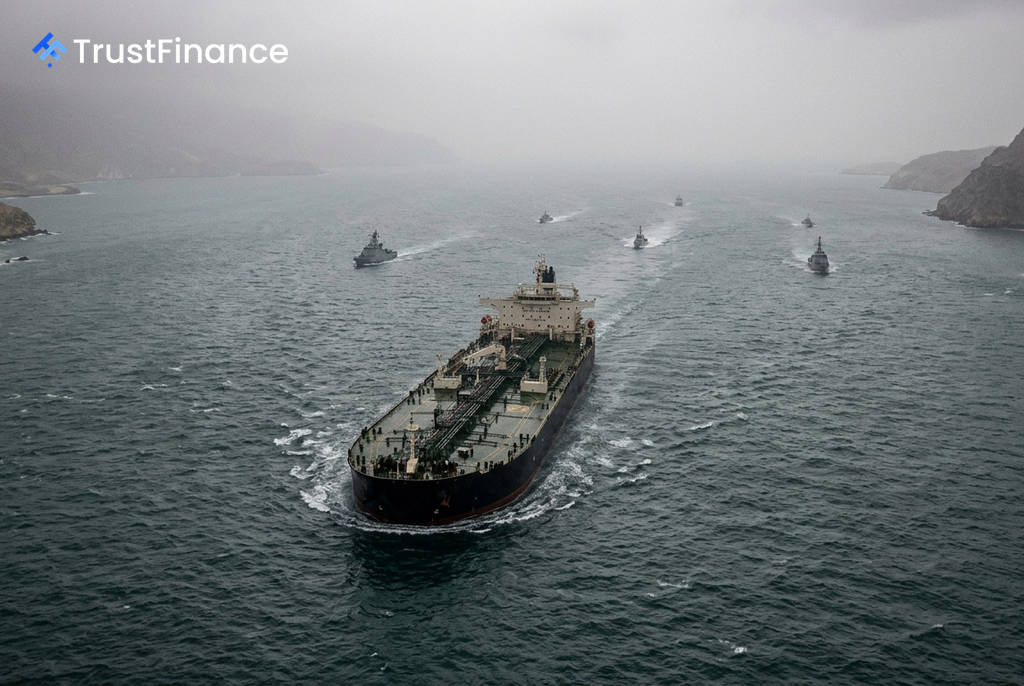
Oil prices surged Monday after the U.S. and Iran engaged in a new round of heavy missile and drone assaults, with Tehran targeting American military facilities across the Gulf and again declaring the vital Strait of Hormuz closed to shipping.
Escalating Military Exchange
Iran’s Revolutionary Guards stated on Monday that they had targeted U.S. military facilities in Bahrain and Kuwait, radar systems in Oman, and infrastructure at Prince Hassan Air Base in Jordan. The strikes mark a significant escalation in the range and pace of attacks in the ongoing conflict.
The U.S. military reported its own operations on Sunday, saying it used aircraft, naval vessels, and drones to strike Iranian air-defense systems, coastal radar sites, and missile and drone capabilities. U.S. Central Command noted it had hit over 300 Iranian military targets over the last three nights in an effort "to degrade Iran’s ability to attack civilian mariners."
Strait of Hormuz in Focus
The status of the Strait of Hormuz, a critical chokepoint for global energy supplies, remains contested. Iran’s newly formed Persian Gulf Strait Authority said passage was "not currently possible" due to U.S. military movements. The Revolutionary Guards warned that "continued interference could lead to greater incidents in the global oil and gas sector."
 Ad
Conversely, the U.S. military insisted that "Iran does not control the strait. Traffic is flowing." The Navy-led Joint Maritime Information Center advised that an "expanded" southern route near Oman was available, though independent ship tracking sites showed little traffic moving through the area.
Market Impact and Political Fallout
The heightened geopolitical risk sent energy prices climbing. Brent crude, the international benchmark, rose 4.3% to $79.31 a barrel on Monday. The conflict and Iran's effective blockade of the strait, which carried one-fifth of the world's oil shipments before the war, have been a key driver of global energy costs and inflation.
The renewed violence threatens a fragile interim agreement signed last month. U.S. President Donald Trump, who told Reuters "We're beating them up," has stated he considers the ceasefire over. Meanwhile, Iran's top negotiator, Mohammad Baqer Qalibaf, posted on X that "The era of one-sided deals is OVER."