
Story
Northrop Grumman Secures $3 Billion in Missile Defense Framework Agreements
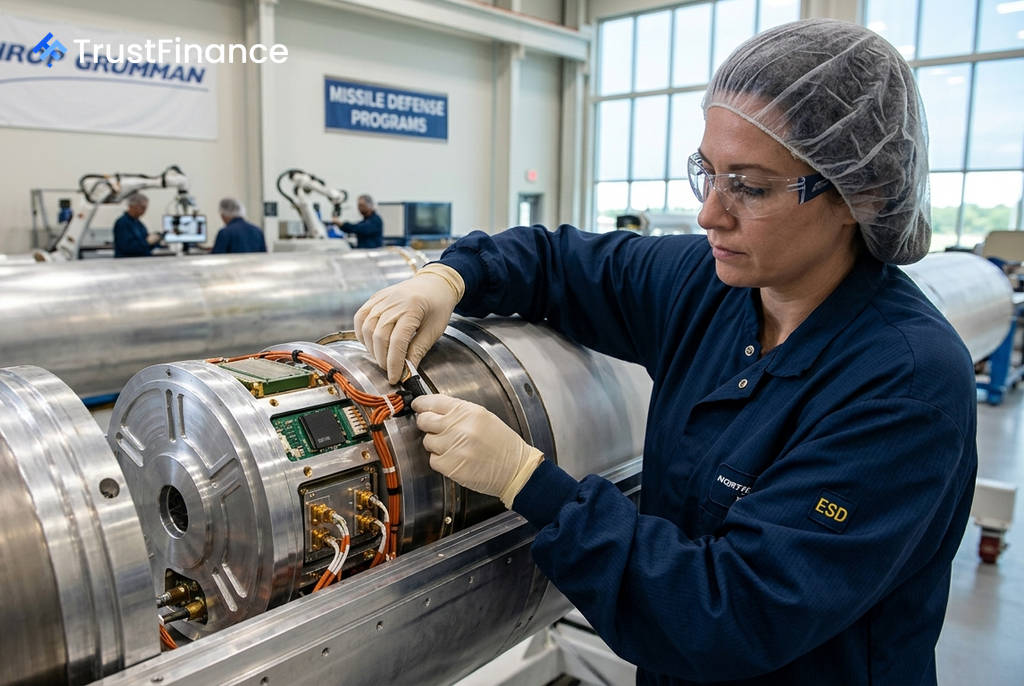
Northrop Grumman (NOC) has secured two multi-year framework agreements valued at a combined $3 billion to produce critical components for U.S. missile defense systems, according to an August 3 announcement. The deals reinforce the company's central role in the defense supply chain but prompted a modest market response, with investors weighing the long-term revenue stream against ongoing cost and capital expenditure pressures.
Agreement Details
The new awards are with the U.S. Department of Defense and Lockheed Martin (LMT) and are intended to ramp up production for two key air defense platforms:
- $2 billion for solid rocket motors and ignition safety devices for the PAC-3 Missile Segment Enhancement (MSE) interceptors.
- $1 billion over seven years for components related to the Terminal High Altitude Area Defense (THAAD) system, with a planned monthly delivery ramp.
To meet the anticipated surge in demand, Northrop Grumman is expanding its manufacturing footprint. The company is doubling capacity at its Utah facility, nearly tripling it at its Allegany Ballistics Laboratory in West Virginia by 2027, and increasing output by 25% at its Maryland site.
Market Impact and Outlook
Despite the significant awards, Northrop Grumman's stock saw a limited intraday gain of +0.63% to $545.89 on the day of the announcement. The stock remains more than 22% below its 52-week high, suggesting the market is balancing competing factors.
 Ad
The bull case points to a rapidly growing order book. These deals add to a record $105 billion backlog, which was up 17% year-over-year in the second quarter. The company also reported a strong Q2 book-to-bill ratio of 1.84x, indicating that new orders are far outpacing current revenue. Following its strong quarter, Northrop raised its full-year 2026 EPS guidance to a range of $28.60 to $29.10.
However, investors also note potential headwinds. TD Cowen recently cut its price target to $550, citing program cost pressures. Furthermore, high capital expenditures, projected at 4.5% of sales through 2027-2028, are compressing near-term free cash flow. Analysts also highlight that these are framework agreements, which set the terms for future orders, rather than definitive contracts with locked-in margins.
Strategic Context
These agreements underscore a structural increase in global demand for advanced munitions and air defense systems, driven by heightened geopolitical tensions. The deal solidifies Northrop Grumman's position as a foundational supplier for the PAC-3 and THAAD ecosystems, two of the most sought-after defense architectures worldwide.
While the new orders bolster the company's long-term revenue visibility, investors will be closely watching for execution on program margins and discipline in capital spending to determine if the stock can close the gap with its recent highs.
Read next
More on Stocks
FTC Orders Walmart, Uber, Delta to Disclose Data on Personalized Pricing
The U.S. Federal Trade Commission is demanding nine major companies, including leading retail, travel, and gig economy firms, to provide information on how they use consumer data for setting individual prices and wages.

Google Launches Gemini 4 Carbon AI Model to Bolster Cybersecurity Capabilities
Alphabet's Google has unveiled Gemini 4 Carbon, its latest AI model specifically designed for advanced cybersecurity tasks like vulnerability detection and secure code generation. The launch escalates competition with rivals OpenAI and Anthropic in the enterprise AI market.

Oracle Shares Surge After Unveiling $225 Billion Revenue Target for 2030
Oracle stock rose sharply after the company presented a long-term financial outlook targeting at least $225 billion in annual revenue by fiscal 2030, driven by its expanding AI infrastructure business.

DOJ Scrutinizes Nvidia's $12.9B Hugging Face Deal Amid Broader Antitrust Probe, Sources Say
The U.S. Department of Justice is reportedly examining Nvidia's planned $12.93 billion acquisition of AI platform Hugging Face as part of a wider, ongoing antitrust investigation into the chipmaker's market conduct.