
Story
Nestlé Shares Fall After Russia Seizes Control of Local Operations
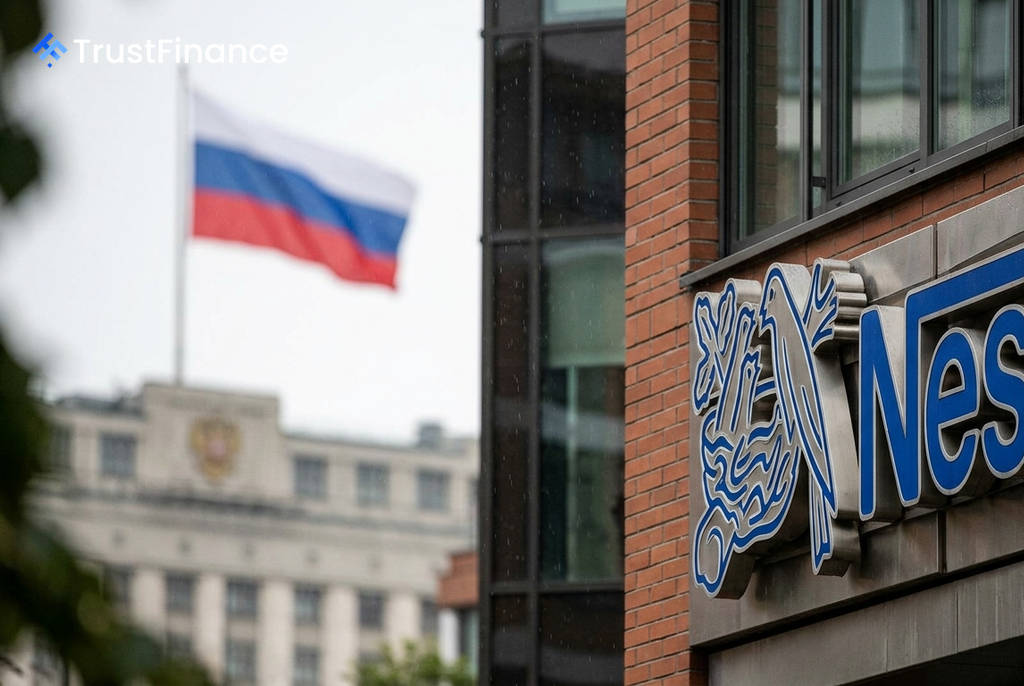
Summary
The Swiss food giant is assessing its options after a presidential decree placed its Russian business under temporary state administration, following similar moves against other Western firms.
Nestlé (NESN) shares declined after Russia placed the company's local business unit under temporary external administration, escalating a trend of asset seizures targeting firms from so-called "unfriendly" countries. The stock fell 1.5% in early Friday trading following the announcement.
Kremlin Tightens Grip
A presidential decree was used to put Nestlé's Russian operations under state control. In response, the Swiss consumer goods company stated it is currently weighing its options. "Nestle is committed to taking all necessary steps to protect its rights and ensure continuity of business operations in the interests of all stakeholders, particularly its employees," the company said.
The new decree also reportedly targeted the Russian operations of French supermarket chain Auchan. This move is the latest in a series of actions by Moscow to control foreign-owned assets since the 2022 invasion of Ukraine.
Financial Exposure
 Ad
AdNestlé has maintained a significant, albeit reduced, presence in Russia since the conflict began, arguing it provides essential food products. The company's exposure in the country includes:
- Six factories as of its 2025 annual report, producing coffee, pet care, and infant formula.
- Approximately 7,000 employees.
- Roughly 2 billion Swiss francs ($2.4 billion) in Russian sales in 2021, the last year the company disclosed such figures.
Context of Asset Seizures
Russia has been using a 2023 decree signed by President Vladimir Putin to place assets under temporary state administration. This mechanism has been applied to a growing list of multinational corporations, including the Russian businesses of Finnish utility Fortum, French yogurt maker Danone, and Danish brewer Carlsberg. The process has often led to forced sales at significant discounts, frequently benefiting buyers with connections to the Kremlin.
Read next
More on Stocks
UBS Lifts AI Spending Forecast to $1.4 Trillion by 2027, Cites Soaring Memory Costs
UBS has dramatically raised its forecast for artificial intelligence capital expenditure, projecting it will reach nearly $1 trillion this year and $1.4 trillion in 2027, driven almost entirely by surging memory prices.

CFDA CEO Steven Kolb Resigns Following Physical Altercation with Protesters
Steven Kolb has stepped down as CEO of the Council of Fashion Designers of America after twenty years, following a widely publicized incident where he physically restrained animal rights activists at a New York Fashion Week show.

Anthropic Weighs New AI Model Release to Counter OpenAI Ahead of IPO, Sources Say
AI developer Anthropic is reportedly considering a new model launch to compete with OpenAI's recent success, a move that comes as the company prepares for an IPO and shortly after its CEO advocated for a slowdown in AI development.

Paramount, States Discuss CNN Oversight in Warner Bros. Merger Settlement Talks, Sources Say
Paramount and a dozen states are reportedly discussing a settlement to clear its $110 billion acquisition of Warner Bros. Discovery, with potential terms including independent monitoring of CNN and a commitment to theatrical film releases.