
Story
Mattel's Q2 Profit Misses Estimates Despite Sales Beat Amid Spending Slowdown
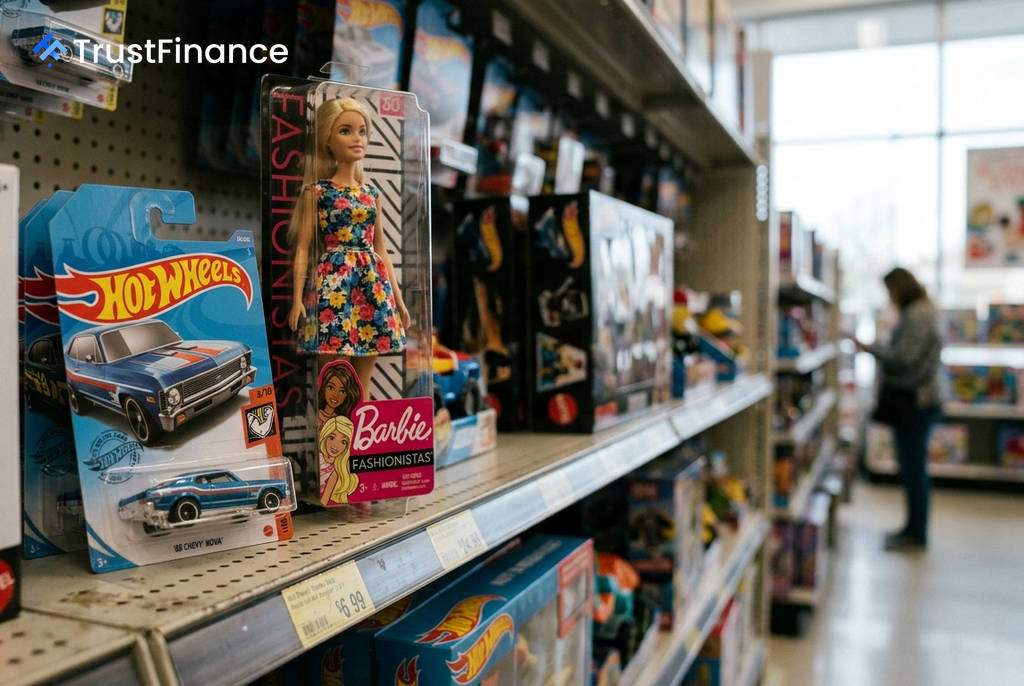
Mattel Inc. missed Wall Street's profit expectations for the second quarter, a sign that weakening consumer demand for traditional toys is pressuring the company's margins. The Barbie maker cited a broad slowdown in discretionary spending as households grapple with higher living costs and economic uncertainty.
By the Numbers
The company reported an adjusted profit of 1 cent per share for the three-month period ending June 30, significantly below the consensus analyst estimate of 4 cents per share, according to LSEG data. This shortfall occurred even as advertising and promotion expenses rose by 11% during the quarter.
Despite the pressure on profitability, Mattel's net sales performance was a bright spot. The company posted second-quarter net sales of $1.12 billion, narrowly beating analysts' expectations of $1.10 billion. The results highlight a challenging environment where sales are harder-won and come at a higher cost.
Consumer Headwinds
Mattel, which relies heavily on sales of classic toys like Hot Wheels, is facing a market shift. According to the company's report on Tuesday, consumers are curbing spending on non-essential goods and increasingly favoring lower-priced items or shifting their entertainment budgets toward digital games and products linked to popular films and online shows.
 Ad
This trend reflects a broader economic reality where squeezed household budgets are forcing families to make tougher choices about discretionary purchases. The weak demand for traditional toys is a key headwind for Mattel and the industry at large.
Annual Forecast Maintained
Despite the second-quarter profit miss, Mattel reaffirmed its full-year financial guidance, signaling confidence in its strategy for the remainder of the year. The company continues to expect:
- Adjusted full-year profit between $1.27 and $1.39 per share.
- Net sales growth in the range of 3% to 6%.
Read next
More on Stocks
FTC Orders Walmart, Uber, Delta to Disclose Data on Personalized Pricing
The U.S. Federal Trade Commission is demanding nine major companies, including leading retail, travel, and gig economy firms, to provide information on how they use consumer data for setting individual prices and wages.

Google Launches Gemini 4 Carbon AI Model to Bolster Cybersecurity Capabilities
Alphabet's Google has unveiled Gemini 4 Carbon, its latest AI model specifically designed for advanced cybersecurity tasks like vulnerability detection and secure code generation. The launch escalates competition with rivals OpenAI and Anthropic in the enterprise AI market.

Oracle Shares Surge After Unveiling $225 Billion Revenue Target for 2030
Oracle stock rose sharply after the company presented a long-term financial outlook targeting at least $225 billion in annual revenue by fiscal 2030, driven by its expanding AI infrastructure business.

DOJ Scrutinizes Nvidia's $12.9B Hugging Face Deal Amid Broader Antitrust Probe, Sources Say
The U.S. Department of Justice is reportedly examining Nvidia's planned $12.93 billion acquisition of AI platform Hugging Face as part of a wider, ongoing antitrust investigation into the chipmaker's market conduct.