
Story
Kimberly-Clark Cuts Annual Forecasts on China Diaper Disruption, Softer US Demand
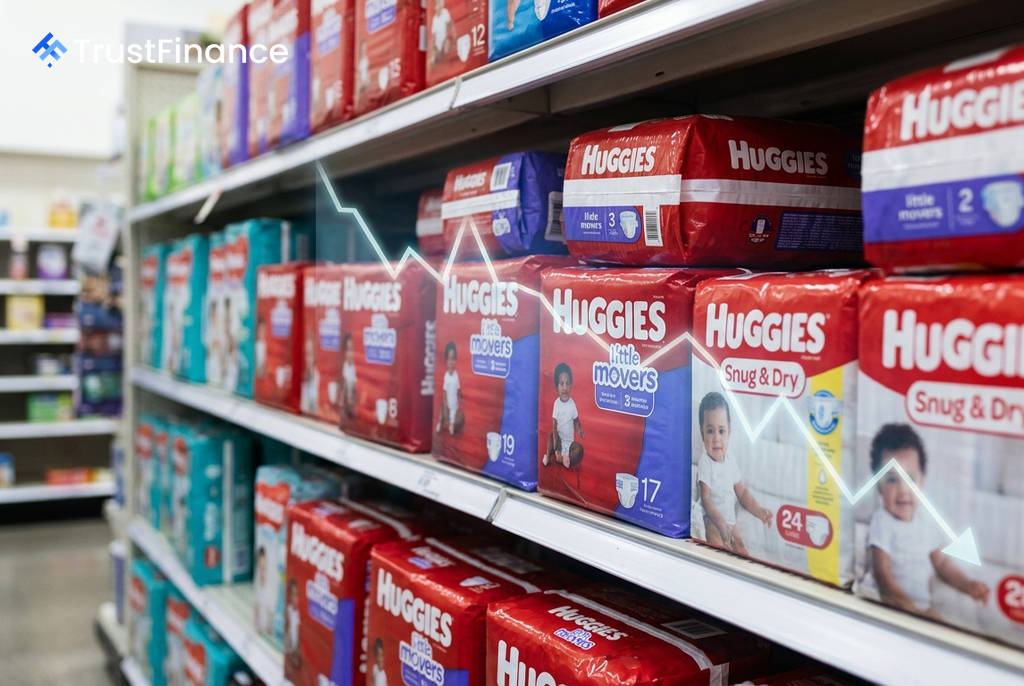
Kimberly-Clark Corp. on Tuesday lowered its full-year sales and profit forecasts, grappling with a significant disruption to its diaper business in China and softening demand from inflation-weary consumers in North America.
Guidance Slashed on China Woes
The company cited false claims circulating on Chinese social media alleging that its Huggies diapers contained toxic formamide. Kimberly-Clark said the claims weighed on second-quarter demand, despite independent, government-certified testing that confirmed the products' quality and safety. The company warned that the disruption in the major market would continue to affect sales and profit in the near term.
According to a Reuters report, China's market regulator announced on June 22 it would launch an investigation into "formamide issues in infant diapers" without naming a specific company, and has not provided an update since.
As a result of the headwinds, the company updated its 2026 outlook:
 Ad
- Organic sales growth is now expected to trail the weighted average growth of its categories by about 100 basis points. Previously, it forecast growth in line with or above the category average.
- Adjusted earnings per share are forecast to grow at a high-single-digit rate on a constant-currency basis, down from a prior projection for double-digit growth.
Q2 Performance and US Headwinds
For the second quarter ended June 30, Kimberly-Clark reported net sales rose 0.6% to $4.19 billion, slightly missing analysts' average expectation of $4.22 billion, according to LSEG data. Adjusted operating profit increased 6.2% to $757 million, benefiting from one-time tariff refunds, productivity savings, and favorable currency effects.
In its North American business, volumes slipped 0.3% during the quarter. The company attributed the decline to persistent inflation and higher living costs, which are forcing lower-income consumers to curtail spending on consumer goods.
Read next
More on Stocks
FTC Orders Walmart, Uber, Delta to Disclose Data on Personalized Pricing
The U.S. Federal Trade Commission is demanding nine major companies, including leading retail, travel, and gig economy firms, to provide information on how they use consumer data for setting individual prices and wages.

Google Launches Gemini 4 Carbon AI Model to Bolster Cybersecurity Capabilities
Alphabet's Google has unveiled Gemini 4 Carbon, its latest AI model specifically designed for advanced cybersecurity tasks like vulnerability detection and secure code generation. The launch escalates competition with rivals OpenAI and Anthropic in the enterprise AI market.

Oracle Shares Surge After Unveiling $225 Billion Revenue Target for 2030
Oracle stock rose sharply after the company presented a long-term financial outlook targeting at least $225 billion in annual revenue by fiscal 2030, driven by its expanding AI infrastructure business.

DOJ Scrutinizes Nvidia's $12.9B Hugging Face Deal Amid Broader Antitrust Probe, Sources Say
The U.S. Department of Justice is reportedly examining Nvidia's planned $12.93 billion acquisition of AI platform Hugging Face as part of a wider, ongoing antitrust investigation into the chipmaker's market conduct.