
Story
Japan Pledges Market Dialogue as 10-Year Bond Yield Breaches 3% for First Time Since 1996
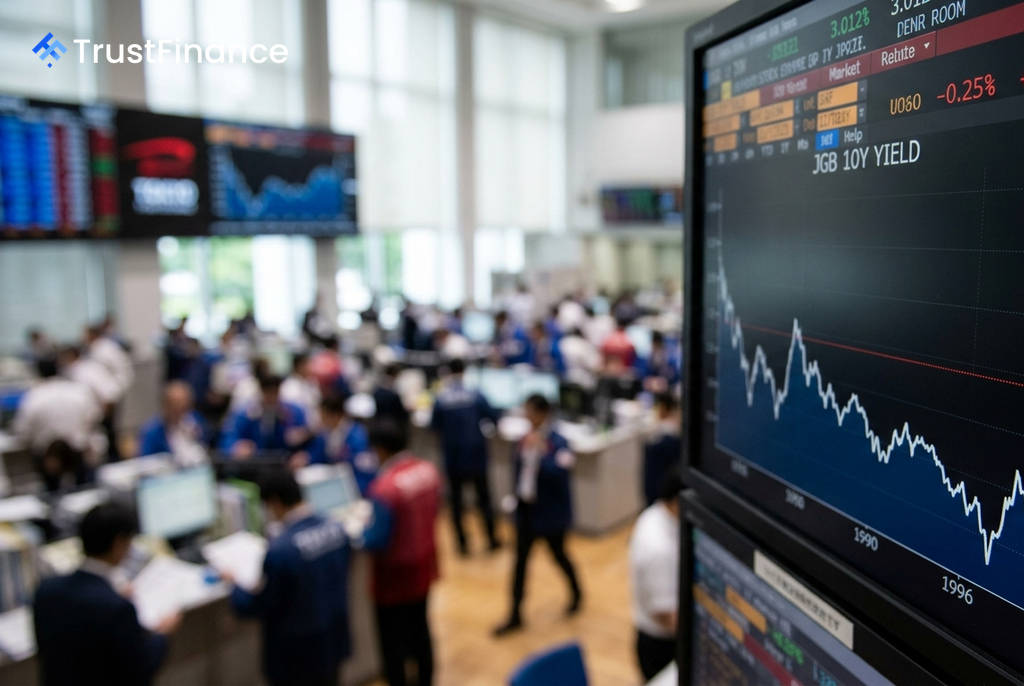
Japan's Finance Minister pledged close communication with markets after the yield on the benchmark 10-year Japanese government bond (JGB) surged past 3% for the first time in three decades. The move signals growing investor anxiety over the country's fiscal policy and inflationary pressures.
Yields Breach Key Threshold
The yield on the benchmark 10-year JGB reached 3% in Tokyo trading on Tuesday, a level not seen since September 1996, according to a report from Investing.com. The sharp rise in borrowing costs prompted a swift response from officials.
Speaking from the G20 finance leaders’ gathering, Finance Minister Satsuki Katayama stated, "Japan will continue efforts to simultaneously achieve strong growth and fiscal sustainability." Katayama emphasized the government's intent to maintain close communication with market participants.
Investor Concerns Driving Sell-Off
The sell-off in Japanese government debt stems from a combination of factors that are unsettling investors. Market participants are increasingly focused on the potential for a significant shift away from Japan's long-standing, ultra-loose monetary and fiscal policies.
 Ad
Key drivers behind the rising yields include:
- Persistent concerns about domestic inflation.
- Worries over the health of Japan's public finances and its large sovereign debt.
- Growing pressure on the central bank to raise interest rates more quickly.
Fiscal Policy in Focus
The government's fiscal stance is a central point of concern for the bond market. A spending plan presented by Prime Minister Sanae Takaichi, a supporter of accommodative policy, has been met with caution from investors.
While the plan aims to boost investment and shield households from rising living costs, investors appear to fear it will exacerbate Japan's debt burden. This has directly contributed to higher yields, which in turn increases the government's future cost of financing its debt.
Read next
More on Stocks
FTC Orders Walmart, Uber, Delta to Disclose Data on Personalized Pricing
The U.S. Federal Trade Commission is demanding nine major companies, including leading retail, travel, and gig economy firms, to provide information on how they use consumer data for setting individual prices and wages.

Google Launches Gemini 4 Carbon AI Model to Bolster Cybersecurity Capabilities
Alphabet's Google has unveiled Gemini 4 Carbon, its latest AI model specifically designed for advanced cybersecurity tasks like vulnerability detection and secure code generation. The launch escalates competition with rivals OpenAI and Anthropic in the enterprise AI market.

Oracle Shares Surge After Unveiling $225 Billion Revenue Target for 2030
Oracle stock rose sharply after the company presented a long-term financial outlook targeting at least $225 billion in annual revenue by fiscal 2030, driven by its expanding AI infrastructure business.

DOJ Scrutinizes Nvidia's $12.9B Hugging Face Deal Amid Broader Antitrust Probe, Sources Say
The U.S. Department of Justice is reportedly examining Nvidia's planned $12.93 billion acquisition of AI platform Hugging Face as part of a wider, ongoing antitrust investigation into the chipmaker's market conduct.