
Story
Japan Inc. Voices Concern Over Weak Yen, Citing Rising Import Costs and Volatility
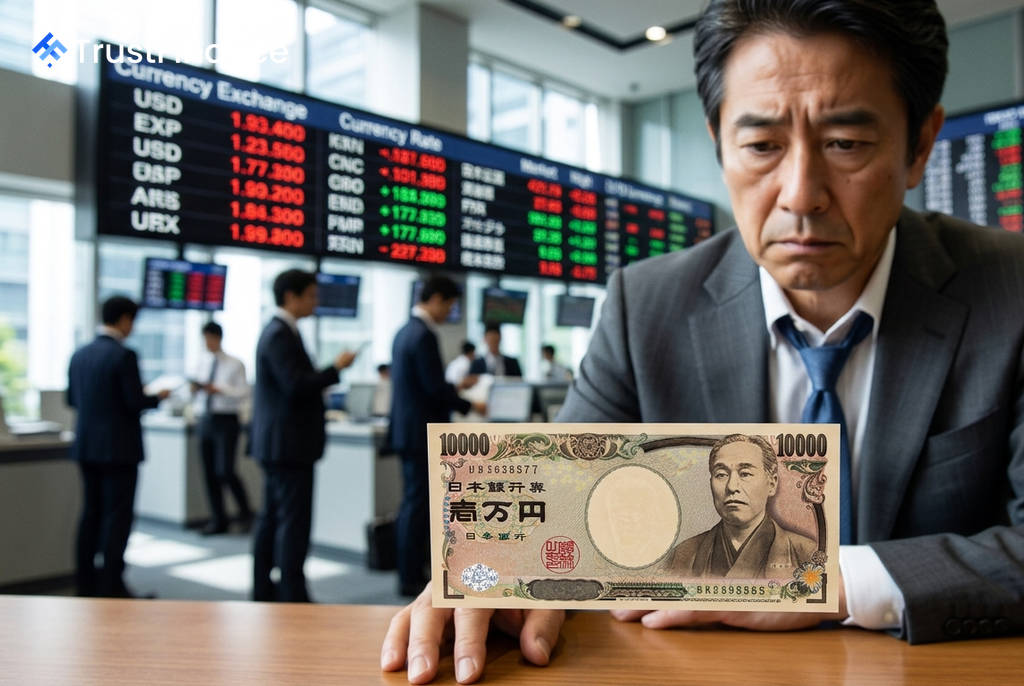
A growing chorus of Japanese executives is sounding the alarm over the negative impacts of a weak yen and sharp currency swings, highlighting the strain on the nation's import-dependent economy. The concerns persist even among exporters, who traditionally benefit from a cheaper currency, signaling widespread unease following the yen's slide to a 40-year low in July.
Import Costs Squeeze Margins
While a weaker yen boosts the value of overseas profits for Japanese multinationals, it also inflates the cost of essential imports, including energy, raw materials, and food. This dynamic threatens to stifle domestic demand and undermine Japan's fragile recovery from decades of deflation.
"While a weaker yen has real advantages for exports, Japanese companies import almost all their raw materials," Norihiko Ishiguro, chairman of the Japan External Trade Organization (JETRO), said at a press conference. "At a certain exchange rate costs actually increase, so we can’t say exporters always win from a weak yen."
Kenichiro Fujimoto, chief financial officer of Mitsubishi Electric, echoed this sentiment in an interview with Reuters, stating, "A weak yen does not necessarily mean all is well."
Volatility Complicates Business Planning
Beyond rising costs, executives point to extreme currency volatility as a major challenge, making it difficult to create reliable earnings forecasts and long-term investment strategies. The instability has prompted calls for a more stable foreign exchange market.
 Ad
"More than anything I’d like the market to stabilise and volatility to come down," said Makoto Tanaka, CFO at trading house Mitsui & Co. Similarly, Yoshihiro Shimazu, CFO of rival Mitsubishi Corp, noted the company will need to revise its assumed exchange rate of 150 yen to the dollar due to the "impact of very high volatility."
Context and Market Outlook
The rising corporate anxiety follows a period of intense pressure on the yen, which hit nearly 164 to the dollar in July. The slide prompted a joint currency intervention by Japan and the U.S. that provided temporary relief, strengthening the yen by about 5%.
However, the current levels remain far from what many businesses consider ideal. A JETRO survey published in March found:
- The most desirable exchange rate for nearly 20% of companies was between 120–124 yen to the dollar.
- Only 11% of firms preferred a rate weaker than 150 yen to the dollar.
Some executives are tempering expectations for a significant recovery. "Considering Japan’s fundamentals and that the trade balance isn’t recovering, perhaps we won’t see a rate of 120 to 130 yen to the dollar again," said Mitsubishi Electric's Fujimoto.
Read next
More on Stocks
FTC Orders Walmart, Uber, Delta to Disclose Data on Personalized Pricing
The U.S. Federal Trade Commission is demanding nine major companies, including leading retail, travel, and gig economy firms, to provide information on how they use consumer data for setting individual prices and wages.

Google Launches Gemini 4 Carbon AI Model to Bolster Cybersecurity Capabilities
Alphabet's Google has unveiled Gemini 4 Carbon, its latest AI model specifically designed for advanced cybersecurity tasks like vulnerability detection and secure code generation. The launch escalates competition with rivals OpenAI and Anthropic in the enterprise AI market.

Oracle Shares Surge After Unveiling $225 Billion Revenue Target for 2030
Oracle stock rose sharply after the company presented a long-term financial outlook targeting at least $225 billion in annual revenue by fiscal 2030, driven by its expanding AI infrastructure business.

DOJ Scrutinizes Nvidia's $12.9B Hugging Face Deal Amid Broader Antitrust Probe, Sources Say
The U.S. Department of Justice is reportedly examining Nvidia's planned $12.93 billion acquisition of AI platform Hugging Face as part of a wider, ongoing antitrust investigation into the chipmaker's market conduct.