
Story
Iran's Houthi Allies Threaten Bab el-Mandeb Closure, Raising Specter of Second Maritime Chokepoint Disruption
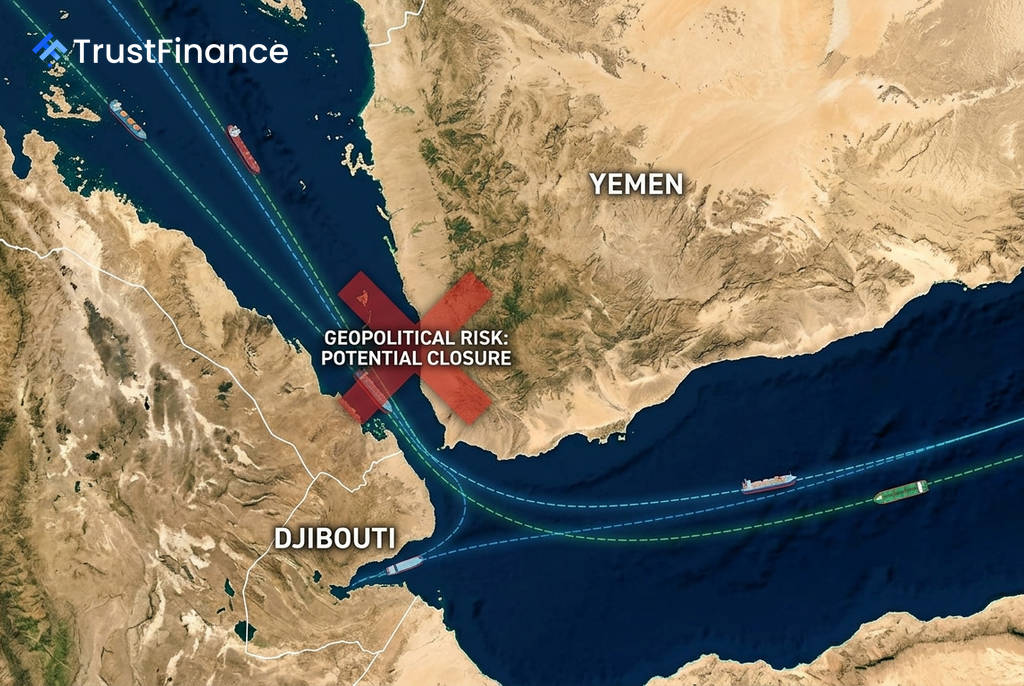
Iran is signaling it may open a new front in its conflict with the U.S. by leveraging its Houthi allies to threaten the Bab el-Mandeb strait, a critical maritime gateway to the Red Sea. This move follows the disruption of shipping in the Strait of Hormuz and raises the risk of two of the world's most vital energy arteries being simultaneously compromised.
A New Maritime Pressure Point
A senior Yemeni Houthi official warned on Monday that the group's armed forces are prepared to close the Bab el-Mandeb strait if attacks by Saudi Arabia on Yemen continue. According to a report from Iran’s Press TV, Mohammed al-Farah of the Ansarullah political bureau claimed such a move could cause oil prices to skyrocket to $200 a barrel in a "dreadful shock."
Al-Farah suggested an "operational alliance" to shut down both the Bab el-Mandeb and the Strait of Hormuz. The threat escalates geopolitical tensions by targeting the narrow waterway connecting the Red Sea to the Gulf of Aden, a key route for Saudi oil exports and a significant portion of global trade.
Geopolitical Implications and Market Risk
Analysts interpret the signal as an attempt by Tehran to broaden the conflict and increase pressure on Washington by extending the threat to global commerce beyond the Persian Gulf. "The message is that not only Hormuz, but Bab al-Mandab, is at risk," Middle East scholar Fawaz Gerges told Reuters, adding that Iran is showing it can threaten both chokepoints at once.
 Ad
The potential for a dual disruption poses a significant risk to the global economy and energy markets. The Houthi movement has already demonstrated its ability to impact global commerce. Since October 2023, the group's attacks on commercial shipping in the Red Sea have forced major carriers to reroute vessels around Africa, inflating transport costs and triggering retaliatory U.S. and British airstrikes.
Strategic Calculations
Experts suggest that a full closure of the Bab el-Mandeb remains a high-stakes option for Iran, described by Andreas Krieg of King’s College London as "another nuclear option" to be used only if all-out war becomes unavoidable. However, he warned that intensified U.S. strikes on Iranian infrastructure could provoke Tehran to use its Yemeni allies to trigger the closure, compounding the economic shock from Hormuz.
Abdulaziz Sager, chairman of the Gulf Research Center, noted that Houthi forces are unlikely to escalate to this level without explicit direction from Tehran. He added that any Houthi attempt to severely disrupt navigation would likely provoke a broader military response from the United States and its partners aimed at degrading the group's capabilities.
Read next
More on Commodities
U.S. Crude Inventories Post Surprise Draw While Gasoline Stocks Swell, EIA Reports
U.S. crude oil stockpiles fell unexpectedly last week, driven by a surge in exports, while gasoline inventories saw a significant build amid weakening demand, according to the latest EIA data.

UBS Raises Year-End Brent Forecast to $110 on Middle East Supply Risks
UBS has increased its year-end forecast for Brent crude to $110 per barrel, citing escalating supply risks in the Middle East, declining global inventories, and record-high freight costs.

Iran Dismisses Latest Qatari Peace Proposal as 'Unacceptable'
A senior Iranian official has rejected the latest Qatari-mediated draft deal to end the eight-month war, calling the ideas 'unacceptable' and signaling a continued diplomatic impasse. The news comes amid rising oil prices following attacks on Saudi energy infrastructure.

Argentina Poised to Gain EU Soymeal Market Share as Deforestation Rules Hit Brazil
Argentina's soybean industry is preparing to capture a larger share of the European Union's soymeal market as new EU anti-deforestation rules are expected to disrupt exports from rival Brazil.