
Story
Iran Strikes US Military Bases in Gulf, Escalating Conflict and Roiling Oil Markets
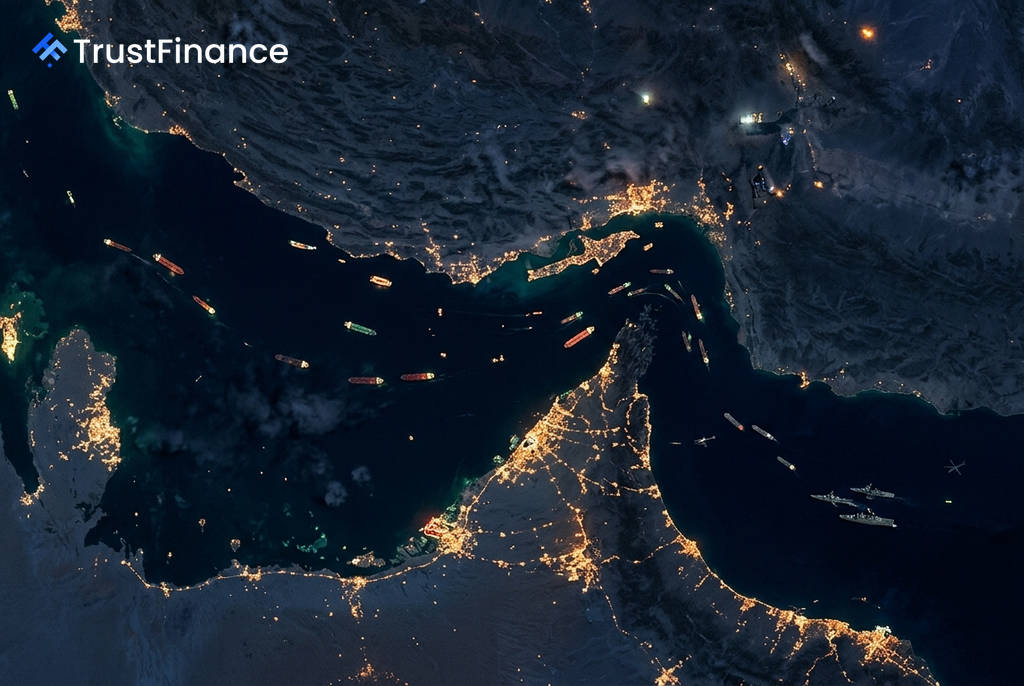
Iran's armed forces have launched attacks on U.S. military infrastructure in multiple Gulf states, according to Iranian state media, in a significant escalation that shatters a three-week-old ceasefire and threatens a key global energy chokepoint.
Tit-for-Tat Strikes Erupt
Iran's army said it targeted U.S. assets including Patriot missile systems in Kuwait, an early-warning site in Qatar, and a U.S. Army fuel depot in Bahrain. Iran's Revolutionary Guards also claimed to have fired 10 ballistic missiles at Jordan’s Azraq military base, which is used by U.S. forces.
- Kuwait's armed forces reported engaging a cruise missile, three ballistic missiles, and 10 drones in its airspace.
- Jordan's state news agency reported that sirens sounded after incoming missiles were detected, with eight being intercepted.
These attacks follow U.S. strikes that hit approximately 90 Iranian military targets, including air defense and missile storage sites, according to U.S. Central Command. Iranian state media reported the U.S. attacks killed 14 people and injured 78 across five provinces.
Strait of Hormuz in Focus
 Ad
The renewed hostilities place a sharp focus on the Strait of Hormuz, a vital artery for global oil shipments that handled about a fifth of the world's supply before the conflict. Iran’s Revolutionary Guards stated that any further U.S. intervention would draw a "crushing response" and asserted that vessel transit, which had recovered to 50% of pre-war levels, is only being permitted on routes designated by Tehran.
The U.S. military countered that Iran does not control the waterway, stating it had facilitated the transit of more than 800 commercial vessels and 380 million barrels of crude oil since early May. Oil prices, a key barometer of regional stability, initially spiked on the news before paring gains.
Diplomatic Channels Fray
The violence erupted as Iran buried its late Supreme Leader, Ayatollah Ali Khamenei, who was killed in an airstrike at the start of the months-long conflict. U.S. President Donald Trump declared the truce "over" on his Truth Social platform, though a second U.S. official, cited by Reuters, maintained that "technical talks continue."
Regional powers including Qatar, Turkey, and Oman have called for a return to diplomacy and de-escalation. The escalating conflict and its impact on energy prices present a significant challenge for the Trump administration ahead of midterm elections later this year.