
Story
Gold Set for Weekly Loss as Oil Spike Fuels Fed Rate Concerns
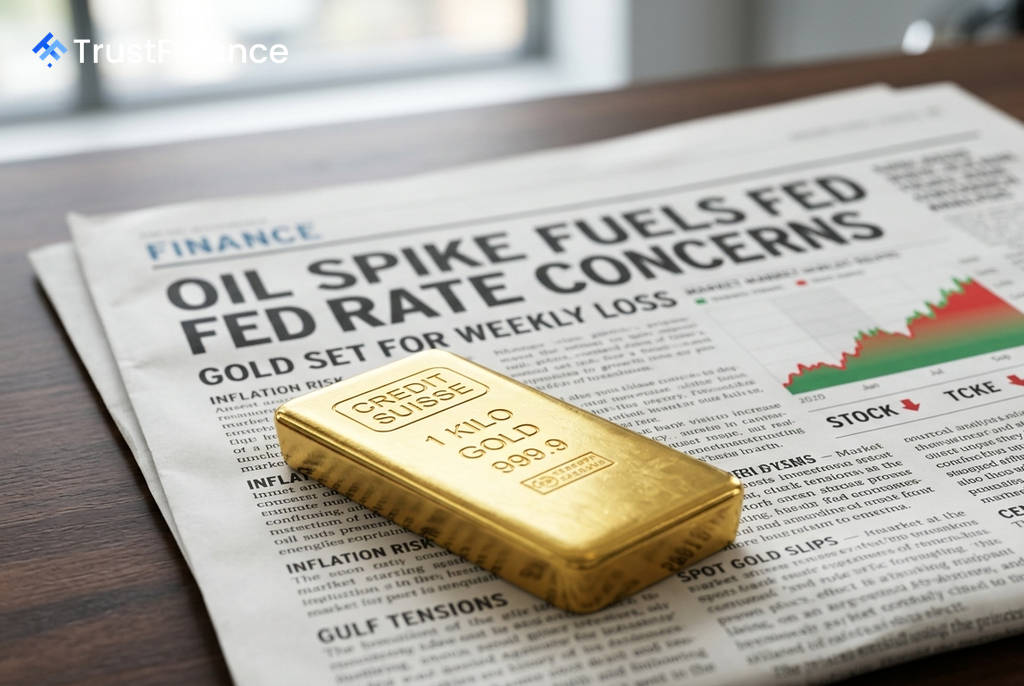
Gold prices fell on Friday, positioning the precious metal for a weekly loss as a surge in oil prices rekindled investor concerns about persistent inflation. The development has markets weighing the possibility that the Federal Reserve may be forced to keep interest rates higher for longer.
Market Performance
By Friday afternoon, spot gold had declined 0.2%, while gold futures were down 0.5%, according to market data. Both benchmarks were on pace to finish the week approximately 1.6% lower.
Higher interest rates typically weigh on gold, as they increase the opportunity cost of holding the non-yielding asset. The metal's price action this week reflects investor anxiety that renewed inflationary pressures could delay any potential rate cuts by the U.S. central bank.
Geopolitical Pressures
The primary driver for the shift in sentiment was the escalation of tensions between Washington and Tehran. The friction followed Iran's reported attacks on three commercial oil tankers near the Strait of Hormuz, a critical chokepoint for global energy supplies. The incidents sparked supply fears, adding a geopolitical risk premium to crude oil prices.
 Ad
While U.S. President Donald Trump issued strong rhetoric against Iran, he also indicated a willingness to negotiate, creating a degree of uncertainty. Analysts at ANZ noted that expectations for a "limited escalation" in the conflict provided some underlying support for gold, preventing a steeper decline.
Fed Policy and Inflation Data
The geopolitical turmoil comes at a sensitive time for monetary policy. The minutes from the Federal Reserve's June meeting, released this week, showed policymakers were divided on the future path for interest rates and remained concerned about inflationary pressures.
Investors are now looking ahead to key U.S. inflation indicators for June, with the Consumer Price Index (CPI) report scheduled for release on Tuesday, followed by the Producer Price Index (PPI) on Wednesday. These figures will be closely scrutinized for signs of whether the inflation spike seen in May, largely driven by energy costs, has peaked.