
Story
Edison International Unit Wins Favorable Tentative Ruling in Eaton Wildfire Liability Case
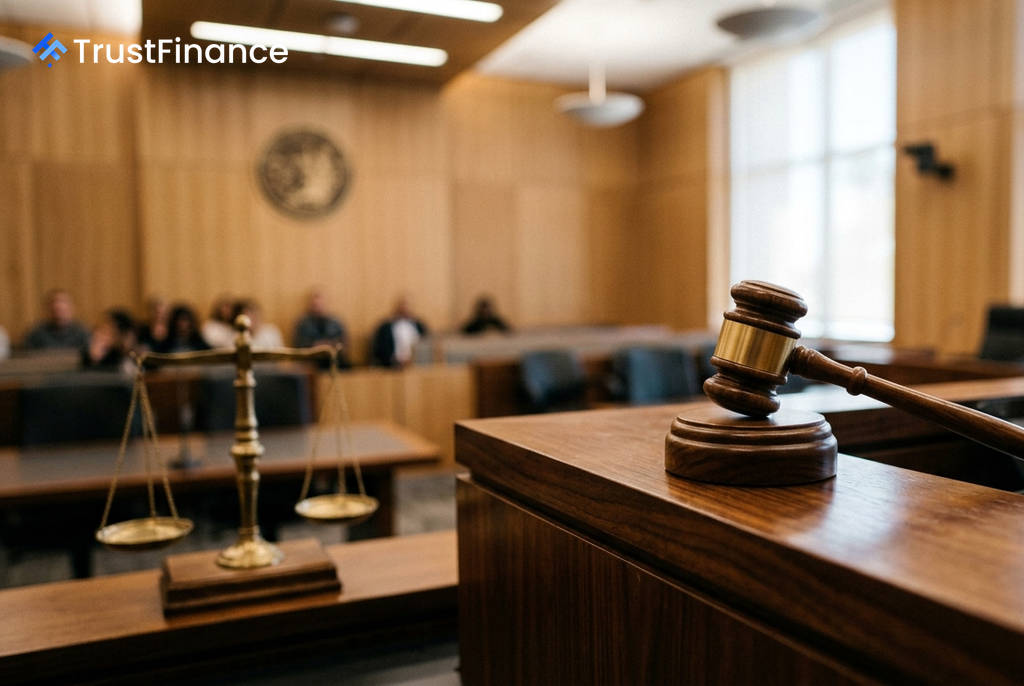
Southern California Edison (SCE) has received a favorable tentative ruling from a California judge, who denied a request to hold the utility automatically liable for potentially billions of dollars in losses from the devastating 2025 Eaton Fire, Bloomberg News reported Tuesday.
Details of the Ruling
Los Angeles County Superior Court Judge Laura Seigle issued the tentative decision, rejecting a motion by insurance companies. The insurers had sought a ruling that SCE was responsible under a state law that can hold utilities strictly liable when their equipment ignites a wildfire, regardless of negligence.
This preliminary ruling is a crucial legal victory for the Edison International (EIX) subsidiary. If finalized, it means plaintiffs will need to prove the utility was negligent, a higher legal standard than the automatic liability the insurers were seeking to establish.
Background on the Eaton Fire
The case stems from the January 2025 Eaton Fire, a catastrophic event with severe consequences:
 Ad
- It resulted in the deaths of 19 people.
- It destroyed thousands of homes in the Altadena community.
Days before the ruling, Los Angeles County fire investigators concluded that the blaze was caused by electrical arcing from an SCE transmission tower that was out of service at the time. Following the fire, SCE has been named in 998 lawsuits filed by businesses, individuals, insurers, and government entities.
Company Response and Implications
SCE acknowledged the court's decision. "Yes, we agree with the tentative ruling. Our primary goal is to support the Altadena community as they recover and rebuild," SCE spokesperson David Eisenhauer told Reuters.
For investors, the ruling mitigates a significant tail risk for Edison International. A finding of automatic, or "inverse condemnation," liability would have exposed the company to a more direct path for damage claims. While the company still faces extensive litigation, this development lowers the probability of a worst-case financial outcome from the incident.
Read next
More on Stocks
FTC Orders Walmart, Uber, Delta to Disclose Data on Personalized Pricing
The U.S. Federal Trade Commission is demanding nine major companies, including leading retail, travel, and gig economy firms, to provide information on how they use consumer data for setting individual prices and wages.

Google Launches Gemini 4 Carbon AI Model to Bolster Cybersecurity Capabilities
Alphabet's Google has unveiled Gemini 4 Carbon, its latest AI model specifically designed for advanced cybersecurity tasks like vulnerability detection and secure code generation. The launch escalates competition with rivals OpenAI and Anthropic in the enterprise AI market.

Oracle Shares Surge After Unveiling $225 Billion Revenue Target for 2030
Oracle stock rose sharply after the company presented a long-term financial outlook targeting at least $225 billion in annual revenue by fiscal 2030, driven by its expanding AI infrastructure business.

DOJ Scrutinizes Nvidia's $12.9B Hugging Face Deal Amid Broader Antitrust Probe, Sources Say
The U.S. Department of Justice is reportedly examining Nvidia's planned $12.93 billion acquisition of AI platform Hugging Face as part of a wider, ongoing antitrust investigation into the chipmaker's market conduct.