
Story
DoorDash Lifts Q3 Forecast After Strong Results Signal Resilient Delivery Demand
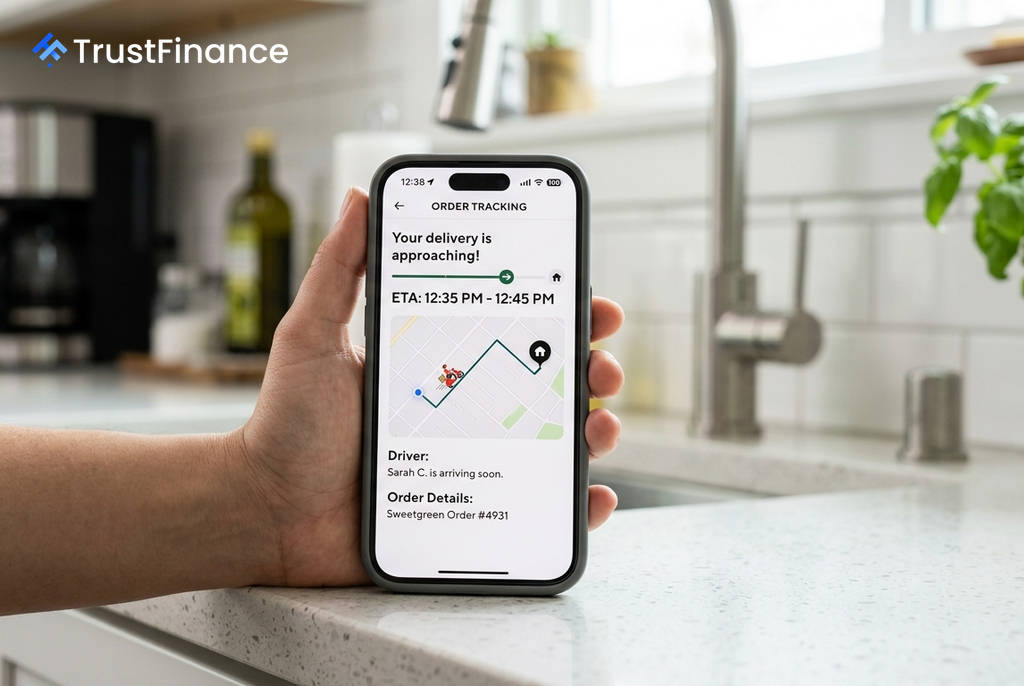
DoorDash on Wednesday provided an upbeat third-quarter forecast, signaling that consumer demand for food, grocery, and convenience delivery remains robust. The company's guidance for key financial metrics surpassed analyst expectations after it also topped estimates for the prior quarter.
Strong Performance and Outlook
DoorDash announced it expects third-quarter marketplace gross order value (GOV), a measure of the total value of all orders, to be between $33 billion and $34 billion. This forecast is ahead of the $32.64 billion anticipated by analysts, according to data from LSEG.
The company also projected third-quarter adjusted earnings before interest, taxes, depreciation, and amortization (EBITDA) to fall between $950 million and $1.10 billion, largely above the consensus estimate of $979.6 million. This guidance follows a strong second quarter, where:
- Marketplace GOV rose 36% to $33.08 billion, beating estimates of $32.08 billion.
- Adjusted EBITDA increased 40% to $914 million, compared with expectations of $841.8 million.
Diversification and Investment
 Ad
The positive results reflect the company's ongoing strategy to expand beyond its core restaurant delivery business. DoorDash has been investing heavily in its grocery and convenience segments, securing partnerships with major retailers like Kroger, Domino’s, Sobeys, and Safeway to broaden its market reach.
In a push to innovate and manage logistics costs, DoorDash recently launched its in-house drone delivery program, DoorDash Air. The company has also continued to invest in its DashPass membership program to drive customer loyalty and order frequency.
Future Considerations
While the outlook is strong, DoorDash cautioned that its adjusted EBITDA as a percentage of GOV is expected to decline sequentially in the fourth quarter. The company attributed this anticipated margin pressure to seasonally higher costs for couriers and insurance, as well as increased investments in technology and autonomous delivery initiatives. This pattern is consistent with trends observed in the previous year.
Read next
More on Stocks
FTC Orders Walmart, Uber, Delta to Disclose Data on Personalized Pricing
The U.S. Federal Trade Commission is demanding nine major companies, including leading retail, travel, and gig economy firms, to provide information on how they use consumer data for setting individual prices and wages.

Google Launches Gemini 4 Carbon AI Model to Bolster Cybersecurity Capabilities
Alphabet's Google has unveiled Gemini 4 Carbon, its latest AI model specifically designed for advanced cybersecurity tasks like vulnerability detection and secure code generation. The launch escalates competition with rivals OpenAI and Anthropic in the enterprise AI market.

Oracle Shares Surge After Unveiling $225 Billion Revenue Target for 2030
Oracle stock rose sharply after the company presented a long-term financial outlook targeting at least $225 billion in annual revenue by fiscal 2030, driven by its expanding AI infrastructure business.

DOJ Scrutinizes Nvidia's $12.9B Hugging Face Deal Amid Broader Antitrust Probe, Sources Say
The U.S. Department of Justice is reportedly examining Nvidia's planned $12.93 billion acquisition of AI platform Hugging Face as part of a wider, ongoing antitrust investigation into the chipmaker's market conduct.