
Story
Dollar Steadies After Sharp Drop as Traders Await Fed Minutes
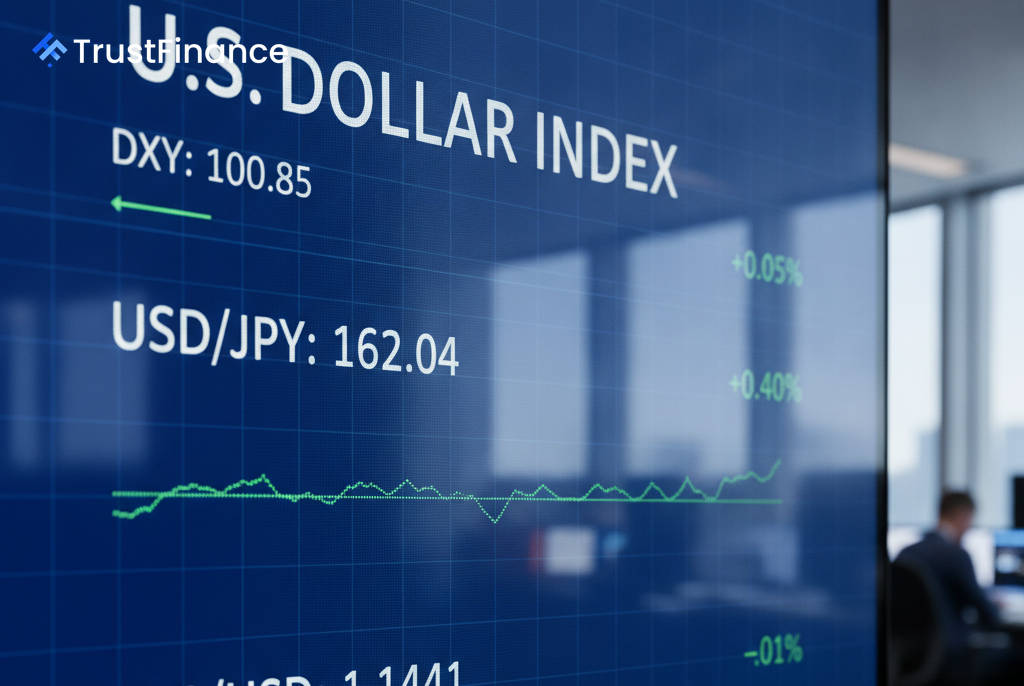
The U.S. dollar stabilized on Monday after posting its largest single-day loss since the end of April during the previous session. Currency market participants are now squarely focused on the future of U.S. monetary policy, with key insights expected later this week.
The U.S. Dollar Index (DXY), which measures the greenback against a basket of six major currencies, was trading near the flatline at 100.85 in late afternoon trading.
Fed Policy in the Spotlight
The dollar's sharp 0.5% slide on Thursday followed a softer-than-expected June nonfarm payrolls report. The data suggested a resilient but not overheating labor market, which traders interpreted as giving the Federal Reserve more flexibility to hold interest rates steady rather than pursuing further tightening.
Investors are now looking ahead to the release of the minutes from the Fed’s June meeting on Wednesday for a deeper understanding of policymakers' thinking. At that meeting, new Fed Chair Kevin Warsh signaled a shift away from forward guidance to focus primarily on inflation. Last week, Warsh noted that inflation risks had moderated, a view supported by oil prices falling back to levels seen before late February.
Yen Hovers Near Intervention Zone
 Ad
Elsewhere, the Japanese yen continued to show weakness against the dollar, with the USD/JPY pair rising 0.4% to 162.04. The currency remains near a 40-year low, languishing well above the 160 level that has historically drawn intervention from Japanese authorities.
While the Bank of Japan raised interest rates in June and has warned of more hawkish moves, the yen's weakness has persisted. "While softer US data improves near-term conditions for the yen, we believe more hawkish rate communication from the Bank of Japan is still needed to prevent a repeat of the rebound in USD/JPY seen after the April/May intervention round,” analysts at ING said in a note.
Euro Edges Higher on Mixed Data
The euro traded slightly higher against the dollar at $1.1441 following the release of mixed economic data from the Eurozone. According to Eurostat, industrial producer prices rose 5.9% year-over-year in May, driven by a 14% surge in energy costs. Retail sales in the bloc ticked up a modest 0.2% for the same month.
The European Central Bank (ECB) was the first major central bank to hike rates in response to the recent inflationary shock. However, with annual inflation now expected to fall and oil prices declining, the case for another rate increase is considered less likely. ECB President Christine Lagarde and chief economist Philip Lane are scheduled to speak later this week.