
Story
Consumer Discretionary ETFs: The Case for Equal-Weighting Amid Mega-Cap Concentration
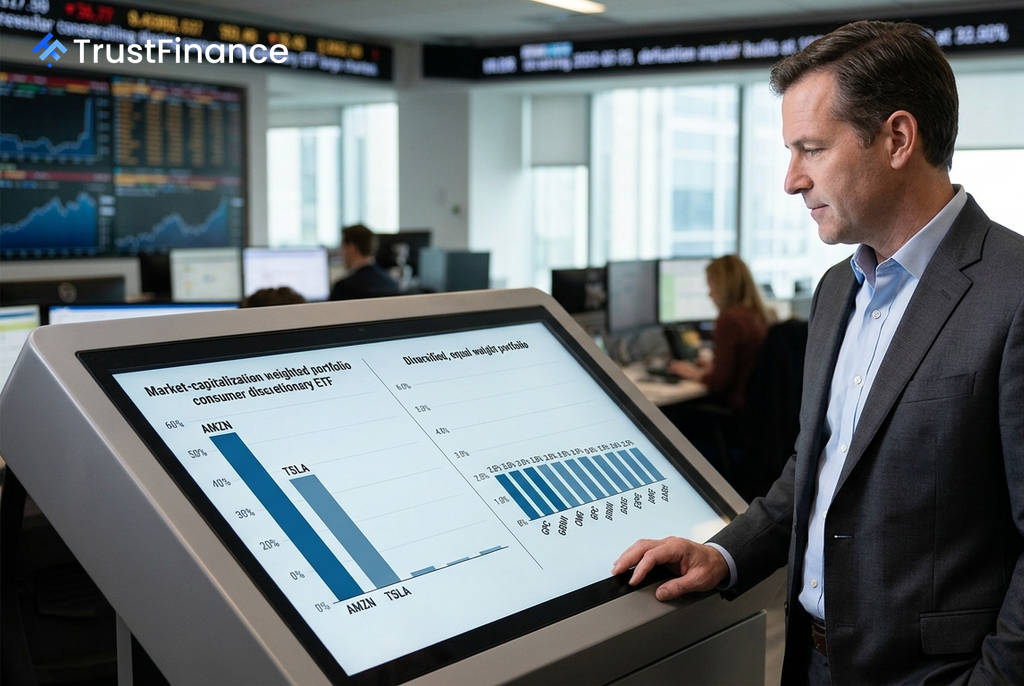
Investors seeking exposure to the consumer discretionary sector through popular market-capitalization-weighted ETFs may be taking on more concentrated risk than they realize. An analysis of the largest funds in the space reveals a heavy reliance on a few mega-cap technology and auto stocks, prompting a closer look at alternative, equal-weight strategies.
The Concentration Dilemma
The two largest pure-play consumer discretionary exchange-traded funds (ETFs) are dominated by just two companies: Amazon.com (AMZN) and Tesla (TSLA). This structure creates a significant concentration risk for shareholders.
- The Consumer Discretionary Select Sector SPDR Fund (XLY), the largest in the category with over $23 billion in assets, allocates a combined 40.3% of its portfolio to Amazon and Tesla.
- Similarly, the Vanguard Consumer Discretionary ETF (VCR) holds 36.9% of its assets in the same two stocks.
This heavy weighting means the performance of these funds is disproportionately tied to the fortunes of two highly volatile growth stocks. For investors, this can transform a sector-wide investment into what is effectively a leveraged bet on a narrow segment of the market.
An Equal-Weight Alternative
 Ad
In contrast, the Invesco S&P 500 Equal Weight Consumer Discretionary ETF (RSPD) employs a strategy that limits the influence of any single company. By capping the weight of each holding at approximately 2.5%, the fund offers a more diversified profile across the sector's various industries.
Instead of Amazon and Tesla, RSPD's top holdings include companies like Genuine Parts (GPC), Garmin (GRMN), and Chipotle (CMG). This methodology provides a fundamentally different risk exposure by underweighting mega-caps and giving more prominence to smaller companies in areas like auto parts, specialty retail, and restaurants.
Weighing the Trade-Offs
The choice between weighting methodologies comes with distinct trade-offs. In a strong, tech-driven bull market, the heavy concentration in Amazon and Tesla can lead to significant outperformance for market-cap-weighted funds like XLY and VCR. Over the past year, VCR returned +11.0% and XLY returned +8.9%, according to Investing.com data.
However, the equal-weight approach used by RSPD is designed to offer a more defensive posture, potentially cushioning the fund during sell-offs led by the largest tech names. This strategy does require periodic rebalancing, which can lead to slightly higher turnover costs, and it provides full exposure to smaller companies that may be more vulnerable during a broad economic downturn.
Read next
More on Stocks
FTC Orders Walmart, Uber, Delta to Disclose Data on Personalized Pricing
The U.S. Federal Trade Commission is demanding nine major companies, including leading retail, travel, and gig economy firms, to provide information on how they use consumer data for setting individual prices and wages.

Google Launches Gemini 4 Carbon AI Model to Bolster Cybersecurity Capabilities
Alphabet's Google has unveiled Gemini 4 Carbon, its latest AI model specifically designed for advanced cybersecurity tasks like vulnerability detection and secure code generation. The launch escalates competition with rivals OpenAI and Anthropic in the enterprise AI market.

Oracle Shares Surge After Unveiling $225 Billion Revenue Target for 2030
Oracle stock rose sharply after the company presented a long-term financial outlook targeting at least $225 billion in annual revenue by fiscal 2030, driven by its expanding AI infrastructure business.

DOJ Scrutinizes Nvidia's $12.9B Hugging Face Deal Amid Broader Antitrust Probe, Sources Say
The U.S. Department of Justice is reportedly examining Nvidia's planned $12.93 billion acquisition of AI platform Hugging Face as part of a wider, ongoing antitrust investigation into the chipmaker's market conduct.