
Story
Citi: Mercedes-Benz Stock Presents 'Deep Value' Opportunity as Valuation Disconnects From Fundamentals
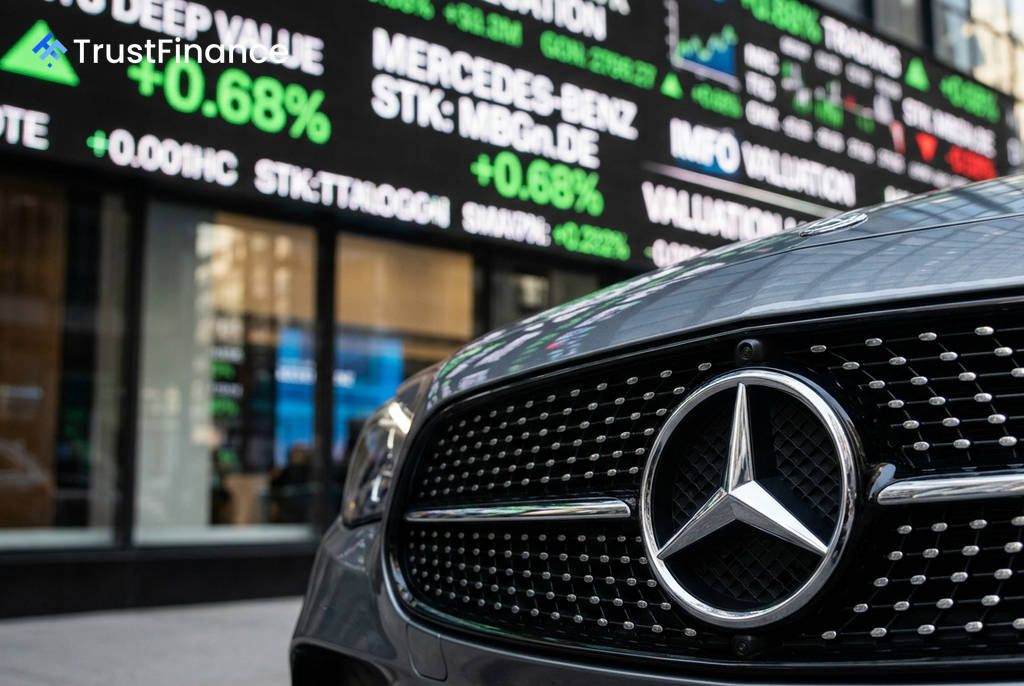
A growing disconnect between the fundamentals of Mercedes-Benz Group and its depressed market valuation could present a compelling "deep value" investment opportunity once short-term pressures subside, according to a research note from Citigroup analysts published after an executive roadshow in New York.
A Valuation at Decade Lows
Analysts at the bank noted that the German luxury automaker's stock has fallen to a ten-year low, excluding the COVID-19 pandemic period. Its current market capitalization is roughly equivalent to its net cash position of approximately €30 billion (about $32.7 billion) combined with the value of its stake in commercial vehicle manufacturer Daimler Truck Holding AG.
This valuation effectively assigns zero value to its core passenger car division and its financial services arm, which holds about €13 billion in equity. While Citi maintains a "Neutral" rating on the stock, the report outlines a "traditional value buy logic," suggesting significant upside potential once the current investor sentiment of avoiding auto stocks in favor of short-term earnings caution shifts.
Analyzing Structural Headwinds
Citi addressed four primary concerns that have been weighing on the automaker's stock performance:
 Ad
- China Market Share: The bank believes market fears may be overstated, particularly if Mercedes-Benz strategically avoids engaging in unprofitable price wars in the region.
- Chinese EV Competition in Europe: With its century-old brand heritage, an average selling price of around €70,000, and strong residual values, Mercedes-Benz's European profit pool is seen as resilient against new Chinese competitors.
- U.S. Tariff Impact: Potential margin pressure from U.S. tariffs is likely already priced into the car division's EBIT (Earnings Before Interest and Taxes) margin, limiting the scope for further negative surprises.
- EV Transition Costs: While the transition to battery electric vehicles (BEVs) has been capital-intensive, the investment peak for its next-generation BEV platform has passed, and sales of its electric models are accelerating in Europe.
Mid-Term Catalysts and Shareholder Returns
Citi estimates that Mercedes-Benz is in the process of cutting approximately €4 billion in fixed and variable costs through measures like closing capacity in Germany and China and shifting production to Hungary. This is complemented by a major global product offensive, including updated GLS and GLE SUVs, a new V8 internal combustion engine, and several new BEVs, which are expected to bolster sales and product mix in fiscal years 2027-2028.
Even assuming "trough" profit margins for fiscal 2026, Citi projects the group will still generate around €4 billion in underlying free cash flow. This cash flow is expected to support approximately €6 billion in annual total shareholder returns, including a stock buyback yield of 4% to 5%. For now, however, Citi notes that momentum-focused investors will likely wait for more clarity on the 2026 margin outlook amid risks from rising raw material costs and intensifying global price competition in the second half of the year.
Read next
More on Stocks
FTC Orders Walmart, Uber, Delta to Disclose Data on Personalized Pricing
The U.S. Federal Trade Commission is demanding nine major companies, including leading retail, travel, and gig economy firms, to provide information on how they use consumer data for setting individual prices and wages.

Google Launches Gemini 4 Carbon AI Model to Bolster Cybersecurity Capabilities
Alphabet's Google has unveiled Gemini 4 Carbon, its latest AI model specifically designed for advanced cybersecurity tasks like vulnerability detection and secure code generation. The launch escalates competition with rivals OpenAI and Anthropic in the enterprise AI market.

Oracle Shares Surge After Unveiling $225 Billion Revenue Target for 2030
Oracle stock rose sharply after the company presented a long-term financial outlook targeting at least $225 billion in annual revenue by fiscal 2030, driven by its expanding AI infrastructure business.

DOJ Scrutinizes Nvidia's $12.9B Hugging Face Deal Amid Broader Antitrust Probe, Sources Say
The U.S. Department of Justice is reportedly examining Nvidia's planned $12.93 billion acquisition of AI platform Hugging Face as part of a wider, ongoing antitrust investigation into the chipmaker's market conduct.